


- About us
-
Services
- Back
- Development Services
-

-
-
-
- Designing Services
-
-
-
-
- Marketing Services
-
-
-
-
- Cloud Engineering Services
-
-
-
- ERP
-
-
-
- CRM
-
-
-
- Artificial Intelligence
-

-
-
-
- MVP
-
- Open Source Business
-
- Industry
- Portfolio
- Career
- Contact us
-
 info[at]startdesigns.com













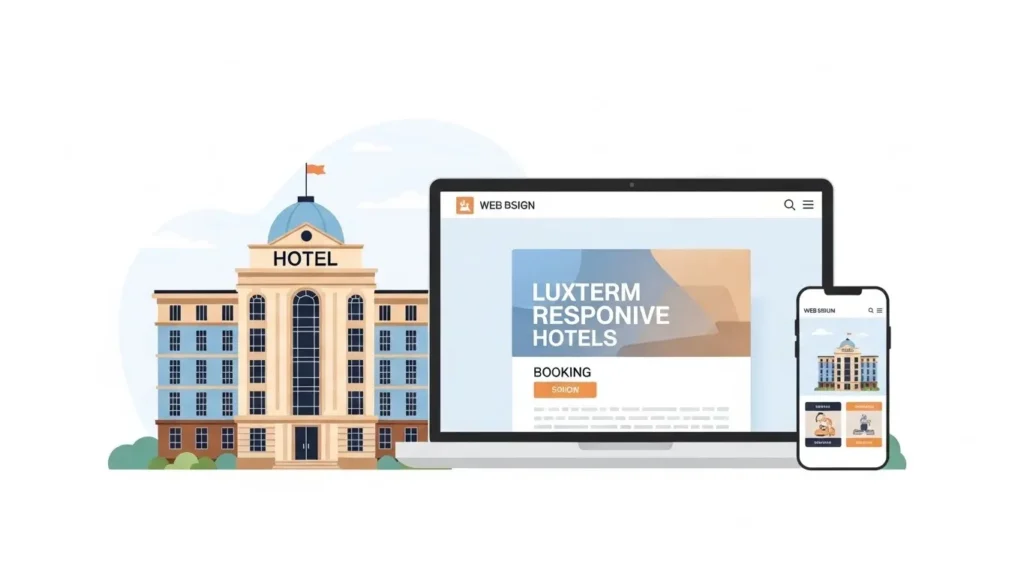
In today’s competitive hospitality market, a hotel’s website is no longer just an online brochure — it is the primary channel for generating direct bookings, building trust, and reducing dependency on OTAs. A strategically planned web design for hotels combines user experience, visual storytelling, SEO, and conversion optimisation to turn website visitors into paying guests.
Many hotels invest heavily in marketing but overlook one critical factor: their website design. If your site is slow, confusing, or not optimised for bookings, potential guests will leave within seconds. This guide explains how website design for hotels works, why it matters, and how hotels in the UK can use it to outperform competitors and rank higher in both search engines and generative AI results.
What Is Hotel Website Design?
Hotel website design is the process of creating a website specifically tailored to the needs of hotels and hospitality businesses. Unlike generic business websites, hospitality-focused design prioritises booking behaviour, trust signals, and guest experience.
A strong hospitality website design focuses on:
- Easy navigation for room discovery
- Seamless booking engine integration
- Mobile-first usability
- Visual storytelling through imagery and video
- SEO-friendly structure for long-term organic growth
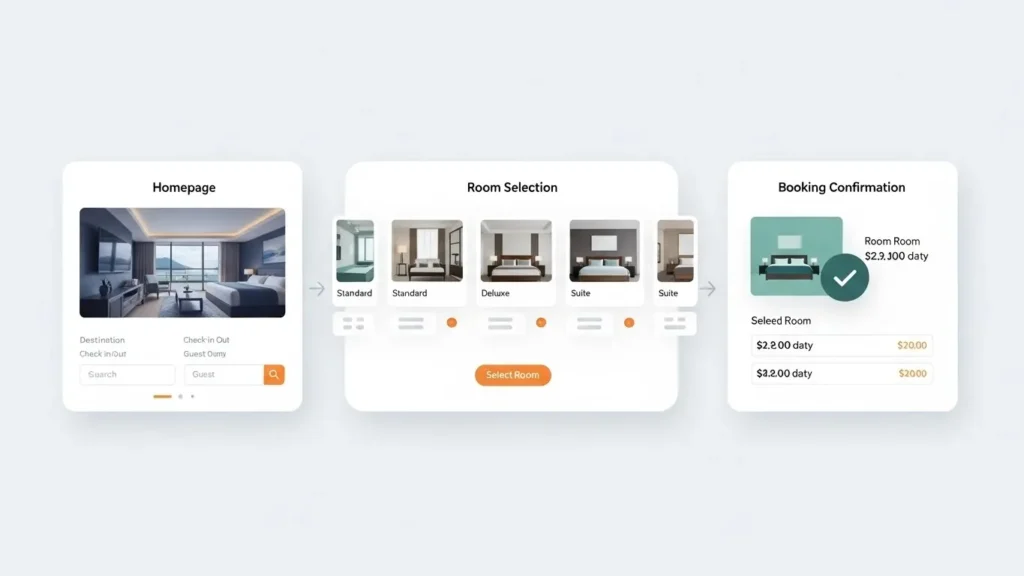
The goal is simple: help users find the right room, trust your brand, and complete a booking with minimal friction.
Why Web Design for Hotels Directly Impacts Bookings
Your website is often the first interaction a guest has with your brand. Within a few seconds, visitors decide whether to continue browsing or leave. A professional hotel web design plays a direct role in this decision.
Key reasons design impacts bookings:
- Trust & credibility: Clean design, secure checkout, and professional visuals build confidence.
- User journey optimisation: Guests compare rooms, amenities, and prices before booking.
- Reduced friction: Clear CTAs and intuitive layouts increase conversions.
Common hotel website mistakes include hidden booking buttons, slow-loading pages, outdated visuals, and poor mobile experiences. Eliminating these issues alone can significantly improve direct booking rates.

Essential UX Elements of High‑Converting Hotel Websites
A successful website design for hotels is built around user experience (UX). Below are the most important elements every hotel website should include.
Mobile‑First Hotel Web Design
More than 70% of hotel searches happen on mobile devices. A mobile-first approach ensures your website adapts perfectly to all screen sizes, offering easy navigation and fast booking on smartphones.
Fast Page Speed & Performance
Slow websites lose bookings. Optimised images, clean code, caching, and reliable hosting are essential for both SEO and user experience.
Clear Booking CTAs & Engine Integration
Booking buttons should be visible, consistent, and accessible across all pages. Seamless integration with a secure booking engine reduces drop-offs during checkout.
Visual Storytelling
High-quality images and videos allow guests to imagine their stay. Professional photography of rooms, amenities, and surroundings significantly increases engagement.
Accessibility & User Trust
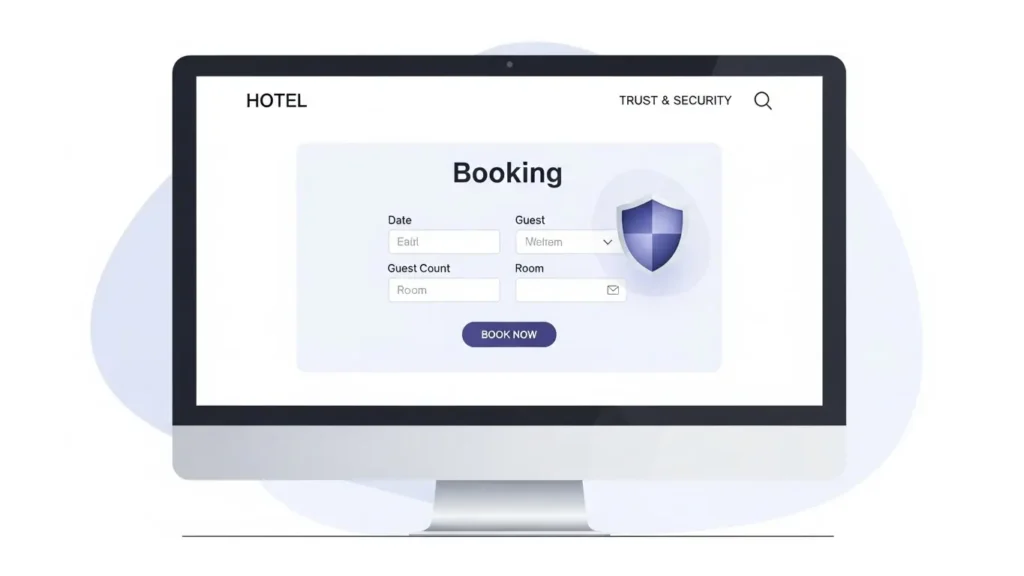
Accessible navigation, readable fonts, GDPR compliance, and security badges all contribute to a trustworthy and inclusive experience.
SEO Best Practices for Hotel Website Design
SEO is a core part of modern hospitality website design. Without proper optimisation, even the best-designed website will struggle to attract organic traffic.
Key SEO considerations include:
- Clear heading hierarchy (H1–H3)
- Optimised meta titles and descriptions
- Location-based keywords (UK cities & regions)
- Image optimisation with descriptive alt text
- Internal linking between service pages and blogs
Technical SEO elements such as clean URLs, schema markup, and fast loading times further enhance search visibility.
Mobile Experience & Speed Optimisation for Hotel Websites
Google prioritises mobile-friendly and fast-loading websites. For hotels, this is critical because mobile users are often ready to book.
Optimisation strategies include:
- Responsive layouts
- Lazy loading images
- Minimal scripts
- Core Web Vitals optimisation
A faster website not only ranks better but also converts better.
How to Choose the Right Website Design Partner for Hotels
Not all web design agencies understand the hospitality industry. Selecting the right partner is crucial for achieving long-term success.
When evaluating a hotel website design company, look for:
- Proven hospitality experience
- Custom design (not templates)
- SEO and CRO expertise
- Booking engine integration knowledge
- Ongoing support and scalability
A specialised partner focuses on revenue generation, not just aesthetics.
Cost of Website Design for Hotels
The cost of web design for hotels in the UK varies depending on complexity and features.
Typical price ranges:
- Basic hotel website: £2,000 – £4,000
- Custom hotel website with booking engine: £5,000 – £10,000
- Enterprise hospitality platforms: £10,000+
While the upfront cost may seem high, a well-designed website quickly pays for itself by increasing direct bookings and reducing OTA commissions.
Real‑World Examples of High‑Performing Hotel Websites
Top-performing hotel websites share common traits:
- Clear value propositions
- Strong visual branding
- Simple booking flows
- SEO-optimised content
Hotels that invest in strategic hotel web design consistently see higher engagement, longer session durations, and improved booking conversion rates.
Frequently Asked Questions About Hotel Website Design
What is web design for hotels?
Web design for hotels is the creation of booking-focused, SEO-optimised websites tailored to hospitality businesses. It combines UX, visuals, and technical performance to increase direct bookings.
How much does hotel website design cost in the UK?
Hotel website design in the UK typically ranges from £2,000 to £10,000+, depending on design complexity, booking engine integration, and SEO requirements.
How long does it take to build a hotel website?
A professional hotel website usually takes 6–10 weeks, depending on content, features, and approval timelines.
Does hotel website design include SEO?
Modern hospitality website design should include on-page SEO, technical optimisation, and content structure to support long-term organic growth.
How can hotel websites increase direct bookings?
By improving UX, speeding up the site, using clear CTAs, integrating a secure booking engine, and optimising for search engines.
Final Thoughts
A hotel’s website is its most valuable digital asset. Strategic web design for hotels improves visibility, builds trust, and drives direct bookings — all while reducing reliance on third-party platforms.
By investing in a conversion-focused website design for hotels, UK hospitality businesses can outperform competitors, rank higher in search engines, and stay visible in generative AI results.
If your goal is sustainable growth and higher profitability, a well-designed hotel website is not optional — it’s essential.
About the author



Popular Posts
How to Write a Website Development RFP: Complete Guide & Checklist
September 19, 2026- 14 Min Read