

- About us
-
Services
- Back
- Development Services
-

-
-
-
- Designing Services
-
-
-
-
- Marketing Services
-
-
-
-
- Cloud Engineering Services
-
-
-
- ERP
-
-
-
- CRM
-
-
-
- Artificial Intelligence
-

-
-
-
- MVP
-
- Industry
- Portfolio
- Career
- Contact us
-
 info[at]startdesigns.com














Cloud-based platforms are being rapidly adopted by enterprises in all industries as a way to gain scalability, resilience, and operational efficiency. It is said that more than 80% of enterprise workloads are using cloud infrastructure, in one way or another, now, according to some industry studies, thus making data migration a critical business project rather than a technical one alone. Nevertheless, moving large amounts of enterprise data presents difficult challenges with regards to security, compliance, data quality, and system integration. This is exactly the point where ServiceNow Data Migration Services come into play by delivering structured frameworks, automation, and governance controls. If an organization makes a proper cloud data migration plan, it can then modernize its IT operations, get real-time insights, and strengthen the digital transformation goals that are set for the long term.
Understanding Enterprise Data Migration in the Cloud Era
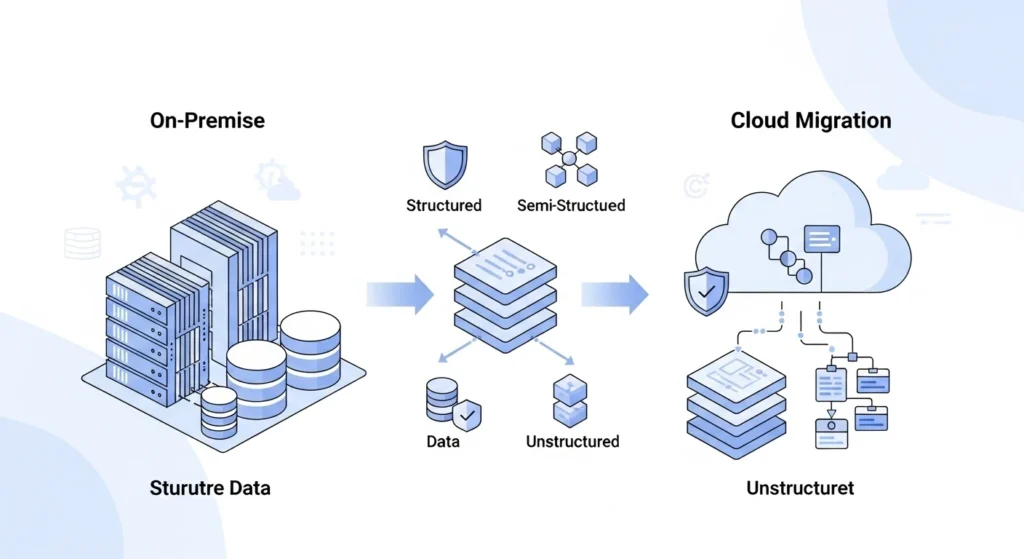
Data migration to the cloud during the enterprise era means moving data from outdated and on-site systems to flexible cloud platforms that are secure and also maintaining their integrity and usefulness. As the digital ecosystems grow, the need for continuous operations is one reason for the structured migration frameworks service supported by ServiceNow Data Migration Services. Handles all types of enterprise data, including structured, semi-structured, and unstructured. Involves mapping, transforming, and validating the data. Integrates the data with the workflows and automation of the cloud-native
Why Enterprises Are Moving Data to the Cloud
Organizations are using cloud platforms to be competitive, agile, and cut their costs at the same time. Besides, moving to the cloud allows companies to update their IT infrastructure and, at the same time, take advantage of tools such as ServiceNow Data Migration Services for having data governance in one place.
- Improved scalability and performance optimization on demand
- Lower costs regarding infrastructure and maintenance
- Enhanced teamwork and access to information in real time
- Stronger support for digital transformation projects
Primary Challenges in Migrating Business Data to Cloud Platforms
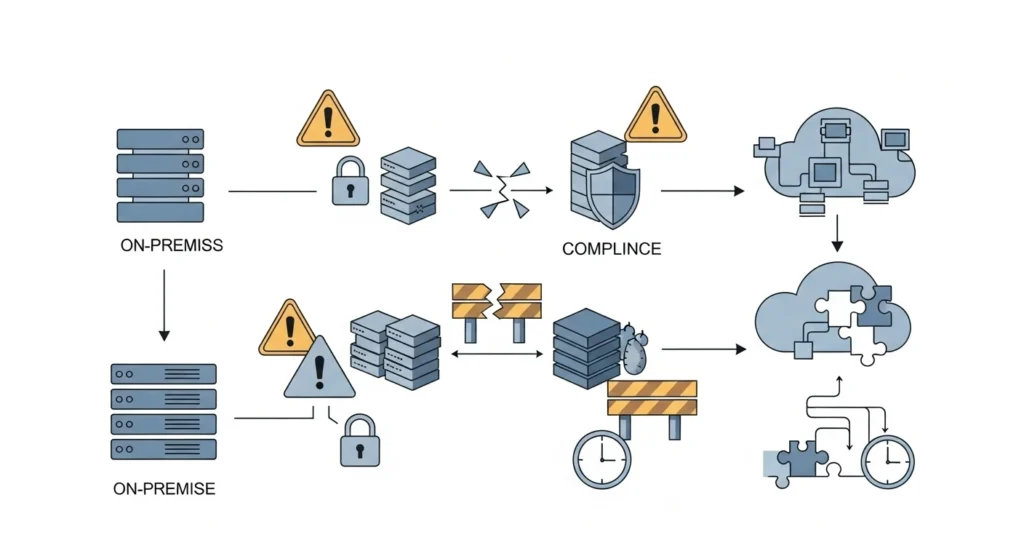
Legacy System Compatibility
The compatibility of older systems and cloud has not been very good, and so they need service tools like ServiceNow Data Migration Services to facilitate data extraction and integration.
Large Data Volumes and Complexity
A huge amount of data, which is of different types, is handled by enterprises. The data will need proper mapping, transformation, and validation during the migration process.
Data Security Risks
The data, which is sensitive to business, may be exposed to breaches if the security measures like encryption and access control are not properly implemented during the transfer.
Regulatory and Compliance Constraints
Getting the various permissions from the various industry regulators like GDPR, HIPAA, and ISO is an added complication to one’s cloud migration project already.
Downtime and Business Continuity Risks
A badly planned company migration may cause a standstill in the business, harm both productivity and customer satisfaction.
Data Quality and Integrity Issues
The presence of inconsistent, duplicate, or old data can make the use of cloud platforms ineffective after migration.
Integration with Existing Systems
Making sure that there is uninterrupted communication with enterprise applications such as ERP, CRM and others is still a major challenge.
Lack of Governance and Visibility
Migration processes can be fatal if there is no central monitoring, as they may end up in errors, delays, and unmanaged risks.
Data Security and Conformity Risks During Migration
Data transfer that is not carefully done may result in the exposure of confidential enterprise data to potential security threats. ServiceNow Data Migration Services support organizations in keeping compliance and securing data throughout the migration lifecycle.
- Data leaks during the transfer.
- Obligations of the regulations, such as GDPR, HIPAA, and ISO standards.
- The possibility of needing encryption, access control, and audit trails.
- The existence of gaps in governance in a mixed environment.
Data Quality, Integrity and Accuracy Challenges
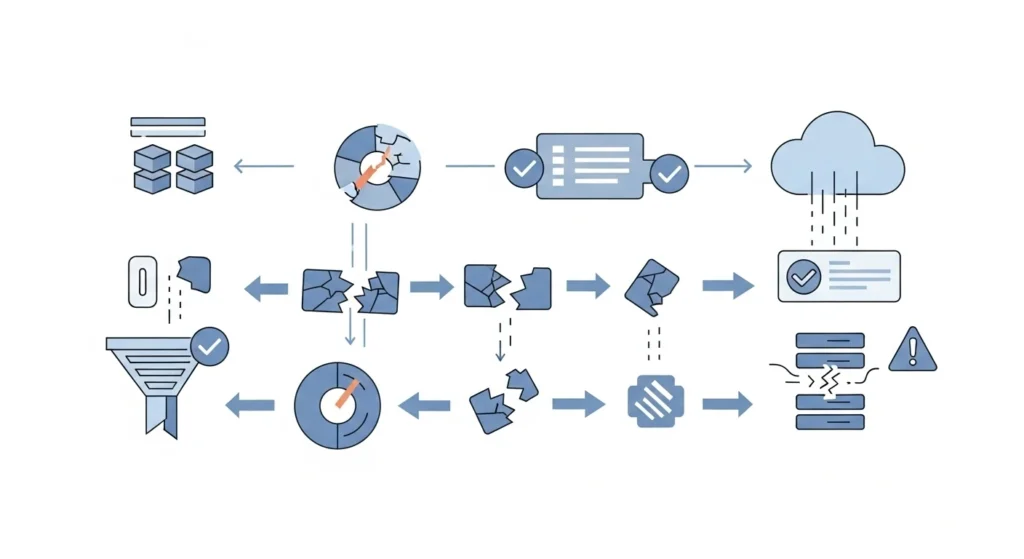
Replicate and Extra Data
As said before, the presence of duplicates or overlapping records (which in turn result in inconsistencies) is one of the main obstacles faced in migration.
Incomplete or Missing Data
Legacy datasets with gaps may cause a loss of information during the cloud migration process if not detected at the right time.
Data Corruption During Transfer
The integrity of the data could be compromised due to errors in the extraction, transformation or loading (ETL) processes.
Inconsistent Data Formats
Data structure differences among systems complicate the process of standardization and mapping.
Lack of Data Validation Controls
Improper validation rules might let inaccurate or invalid data get into the cloud platforms.
Poor Master Data Management
Not having a single source of truth will lead to inaccuracy and unreliability in the whole enterprise system.
Data Transformation Errors
Wrong field mapping or transformation logic can change the data’s meaning and usability.
Limited Data Lineage and Traceability
Insufficient tracking makes it hard to conduct audits of data changes and guarantee accuracy after migration.
Complexity of Integrating Cloud Platforms with Existing Systems
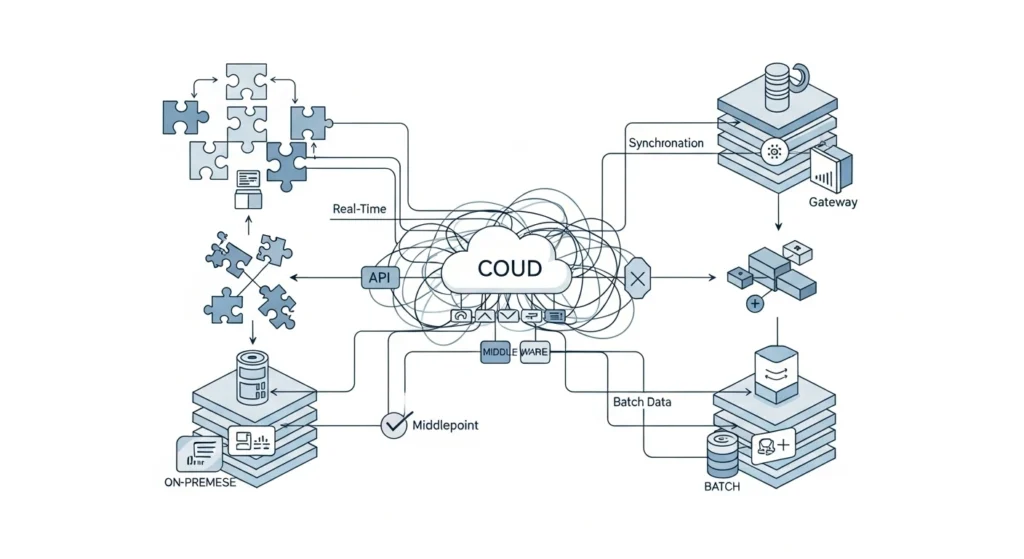
The integration of cloud platforms and existing enterprise systems is a complicated process because of the assortment of technologies, architectures, and data flows. If there is no systematic integration approach, companies will have to deal with operational inefficiencies and data being trapped in different places while moving to the cloud.
- The main compatibility problem is between legacy and cloud-native systems.
- Another issue is the APIs’ limitations along with the middleware dependencies.
- There are also difficulties in the process of synchronizing real-time and historical data.
- Besides, organizations need to control the hybrid and multi-cloud environments
- Guaranteeing uninterrupted workflow across different platforms.
Role of ServiceNow Data Migration Services in Enterprise Cloud Transitions
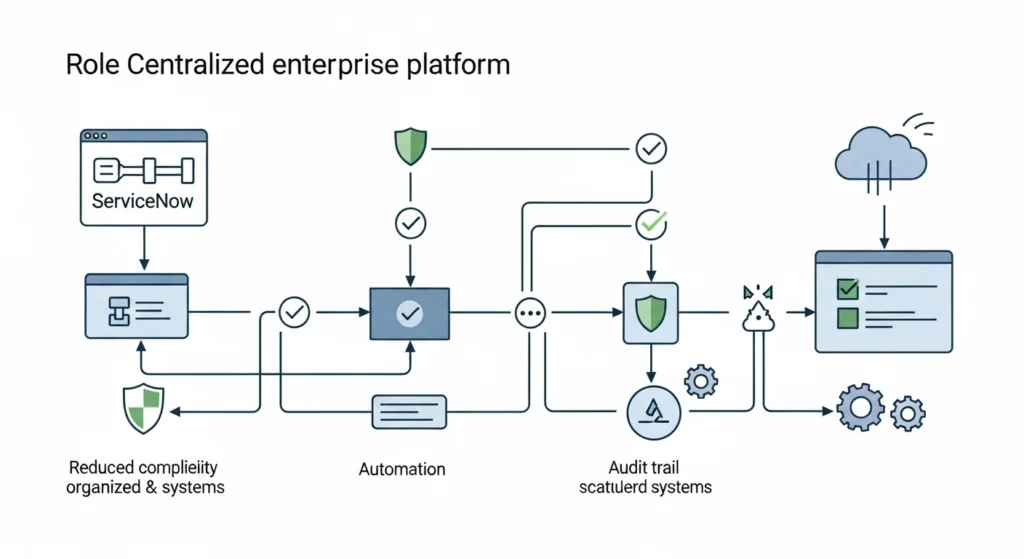
The product offers a structured and centralized framework for migrating big company data to platformas de cloud platforms. It automates the whole process of data extraction, transformation, and loading (ETL), thus manually executed errors.The system of built-in validation mechanisms that are incorporated into the data ensures its accuracy, integrity, and consistency. Legacy systems, ERP, CRM, and third-party applications can effortlessly integrate with one another as a result of this. The system enables secure transfer of data with controls on access based on roles and encryption standards. Data transfer with audit trails and governance workflows will be the main regulators in the maintenance of compliance with the respective rules.
- The operational downtime is reduced to the barest minimum through the migration approaches that are phased and controlled.
- The data that has been migrated is aligned with ITSM, ITOM, and enterprise service workflows.
- The visibility and control over migration progress is improved through dashboards and reporting.
Opportunities Created by Cloud-Based Data Migration
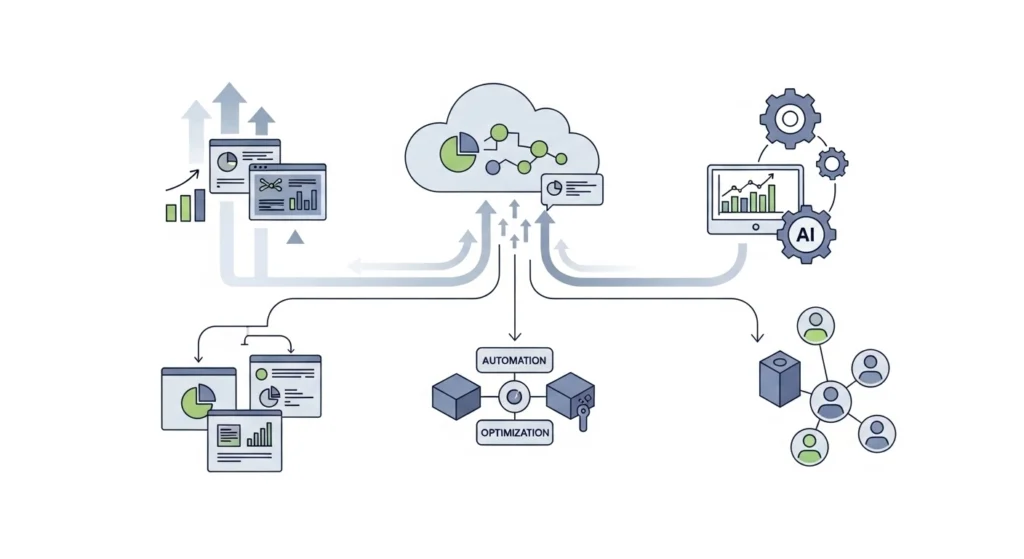
The process of cloud migration is not just about the modernization of the infrastructure but rather opens up an array of strategic business opportunities. Data Migration Services from ServiceNow give the enterprises a chance to derive the maximum value from their data.
Real-Time Data Access and Analytics
This feature allows companies to instantly analyze and take action on data which in turn, the firm’s decision-making gets better.
Enhanced Operational Agility
With cloud technologies, businesses can scale up or down according to their needs, thus, they are able to react rapidly to changes in the market.
Cost Optimization
One of the advantages is the reduction of the on-premise infrastructure requirement plus it also leads to the decrease of the maintenance costs.
Automation and AI Integration
This can facilitate complex automation, deep learning, and the extraction of AI-based insights from the data that are already in the cloud
Future Trends in Enterprise Data Migration and Cloud Platforms
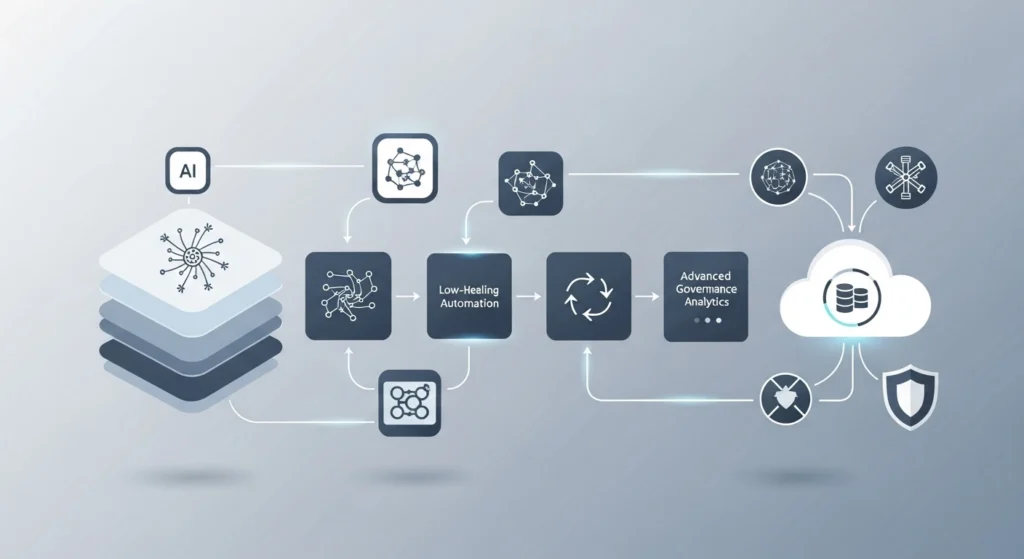
Enterprise data migration is still subject to change as new technologies come up. ServiceNow Data Migration Services are still changing to be of help in the future ready cloud strategies.
- Migration and validation tools powered by AI
- Migration frameworks powered by low-code and no-code
- Higher automation and self-healing workflows
- Data governance with intelligence getting more and more important
Conclusion
Moving enterprise data to the cloud is a must for today’s organizations as it is a strategic move. Even though there are still issues of security, integration, and data quality, methods such as ServiceNow Data Migration Services provide a secure, legal, and effective way to do the transfer. By using the right approaches and cloud-first data strategies, companies can achieve scalability, quick operations, and benefits of digital transformation that last for a long time.
FAQs
What are the Services for Data Migration in ServiceNow?
Migrate, transform, validate enterprise data securely while preserving integrity, compliance.
Which are the major challenges in migrating enterprise cloud data?
Security, legacy systems integration, data quality, downtime and compliance problems stand out.
In what way ServiceNow Data Migration Services mitigate the risks associated with migration?
The whole process is carried out in a way that preserves necessary validation, governance, workflow, and structured migration that reduces errors.
Will a cloud data migration be beneficial for highly regulated industries?
Indeed, if encryption, audit trails and compliance controls are implemented.
What is the normal duration for transferring business data to the cloud?
It is very much dependent on the size and complexity of the data, the number of integrations, the chosen strategy and the steps.
About the author


Popular Posts


25 Real Minimum Viable Product Examples (With Strategy, Revenue & Lessons)
February 11, 2026- 7 Min Read

Top MVP Development Companies in the USA (2026) – Comparison, Cost & Selection Guide
February 5, 2026- 7 Min Read