
- About us
-
Services
- Back
- Development Services
-

-
-
-
- Designing Services
-
-
-
-
- Marketing Services
-
-
-
-
- Cloud Engineering Services
-
-
-
- ERP
-
-
-
- CRM
-
-
-
- Artificial Intelligence
-

-
-
-
- MVP
-
- Industry
- Portfolio
- Career
- Contact us
-
 info[at]startdesigns.com











In today’s fast-moving digital landscape, every click counts. Whether you’re launching a new product, running a seasonal campaign, or driving leads through paid advertising, a well-crafted landing page can make the difference between curiosity and conversion.
As competition intensifies online, visitors have less patience and higher expectations. Your challenge is to guide them from interest to action — with clarity, simplicity, and purpose. This guide will walk you through the essential principles of building an effective landing page in 2025, highlighting what has changed, what still works, and how to turn digital visitors into loyal customers.
What Exactly Is a Landing Page?
A landing page is a standalone web page designed with one clear goal — to drive a specific action from the visitor. It’s typically the destination after someone clicks an ad, a social media post, or a marketing email.
Unlike a full website that offers multiple navigation paths and information, a landing page focuses on a single conversion objective — such as collecting leads, promoting an event, or selling a product.
Landing pages are powerful tools in modern marketing because they minimize distractions and direct users’ attention to the call-to-action (CTA) — whether that’s signing up, purchasing, or downloading.
Common Uses of Landing Pages
Landing pages can serve a variety of purposes, including:
- Capturing leads for newsletters or product trials.
- Promoting limited-time offers or discounts.
- Registering users for webinars, conferences, or online courses.
- Providing detailed information about a specific product or service.
- Gathering customer feedback or survey responses.
For example, a landing page for a product demo might include a concise headline, a short video overview, and a simple signup form — all focused on one action: booking a demo.
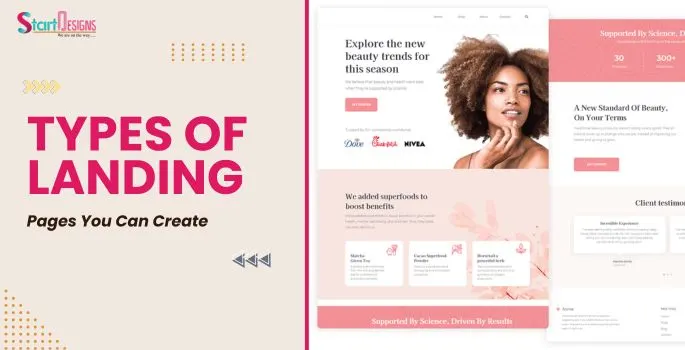
Types of Landing Pages You Can Create
Depending on your campaign goals, you can design different types of landing pages:
- Lead Generation Pages: Encourage users to provide contact details in exchange for something valuable, such as an eBook, trial, or discount.
- Sales Pages: Drive immediate purchases or subscriptions, often featuring persuasive copy, testimonials, and clear CTAs.
- Event Pages: Promote upcoming webinars, product launches, or virtual conferences with simple registration forms.
- Coming Soon Pages: Build anticipation before a launch while collecting early signups.
- Feedback Pages: Collect reviews or survey responses to improve your offerings.
- Unsubscribe or Thank-You Pages: Maintain a positive brand experience, even in minor interactions.
Each of these page types shares one thing in common — focus. The entire design and message revolve around one measurable action.
Landing Page vs. Website: What’s the Difference?
It’s easy to confuse a landing page with a traditional website, but they serve very different purposes.
| Landing Page | Website |
|---|---|
| Designed for a specific goal or campaign | Provides general information about the brand |
| Focused on conversions | Focused on exploration |
| Contains a single call-to-action | Contains multiple links and navigation |
| Traffic comes from targeted campaigns | Traffic comes from search engines, referrals, and multiple channels |
| Minimal distractions | May contain many exit points |
While a landing page can technically exist without a full website, having both ensures better brand credibility and trust. Visitors often feel more confident engaging with a business that also has an established web presence.
Key Components of an Effective Landing Page
Every successful landing page combines clarity, design, and psychology. Below are the essential elements that make a landing page perform well:
- Headline and Subheadline: Capture attention instantly and clearly state the offer.
- Unique Value Proposition (UVP): Explain why your product or service stands out.
- Hero Image or Video: Use visuals that reinforce your message and emotional appeal.
- Benefits and Features: Present your solution’s key advantages in an easy-to-scan format.
- Social Proof: Include testimonials, reviews, or recognizable brand logos to build trust.
- Call-to-Action (CTA): Make it bold, specific, and easy to act on.
- Minimal Distractions: Remove unnecessary links or clutter that might lead users away from the goal.
The secret lies in consistency — the message that brought a user to the page (ad, email, or post) should perfectly align with what they see upon arrival.
How to Create a Landing Page from Scratch
Let’s go step by step through building a professional, high-converting landing page in 2025 — from defining your goal to optimizing for SEO and conversions.
Step 1: Define Your Objective
Every landing page begins with a clear, measurable goal. This objective determines your messaging, layout, and even visual tone. Examples include:
- Encourage users to sign up for a free trial.
- Collect contact information for lead nurturing.
- Generate downloads for an eBook or whitepaper.
- Drive sales for a new product.
- Promote event registrations.
Avoid combining multiple goals. A single, well-defined objective ensures focus and increases conversion rates.
Step 2: Choose the Right Landing Page Builder
In 2025, you don’t need coding or design skills to create a landing page. Numerous drag-and-drop builders let you create professional layouts quickly.
Look for a platform that offers:
- Responsive templates for all devices.
- Easy customization (fonts, colors, forms, videos).
- Built-in analytics or integrations with tools like Google Analytics and CRM systems.
- A/B testing features for optimization.
Many modern builders also include AI-assisted design recommendations, helping marketers optimize structure, image placement, and even CTA wording automatically.
Page Within Budget!
Step 3: Design with Purpose
Your design should guide visitors’ eyes directly to the conversion point. Keep it clean, minimalistic, and brand-consistent.
Here’s what to consider:
- Use your brand’s color palette, but maintain strong contrast for CTA buttons.
- Add enough white space to make your content easy to scan.
- Use typography that’s readable across all screen sizes.
- Make sure all visuals reinforce — not distract from — your message.
Mobile-first design is now non-negotiable. Over 70% of visitors access landing pages via mobile devices, so ensure fast loading times and responsive layouts.
Step 4: Write Persuasive, Benefit-Driven Copy
Your headline and copy should clearly communicate why visitors should care. Lead with benefits — not features.
Tips for writing strong landing page copy:
- Align your headline with the ad or email that brought users there.
- Keep sentences short, conversational, and value-focused.
- Address the audience’s pain points and how your offer solves them.
- Use active language (“Get started,” “Join today,” “Unlock access”).
- Avoid industry jargon or unnecessary fluff.
Example:
Instead of saying “Our platform helps automate marketing workflows,” try “Save hours each week by automating your marketing tasks with one simple tool.”
Step 5: Create a Compelling Call-to-Action (CTA)
The CTA is the centerpiece of your landing page — the final nudge that drives conversions.
To make your CTA effective:
- Use action-oriented words (“Start Now,” “Claim Your Offer,” “Book a Demo”).
- Make the button visually distinct with high contrast.
- Keep it above the fold, but repeat it in longer pages for convenience.
- Eliminate competing links or distractions.
Short forms generally perform best. If possible, ask only for the most essential information (often just a name and email). Reducing friction boosts conversion rates.
Step 6: Use Engaging Visual Content
High-quality visuals elevate your credibility and guide attention. Whether you use photography, product mockups, or explainer videos, visuals should always reinforce your story.
Best practices:
- Use an attention-grabbing hero image or short introductory video.
- Include real photos of people using your product or service.
- Optimize all media for fast loading (compress files and use next-gen formats).
- Align color and style with your brand identity.
Visuals can communicate emotion faster than text — use them strategically to create an intuitive user journey.
Step 7: Showcase Social Proof
Building trust online is essential. New visitors are more likely to convert when they see others have already benefited.
You can include:
- Customer testimonials with names and photos.
- Case studies summarizing results achieved.
- Trust badges, certifications, or security assurances.
- Partner or client logos.
- Social share or follower counts.
Position your social proof close to your CTA to reassure hesitant visitors at the decision point.
Step 8: Implement Tracking and Analytics
To know whether your landing page performs well, you must track it. Integrate tools such as Google Analytics, Meta Pixel, or Tag Manager to monitor key metrics like:
- Traffic sources.
- Conversion rates.
- Bounce rates.
- Average time on page.
Use these insights to refine your copy, design, and offers. Data-driven optimization ensures that every campaign performs better than the last.
Step 9: Optimize for SEO
Even though landing pages are often used for paid campaigns, optimizing them for search engines can bring long-term benefits.
Focus on these key SEO elements:
- Title Tag: Write a clear, keyword-optimized title under 60 characters.
- Meta Description: Summarize your offer in 150–160 characters with a persuasive hook.
- URL: Keep it short, descriptive, and relevant to your offer.
- Alt Text: Add meaningful alt text to all images.
- Page Speed: Compress images and use caching to reduce load time.
An SEO-friendly landing page not only improves visibility but also enhances user experience.
Step 10: Run A/B Tests
The most successful marketers never stop testing. A/B testing (or split testing) allows you to compare two versions of a landing page to see which performs better.
Test variations in:
- Headlines and subheadings.
- CTA button color or copy.
- Visuals (images vs. videos).
- Page layout or form placement.
Run tests long enough to collect statistically significant results. Over time, small improvements can add up to substantial increases in conversion rates.
Step 11: Review, Launch, and Monitor
Before publishing, double-check everything:
- Proofread all copy to remove typos or inconsistencies.
- Test all links and forms.
- View your page on multiple devices.
- Confirm that analytics tracking works properly.
Once published, continue monitoring performance and user behavior. Update visuals, offers, or CTAs periodically to maintain freshness and engagement.

Why Landing Pages Are Crucial in 2025
As personalization and automation evolve, landing pages have become the core of every digital funnel. They allow marketers to test messaging, segment audiences, and guide visitors toward conversion faster than ever.
A strong landing page strategy supports:
- Lead generation for sales and marketing teams.
- Data collection for remarketing campaigns.
- Customer trust building through transparency and social proof.
- Revenue growth through optimized conversion pathways.
In short, a landing page isn’t just a design asset — it’s a conversion engine for your business.
Frequently Asked Questions (FAQs)
1. Do I need a custom domain for my landing page?
No, but using your brand domain improves credibility and search visibility. Many builders offer subdomains for testing before going live.
2. Can a landing page replace a full website?
Not entirely. Landing pages serve focused goals, while websites offer broader brand experiences. They work best together.
3. Do landing pages rank on Google?
Yes, if optimized correctly with valuable content, keywords, and backlinks. Though often built for paid traffic, SEO can enhance long-term performance.
4. How long does it take to build one?
Depending on complexity, a basic landing page can be built in under two hours using templates. Custom designs may take several days.
5. How can I drive traffic to it?
Use email campaigns, paid search, social media ads, influencer collaborations, and retargeting. Organic blog links and newsletters also work well.
6. Are landing pages effective?
Extremely. They typically achieve conversion rates several times higher than regular website pages because they eliminate distractions.
7. Are landing pages bad for SEO?
No. When integrated into your content strategy, they enhance SEO by capturing leads and improving site engagement.
8. What’s the ideal landing page size?
Keep the width around 960 pixels and ensure that key information appears within the first screen view for better engagement.
9. What makes a CTA perform best?
Clarity, urgency, and relevance. Use actionable language and contrast to draw the eye immediately.
10. How often should I update my landing pages?
Review quarterly or whenever your offer changes. Regular updates maintain freshness, SEO ranking, and user engagement.
Final Thoughts
Creating an effective landing page in 2025 is about clarity, relevance, and strategy. While design and technology continue to evolve, the principles of trust, focus, and simplicity remain constant.
A great landing page doesn’t just look good — it guides the visitor effortlessly toward action. Combine solid design, persuasive messaging, and continuous testing, and your landing pages can become your most reliable digital asset for lead generation and growth.
About the author



Popular Posts
50+ Best Corporate Website Examples That Drive Real Results in 2026
March 26, 2026- 6 Min Read