


- About us
-
Services
- Back
- Development Services
-

-
-
-
- Designing Services
-
-
-
-
- Marketing Services
-
-
-
-
- Cloud Engineering Services
-
-
-
- ERP
-
-
-
- CRM
-
-
-
- Artificial Intelligence
-

-
-
-
- MVP
-
- Industry
- Portfolio
- Career
- Contact us
-
 info[at]startdesigns.com














If you are thinking about starting a website in 2026, WordPress can feel confusing.
Some people still call it the best website platform in the world. Others say it is outdated, slow, difficult, and no longer worth using because tools like Wix, Webflow, Shopify, Squarespace, and AI website builders have become popular.
The truth is somewhere in the middle.
WordPress is still worth using in 2026, but only for the right type of website.
If you want full control, strong SEO flexibility, long-term ownership, and the ability to grow your website over time, WordPress is still one of the best choices available. But if you want a very simple, no-maintenance website that you can launch quickly and forget about, WordPress may not be the easiest option.
Here is the honest answer:
WordPress is not outdated in 2026. Bad WordPress websites are outdated.
A slow WordPress site with cheap hosting, too many plugins, poor security, and no SEO plan will struggle. But a clean, fast, well-structured WordPress website can still be a powerful business asset.
As of April 2026, WordPress is still the most used CMS on the web. W3Techs reports that WordPress is used by 59.6% of websites whose CMS is known.
So no, WordPress is not dead. But that does not automatically mean it is right for everyone.
Let’s break it down properly.
Is WordPress Worth It in 2026?
Yes, WordPress is worth it in 2026 if you want to build a serious website that can grow with your business.
WordPress is a strong choice for:
- Blogs
- Business websites
- SEO-focused websites
- Affiliate websites
- Local business websites
- Content-heavy websites
- WooCommerce stores
- Membership websites
- Course websites
- News or magazine websites
- Service-based business websites
But WordPress may not be the best choice if you want:
- A basic one-page website
- Zero maintenance
- No hosting setup
- No plugin updates
- A simple drag-and-drop-only builder
- An all-in-one platform where everything is managed for you
In simple words:
Use WordPress if your website is a long-term asset.
Avoid WordPress if you only want the fastest and simplest setup.
That is the real decision.
My Honest Take on WordPress in 2026
WordPress is still one of the best website platforms in 2026, but only when it is built properly.
The problem is not WordPress itself.
The problem is usually:
- Cheap hosting
- Heavy themes
- Too many plugins
- Poor maintenance
- No backup system
- Weak security
- Bad page builders
- Random content strategy
- No technical SEO setup
Many people say, “WordPress is slow.”
But WordPress is not automatically slow. A badly built WordPress website is slow.
Many people say, “WordPress is not secure.”
But WordPress is not automatically insecure. A poorly maintained WordPress website with outdated plugins, weak passwords, and no security system is insecure.
Many people say, “WordPress is too hard.”
But most of the time, WordPress feels hard because the website was built without a clear plan.
So the better question is not:
“Is WordPress good or bad?”
The better question is:
“Am I willing to build and maintain WordPress the right way?”
If yes, WordPress is still absolutely worth it.
Who Should Use WordPress in 2026?
WordPress is a great choice if you care about control, SEO, content, and long-term growth.
Here is a simple decision table.
| Your Goal | Should You Use WordPress? |
|---|---|
| Start a serious blog | Yes |
| Build a business website | Yes |
| Rank on Google with SEO content | Yes |
| Create service pages and landing pages | Yes |
| Build a content-heavy website | Yes |
| Start affiliate marketing | Yes |
| Build a local business website | Yes |
| Sell products with content marketing | Yes, with WooCommerce |
| Build a simple one-page website | Maybe not |
| Want zero maintenance | Probably not |
| Want only drag-and-drop simplicity | Wix or Squarespace may be easier |
| Want a pure online store | Shopify may be easier |
| Want advanced visual design control | Webflow may be better |
| Want long-term website ownership | WordPress is one of the best choices |
This is where WordPress wins: ownership, flexibility, SEO, and scalability.
Why WordPress Still Makes Sense in 2026
WordPress has survived for so long because it solves a very important problem: it gives website owners control.
With many website builders, you are locked inside one platform. You use their hosting, their system, their pricing, their design limits, and their rules.
With self-hosted WordPress, you have more freedom.
You can choose your own hosting.
You can choose your own theme.
You can install your own plugins.
You can customize your website.
You can move your site to another host.
You can hire any WordPress developer.
You can build a small website today and expand it later.
That flexibility matters, especially if your website is connected to your business.
A website is not just an online brochure anymore. For many businesses, it is a lead generation system, content hub, sales channel, brand asset, and trust-building tool.
That is why WordPress still matters.
1. WordPress Gives You Real Ownership
One of the biggest reasons to use WordPress is ownership.
With self-hosted WordPress.org, your website is not fully controlled by one closed platform. You own your content, your files, your database, and your website structure.
This is important for serious websites.
Imagine you build your entire business website on a closed platform. Over time, pricing changes. Features change. Limitations appear. Migration becomes difficult. You may not have full control over technical SEO, custom features, or data portability.
With WordPress, you have more control.
You can change your hosting provider.
You can redesign your website.
You can add custom functionality.
You can optimize technical SEO.
You can create custom landing pages.
You can scale your content strategy.
You can migrate more freely.
For a hobby website, this may not matter much.
But for a business website, ownership matters a lot.
2. WordPress Is Still Strong for SEO
WordPress is still one of the best platforms for SEO but only if you know what you are doing.
WordPress gives you control over the things that matter for SEO:
- Page titles
- Meta descriptions
- URLs
- Headings
- Image alt text
- Internal links
- Sitemaps
- Schema markup
- Redirects
- Blog categories
- Content structure
- Canonical URLs
- Indexing settings
But here is the important part:
WordPress does not rank your website. Your strategy does.
Installing WordPress and adding an SEO plugin will not magically bring traffic. You still need helpful content, search intent matching, fast pages, good UX, proper internal linking, topical authority, and trust signals.
Google’s SEO Starter Guide explains that SEO helps search engines crawl, index, understand, and show your content, but it does not guarantee rankings.
So the right way to think about it is:
WordPress is SEO-friendly. It is not SEO-magic.
That difference matters.
3. WordPress Is Excellent for Content Marketing
If your growth strategy depends on content, WordPress is still a very strong platform.
For example, WordPress works well for:
- Blog posts
- Service pages
- Location pages
- Comparison articles
- Product reviews
- Tutorials
- Case studies
- Resource hubs
- News articles
- Affiliate content
- Long-form guides
This is where WordPress beats many simple website builders.
Let’s say you run a digital marketing agency. You can create main service pages like:
- SEO Services
- Website Design
- WordPress Development
- Local SEO
- Website Maintenance
Then you can support those service pages with blog content like:
- WordPress vs Wix
- How Much Does a Website Cost?
- Best SEO Plugins for WordPress
- How to Speed Up a WordPress Website
- WordPress Maintenance Checklist
This creates topical authority.
And topical authority is important because Google does not just look at one page. It also tries to understand whether your website is a useful source for that topic.
WordPress makes this easier because it is built for publishing, organizing, updating, and interlinking content.
4. WordPress Has a Huge Plugin Ecosystem
Another big advantage of WordPress is its plugin ecosystem.
You can add features without building everything from scratch.
For example:
- SEO: Rank Math, Yoast SEO, SEOPress
- Ecommerce: WooCommerce
- Forms: Fluent Forms, WPForms, Gravity Forms
- Security: Wordfence, Solid Security
- Speed: LiteSpeed Cache, WP Rocket, Perfmatters
- Backups: UpdraftPlus, BlogVault
- Memberships: MemberPress, Paid Memberships Pro
- Courses: LearnDash, Tutor LMS, LifterLMS
This flexibility is one of WordPress’s biggest strengths.
But it can also become a weakness.
Many beginners install too many plugins. Every small feature gets a plugin. Over time, the website becomes slow, messy, and hard to maintain.
A good WordPress website does not need 40 plugins.
A good WordPress website needs the right plugins.
In 2026, the best WordPress setup is usually simple:
- Good hosting
- Lightweight theme
- Essential plugins only
- Clean design
- Strong security
- Proper SEO structure
- Regular maintenance
That is how WordPress performs well.
5. WordPress Can Be Affordable, But Not Always Cheap
WordPress software itself is free, but running a proper WordPress website is not always free.
You may need to pay for:
- Domain name
- Website hosting
- Premium theme
- Premium plugins
- Security tools
- Backup tools
- Developer support
- Design work
- Maintenance
- SEO services
The good thing is that WordPress gives you flexibility.
You can start small and upgrade later.
A beginner can start with basic hosting, a free theme, and a few essential plugins. A growing business can move to managed hosting, premium plugins, custom design, and advanced SEO.
That flexibility is useful.
But here is the mistake many people make:
They try to build a serious business website with the cheapest possible setup.
That usually creates problems later.
Cheap hosting can slow down your website.
Poor themes can hurt performance.
Free plugins may not always cover serious business needs.
No maintenance can create security risks.
No SEO plan can leave the website invisible.
So yes, WordPress can be cost-effective.
But if your website is important for your business, treat it like an investment.
What Has Changed About WordPress in 2026?
WordPress in 2026 is not the same WordPress people used ten years ago.
The platform has been moving toward better block editing, full-site editing, collaboration features, media handling, responsive styling, and improved performance workflows. WordPress.org’s roadmap says the project aims to deliver three major releases in 2026, with WordPress 7.0 advancing Phase 3 collaboration features, client-side media handling, responsive styling controls, and expanded block tools.
That shows WordPress is still actively evolving.
But user expectations have also changed.
In 2026, people expect websites to be:
- Fast
- Mobile-friendly
- Easy to navigate
- Secure
- Cleanly designed
- Helpful
- Accessible
- Easy to update
- Conversion-focused
This is why old WordPress habits no longer work.
In the past, many people installed a heavy theme, added a page builder, used 30 plugins, and called it done.
That approach is outdated.
Modern WordPress needs a cleaner approach:
- Lightweight theme
- Better hosting
- Fewer plugins
- Strong content strategy
- Technical SEO setup
- Speed optimization
- Mobile-first design
- Ongoing maintenance
So yes, WordPress is still worth it.
But the way you build WordPress matters more than ever.
Pros of Using WordPress in 2026
Let’s look at the biggest benefits.
1. Full Control
WordPress gives you more control than most website builders. You can control hosting, design, features, SEO settings, plugins, content, and data.
2. Strong SEO Flexibility
You can optimize almost every part of your website, from metadata and URLs to schema, internal links, and technical settings.
3. Great for Blogging
WordPress started as a blogging platform, and it is still excellent for publishing content.
4. Scalable for Content
You can grow from 10 pages to hundreds or thousands of pages if your website structure is planned properly.
5. Large Plugin Ecosystem
You can add forms, ecommerce, memberships, courses, analytics, security, speed optimization, and more.
6. Good for Business Websites
Service pages, landing pages, testimonials, case studies, lead forms, and blogs are easy to manage.
7. WooCommerce Support
If you want to combine ecommerce with content marketing, WordPress plus WooCommerce can be a strong option.
8. Huge Community
Because WordPress is so popular, it is easy to find tutorials, developers, themes, plugins, and support.
9. Easier Long-Term Customization
If your business grows, WordPress can grow with it. You are not stuck with only basic features.
Cons of Using WordPress in 2026
Now let’s be honest. WordPress is powerful, but it is not perfect.
1. It Has a Learning Curve
Beginners may feel overwhelmed at first. Hosting, themes, plugins, pages, posts, menus, backups, updates, security, there are many moving parts.
2. It Needs Maintenance
WordPress needs regular updates. You need to maintain themes, plugins, backups, and security.
3. Poor Setup Can Make It Slow
WordPress can be fast, but bad hosting, heavy themes, unoptimized images, and too many plugins can make it slow.
4. Security Depends on You
Because WordPress is popular, it is a common target. You need strong passwords, updates, backups, security plugins, and careful admin access.
5. Plugin Conflicts Can Happen
Not every plugin works perfectly with every theme or plugin. Sometimes updates can create compatibility issues.
6. It Can Become Messy Without Strategy
If you keep adding plugins, builders, templates, and random pages without planning, the website can become difficult to manage.
7. It Is Not the Simplest Option
For a very basic website, platforms like Wix or Squarespace may be easier.
The honest conclusion:
WordPress gives you power, but you need to manage that power properly.
WordPress.org vs WordPress.com: Which One Should You Choose?
This is where many beginners get confused.
WordPress.org and WordPress.com are not the same.
| Depends on the plan | WordPress.org | WordPress.com |
|---|---|---|
| Hosting | You choose your own hosting | Hosting included |
| Control | Maximum control | Serious websites, SEO, business, and custom websites |
| Plugins | Full plugin freedom | Plan-dependent |
| Themes | Full theme freedom | Plan-dependent |
| Best for | Serious websites, SEO, business, custom websites | Simple managed websites |
| Maintenance | Your responsibility | More managed |
| Flexibility | Higher | More limited |
For most serious websites, self-hosted WordPress.org is the better long-term choice.
It gives you more control over SEO, hosting, plugins, design, and customization.
WordPress.com can be useful if you want a more managed experience and do not want to handle hosting yourself.
But if your goal is SEO, business growth, customization, and long-term ownership, WordPress.org is usually the better option.
WordPress vs Wix vs Webflow vs Shopify vs Squarespace
WordPress is not the only good platform. The best platform depends on your goal.
| Platform | Best For | Main Weakness |
|---|---|---|
| WordPress | SEO, blogs, business websites, content-heavy sites | Needs maintenance |
| Wix | Simple beginner websites | Less flexible for advanced growth |
| Webflow | Design-focused marketing websites | Higher learning curve and cost |
| Shopify | Ecommerce stores | Less ideal for content-heavy non-store sites |
| Squarespace | Portfolios and simple brand websites | Limited advanced flexibility |
Choose WordPress if:
You want control, SEO flexibility, content growth, customization, and long-term ownership.
Choose Wix if:
You want a simple drag-and-drop website and do not want much technical responsibility.
Choose Webflow if:
You care deeply about visual design and have the budget or skill to manage it.
Choose Shopify if:
Your main focus is selling products online.
Choose Squarespace if:
You want a simple, clean website for a portfolio, personal brand, or small business.
The key point is this:
WordPress is not always the easiest option. But it is often the most flexible option.
Is WordPress Good for SEO in 2026?
Yes, WordPress is good for SEO in 2026, but only if you build the website correctly.
A strong WordPress SEO setup should include:
- Fast hosting
- Clean theme
- Mobile-friendly design
- SEO-friendly URLs
- Proper title tags
- Meta descriptions
- Optimized headings
- Internal linking
- XML sitemap
- Schema markup
- Image optimization
- Helpful content
- Good navigation
- Regular content updates
- Search Console setup
Google’s helpful content documentation says its ranking systems are designed to prioritize helpful, reliable, people-first content rather than content created mainly to manipulate rankings.
That means keyword stuffing is not enough.
Your content should actually answer the reader’s question.
For this topic, the reader wants to know:
- Is WordPress still relevant?
- Is it outdated?
- Is it good for SEO?
- Is it beginner-friendly?
- What are the pros and cons?
- What are better alternatives?
- Who should use WordPress?
- Who should avoid it?
Good SEO means answering all of that clearly.
Not with fluff.
Not with hype.
Not with generic statements.
But with useful, honest guidance.
Is WordPress Good for Beginners in 2026?
Yes, WordPress can be good for beginners, but it depends on the beginner.
If you are willing to learn basic website management, WordPress is a great skill to have.
You do not need to become a developer, but you should understand:
- Pages and posts
- Themes
- Plugins
- Menus
- Hosting
- Backups
- Updates
- Basic SEO
- Website security
If that sounds okay, WordPress is a good choice.
But if you want something extremely simple where everything is handled for you, Wix, Squarespace, or WordPress.com may feel easier.
A beginner-friendly WordPress setup should be simple:
- Managed hosting
- Lightweight theme
- A few essential plugins
- Clean page structure
- Good backup system
- Basic security
- One SEO plugin
- Simple design
The biggest beginner mistake is trying to make the website perfect from day one.
Do not do that.
Start clean.
Publish useful pages.
Improve over time.
That is a much better strategy.
Is WordPress Good for Business Websites?
Yes, WordPress is still excellent for business websites.
Most business websites need:
- Home page
- About page
- Service pages
- Contact page
- Blog
- Lead forms
- Testimonials
- Case studies
- Location pages
- SEO structure
- Fast loading speed
- Easy content updates
WordPress handles all of this very well.
For example, a local service business can create separate pages for each service and location.
An agency can publish case studies and SEO guides.
A consultant can create landing pages, lead magnets, and blog content.
A startup can use WordPress for its marketing site while running the actual product separately.
This is where WordPress makes a lot of sense.
It gives businesses a flexible website that can grow with their marketing strategy.
Is WordPress Good for Ecommerce?
WordPress can be good for ecommerce through WooCommerce.
WooCommerce is a strong choice if you want:
- Product pages
- Blog content
- SEO control
- Custom checkout options
- Flexible design
- Ownership
- Content plus commerce
But Shopify may be easier if your main goal is simply to sell products online with less technical setup.
So the decision is simple:
Use WooCommerce if you want flexibility and content-driven ecommerce.
Use Shopify if you want a more managed ecommerce system.
WordPress plus WooCommerce can be powerful, but it requires better maintenance.
For small stores, it can be affordable and flexible.
For larger stores, you need strong hosting, speed optimization, security, and a proper development process.
How Much Does WordPress Cost in 2026?
WordPress cost depends on your website goals.
A simple blog will cost less than a custom business website. A WooCommerce store will usually cost more than a basic service website.
Common WordPress costs include:
1. Domain Name
This is your website address, like yourwebsite.com.
2. Hosting
Hosting affects speed, uptime, security, and performance. Do not choose hosting only because it is cheap.
3. Theme
You can use a free theme or a premium theme. Good lightweight themes include GeneratePress, Astra, Kadence, Blocksy, Neve, and modern block themes.
4. Plugins
Many plugins are free, but serious websites often need premium tools for SEO, forms, backups, speed, security, or ecommerce.
5. Design and Development
If you want a professional website, you may need a designer or developer.
6. Maintenance
WordPress needs ongoing updates, backups, security checks, and occasional fixes.
So is WordPress cheap?
It can be.
But a serious WordPress website should not be treated like a cheap one-time project.
A better way to think about it:
WordPress can be affordable to start, but valuable websites need ongoing investment.
Best Way to Start with WordPress in 2026
If you decide to use WordPress, do not start randomly.
Follow this simple plan.
Step 1: Choose Self-Hosted WordPress.org
For serious websites, WordPress.org gives you the most control.
Step 2: Pick Good Hosting
Choose hosting that is fast, secure, and reliable. Hosting is the foundation of your website.
Step 3: Use a Lightweight Theme
Avoid bloated themes. Use something clean and fast.
Good options include:
- GeneratePress
- Astra
- Kadence
- Blocksy
- Neve
- Modern block themes
Step 4: Install Only Essential Plugins
Start with only what you need:
- SEO plugin
- Security plugin
- Backup plugin
- Cache/performance plugin
- Form plugin
- Analytics plugin
Do not install unnecessary plugins.
Step 5: Set Up Basic SEO
Set clean permalinks, create a sitemap, optimize titles, write meta descriptions, and structure pages with proper headings.
Step 6: Create Core Pages
Start with:
- Home
- About
- Services
- Blog
- Contact
- Privacy Policy
Step 7: Build Topic Clusters
Do not publish random blog posts.
Create content around your main services or topics.
For example, if your site is about WordPress services, you can create content around:
- WordPress SEO
- WordPress speed
- WordPress security
- WordPress maintenance
- WordPress design
- WordPress alternatives
- WordPress pricing
Step 8: Optimize Speed
Compress images, use caching, avoid heavy builders, and test your site on mobile.
Step 9: Set Up Security
Use strong passwords, two-factor authentication, regular updates, backups, and limited admin access.
Step 10: Track Performance
Set up Google Search Console and analytics so you can monitor traffic, indexing, and SEO performance.
Common WordPress Mistakes to Avoid
Many WordPress problems are avoidable.
Avoid these mistakes:
1. Choosing Bad Hosting
Slow hosting can damage user experience and SEO.
2. Using Too Many Plugins
More plugins do not mean a better website. They often create more problems.
3. Installing a Heavy Theme
A beautiful theme is useless if it makes your website slow.
4. Ignoring Mobile Users
Your website must work well on mobile.
5. Not Updating Plugins
Outdated plugins can create bugs and security risks.
6. Publishing Thin Content
Do not publish generic 500-word articles and expect strong rankings.
7. Ignoring Internal Links
Internal links help users and search engines understand your website.
8. Not Taking Backups
Backups are not optional. They protect your website.
9. Using Nulled Themes or Plugins
Never use pirated WordPress themes or plugins. They can contain malware.
10. Building Without a Strategy
A website should not just look good. It should support your business goals.
Is WordPress Outdated in 2026?
No, WordPress is not outdated in 2026.
But many WordPress websites are outdated.
An outdated WordPress website usually has:
- Old theme
- Poor design
- Slow loading speed
- Too many plugins
- No security setup
- Bad mobile experience
- Thin content
- Weak navigation
- No SEO strategy
- No maintenance
- Fast hosting
- Lightweight theme
- Clean design
- Helpful content
- Strong internal linking
- Proper SEO setup
- Good mobile UX
- Security system
- Regular updates
- Clear conversion path
That is the difference.
WordPress is still powerful.
Bad implementation is the problem.
Final Verdict: Is WordPress Worth It in 2026?
Yes, WordPress is worth it in 2026 if you want control, SEO flexibility, content growth, and long-term ownership.
It is not worth it if you want a website that needs zero maintenance.
Here is the simplest way to decide:
If your website is just a quick online brochure, use a simple website builder.
If your website is a serious business asset, WordPress is still one of the best choices in 2026.
WordPress is not dead.
WordPress is not outdated.
WordPress is not perfect.
But when built properly, WordPress is still powerful, flexible, SEO-friendly, and future-ready.
The real question is not whether WordPress is worth it.
The real question is:
Are you ready to build it the right way?
FAQs About Using WordPress in 2026
1. Is WordPress still worth it in 2026?
Yes, WordPress is still worth it in 2026 for blogs, business websites, SEO-focused websites, content-heavy sites, and WooCommerce stores. It is best for people who want control and long-term growth.
2. Is WordPress outdated in 2026?
No, WordPress is not outdated. But poorly built WordPress websites with slow themes, too many plugins, and weak maintenance can feel outdated.
3. Is WordPress good for beginners?
Yes, WordPress can be good for beginners who are willing to learn basic website management. But if you want a no-maintenance website, Wix or Squarespace may be easier.
4. Is WordPress good for SEO?
Yes, WordPress is good for SEO because it gives strong control over URLs, headings, metadata, internal links, schema, and content structure. But SEO success depends on strategy, content quality, speed, and authority.
5. Is WordPress better than Wix?
WordPress is better for SEO flexibility, content growth, customization, and long-term ownership. Wix is easier for beginners who want a simple drag-and-drop website.
6. Is WordPress better than Webflow?
WordPress is usually better for blogs and content-heavy websites. Webflow is better for design-focused marketing websites where visual control is the main priority.
7. Is WordPress better than Shopify?
WordPress with WooCommerce is better if you want ecommerce plus content marketing flexibility. Shopify is easier if your main focus is selling products with less technical setup.
8. Should I use WordPress.org or WordPress.com?
Use WordPress.org if you want full control, SEO flexibility, custom plugins, and long-term ownership. Use WordPress.com if you want a more managed experience.
9. What is the biggest disadvantage of WordPress?
The biggest disadvantage is maintenance. WordPress websites need updates, backups, security checks, and performance optimization.
10. Should I start a WordPress website in 2026?
Yes, you should start a WordPress website in 2026 if you want a serious website that can grow over time. But if you only need a simple website with no maintenance, a hosted builder may be better.
Final CTA
Need a fast, SEO-friendly WordPress website that is built the right way?
A good WordPress website is not just about design. It needs speed, structure, security, SEO, and a clear growth plan.
Whether you need a business website, blog, WooCommerce store, or complete redesign, the right setup can save you time, money, and future problems.
Contact us today to build a WordPress website that is ready for 2026 and beyond.
About the author

Popular Posts
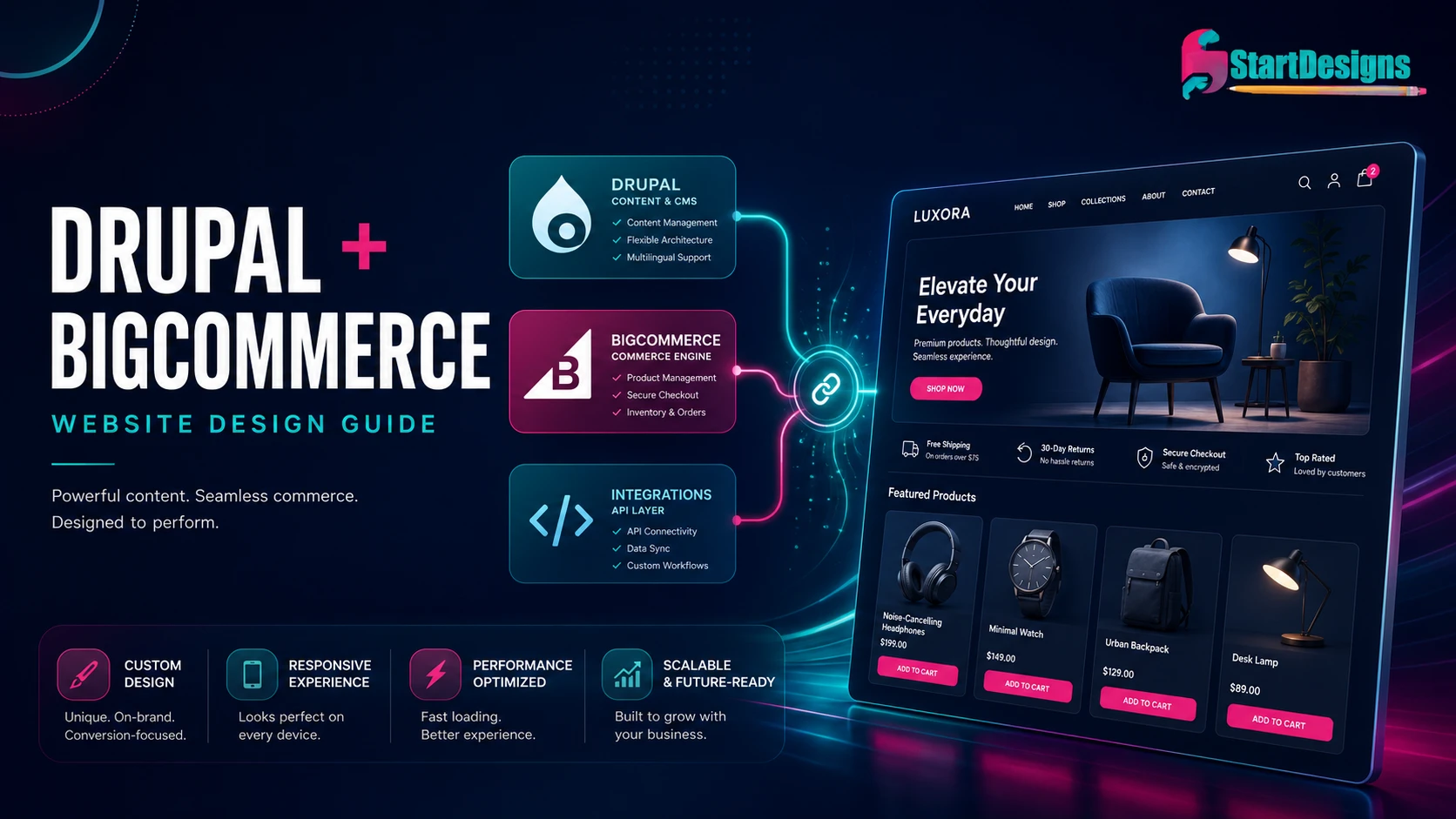
Drupal + BigCommerce Website Design: Architecture, Integration & UX Guide
August 8, 2026- 13 Min Read
What Is Webflow? Website Builder, CMS, SEO and Development Guide
July 28, 2026- 23 Min Read
WordPress Website Development: 10 Best Practices for 2026
July 20, 2026- 14 Min Read