

- About us
-
Services
- Back
- Development Services
-

-
-
-
- Designing Services
-
-
-
-
- Marketing Services
-
-
-
-
- Cloud Engineering Services
-
-
-
- ERP
-
-
-
- CRM
-
-
-
- Artificial Intelligence
-

-
-
-
- MVP
-
- Industry
- Portfolio
- Career
- Contact us
-
 info[at]startdesigns.com











Introduction
The eCommerce market is evolving faster than ever. Traditional online stores are giving way to Web3 platforms, which leverage blockchain, decentralized services, and crypto payments to offer security, transparency, and new monetization opportunities.
Businesses that adopt Web3 eCommerce in 2026 can create platforms where users own their data, transactions are automated through smart contracts, and customer engagement is enhanced through tokenized loyalty programs and NFTs.
Web3 isn’t just a technology shift; it’s a new business model that enables companies to innovate, reduce costs, and expand globally.
What Is Web3 eCommerce and How Does It Differ From Web2

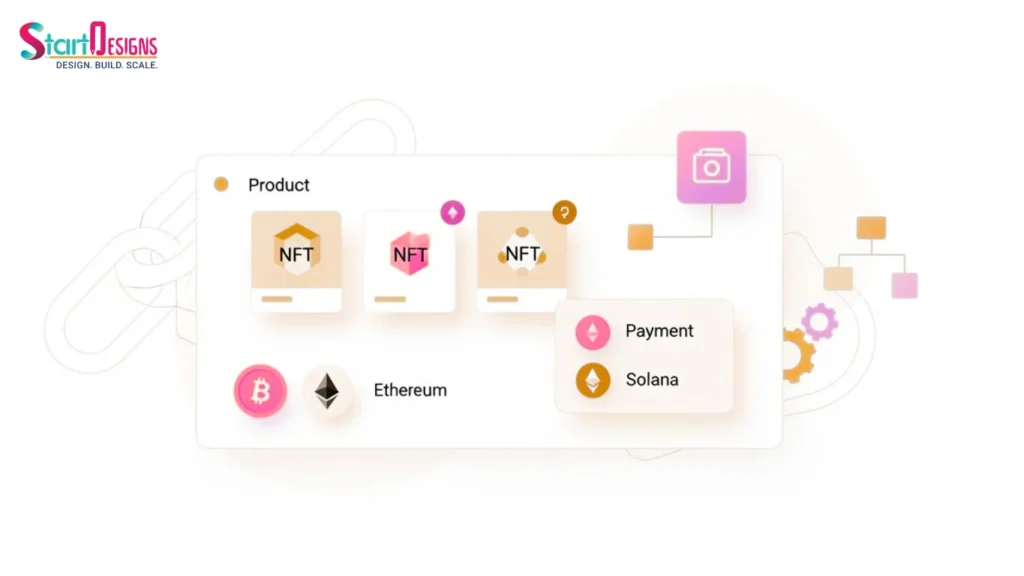
Web3 eCommerce represents the next-generation online shopping ecosystem, built on decentralized blockchain technology. Unlike Web2, where data is stored centrally, and payments go through banks or gateways, Web3 enables:
- User-owned data: Customers control their personal information.
- Crypto payments: Accept Bitcoin, Ethereum, stablecoins, or platform tokens.
- NFT-based products: Digital collectibles, membership passes, or tokenized physical goods.
- Decentralized governance (DAO): Communities vote on new products or discounts.
| Feature | Web2 eCommerce | Web3 eCommerce |
|---|---|---|
| Data Ownership | Platform-owned | User-owned |
| Payment Options | Credit/Debit, PayPal | Crypto, tokens, multi-currency wallets |
| Rewards | Traditional loyalty points | NFT/token rewards, staking programs |
| Governance | Centralized | Community-driven DAO |
| Security | Centralized servers | Blockchain-based, tamper-proof |
Web3 eCommerce opens new revenue streams while enhancing trust and transparency for users.
Why Businesses Need Web3 eCommerce
Modern consumers expect secure, fast, and rewarding shopping experiences. Web3 addresses these expectations while helping businesses:
- Enhance security & transparency with smart contracts and blockchain.
- Accept global crypto payments, bypassing banking restrictions.
- Reduce transaction fees by eliminating intermediaries.
- Build tokenized loyalty programs for deeper customer engagement.
- Minimize fraud and chargebacks through automated verification.
- Expand internationally without Web2 limitations.
Web3 transforms an online store into a financial-digital ecosystem that increases revenue and strategic flexibility.
Key Features of a Web3 eCommerce Website
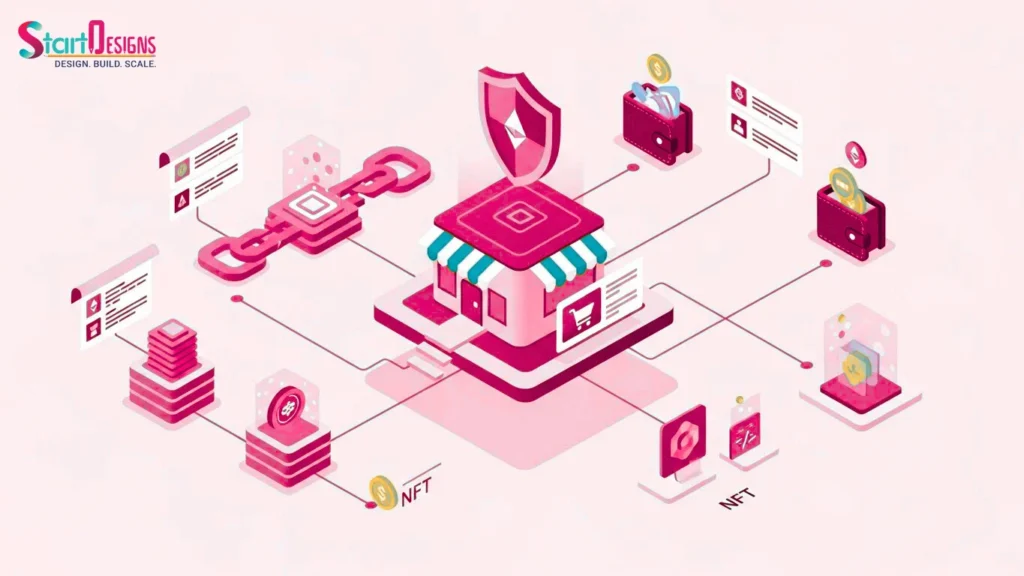
A modern Web3 platform includes:
- Crypto payment & wallet integration (MetaMask, WalletConnect).
- Smart contracts for order automation, refunds, and loyalty rewards.
- NFT certificates and tokenized products.
- Blockchain-based order tracking for transparency.
- Decentralized identification (DID) for secure login.
- Multichain support for scalability.
- Web3 API integration for seamless operations.
- High-level security architecture.
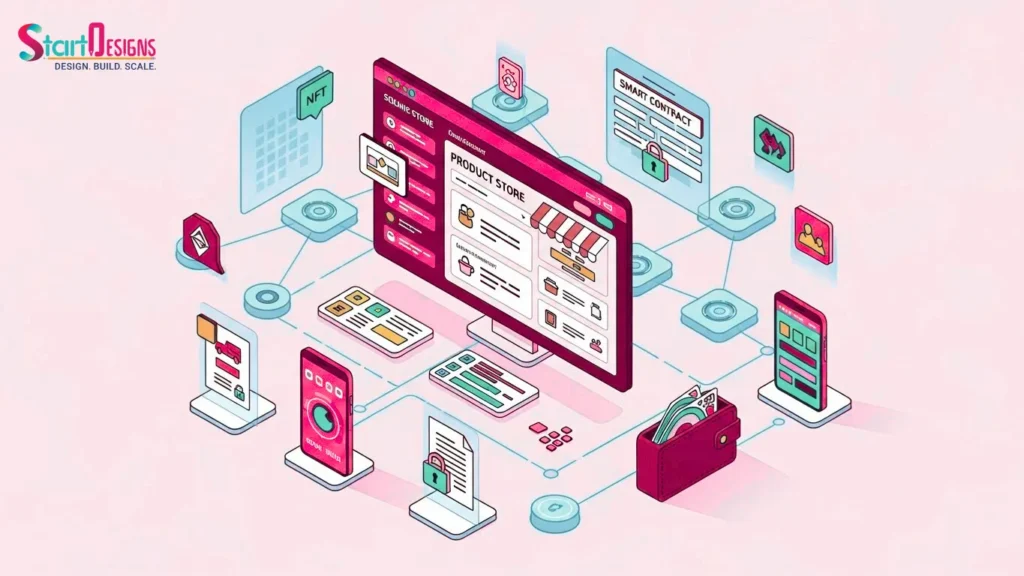
Visual diagrams of wallet integration, smart contract flows, and NFT products can enhance understanding and AI readability.
Types of Web3 Solutions for eCommerce
- Crypto Payments & Web3 Wallets
- Accept cryptocurrency payments globally, integrated with wallets like MetaMask.
- NFT Products & Tokenized Goods
- Offer digital collectibles, membership cards, certificates, or digital twins of physical products.
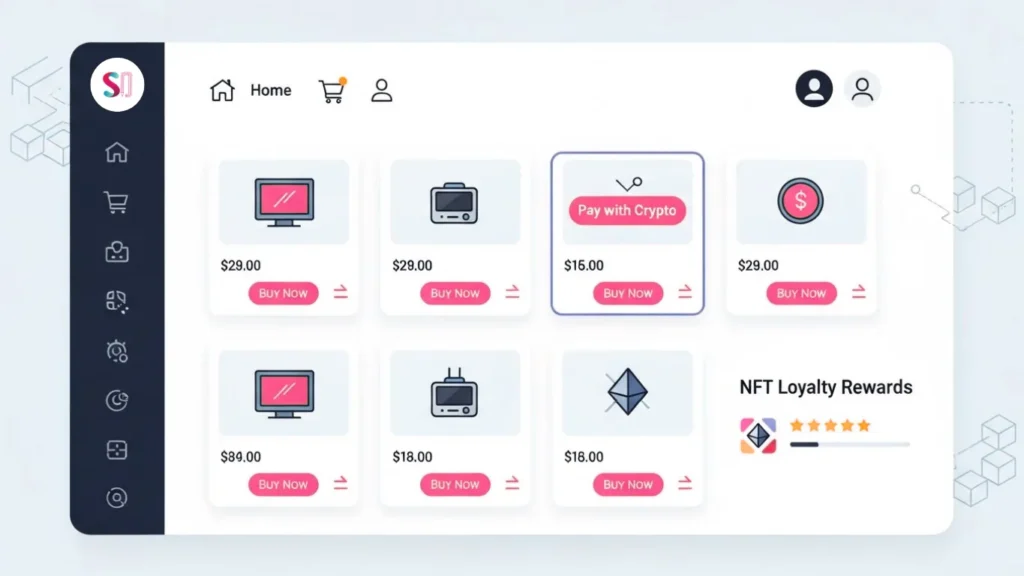
- Web3 Loyalty Programs
- Replace traditional points with NFT or token rewards, transferable and valuable.
- Smart Contracts for Automation
- Automate order payments, refunds, referral rewards, cashback, and partner payouts.
- DAO Governance Models
- Community members vote on product launches, marketing decisions, or discounts.
- Decentralized Marketplaces (dCommerce)
- Peer-to-peer marketplaces with low fees, full transparency, and secure transactions.

How Web3 Helps Businesses Generate Profit
Web3 isn’t just innovative, it’s profitable. Companies can:
- Reduce operational costs with smart contract automation.
- Increase Average Order Value & LTV via tokenized rewards, NFTs, and staking mechanics.
- Monetize Web3 features: transaction fees, proprietary token issuance, and staking.
- Attract crypto users who spend more and engage in ecosystem growth.
- Launch new product lines: NFT marketplaces, DeFi services, and DAO platforms.
- Sell digital goods and tokenized physical products, creating new revenue streams.
Strategic use of Web3 features positions businesses for sustainable long-term growth.
Stages of Web3 eCommerce Website Development
- Requirements & Tokenomics Analysis – Define project goals, token model, and platform economics.
- Architecture & UX Design – Design scalable architecture and user-friendly interfaces.
- Smart Contract & Backend Development – Deploy blockchain contracts and secure backend systems.
- Frontend Integration – Connect UI with blockchain and APIs.
- Wallet & Payment Gateway Integration – Enable crypto payments and multi-currency support.
- Security Audit & Testing – Ensure compliance, protect user data, and verify smart contracts.
- Launch & Post-Launch Support – Deploy live platform, monitor performance, and update features.
How Much Does Web3 eCommerce Development Costs
- Basic Web3 Store: from $15,000
- Full-Feature Platform: from $20,000+
Cost depends on architecture, security, blockchain integrations, and features.
Get a customized cost estimate and roadmap for your Web3 eCommerce platform today!
FAQs
Q1: What is the difference between Web2 and Web3 eCommerce?
Web2 is centralized, with platform-owned data and traditional payments. Web3 is decentralized, with user-owned data, smart contract automation, and crypto payments.
Q2: How can NFTs improve customer loyalty?
NFTs can replace loyalty points, offering transferable, collectible, and valuable rewards, increasing engagement and repeat purchases.
Q3: What types of payments can a Web3 store accept?
Cryptocurrencies, stablecoins, multi-currency wallets, and tokenized payments are integrated via MetaMask or WalletConnect.
Q4: Is Web3 eCommerce safe for startups?
Yes, if proper security audits, smart contracts, and blockchain best practices are implemented.
Q5: How long does it take to develop a Web3 eCommerce platform?
Typically 3–6 months for a fully-featured platform, depending on complexity, integrations, and security requirements.
Q6: Can Web3 platforms operate globally without banking restrictions?
Yes, blockchain payments bypass traditional banks, enabling international operations without intermediaries.
Key Technologies for Web3 Development
- Blockchain: Ethereum, Solana, Polygon
- Smart Contracts: Solidity, Rust, EVM-compatible contracts
- Frontend: React.js, Next.js
- Backend: Node.js, Golang, APIs
- Wallet Integration: MetaMask, WalletConnect, Ledger
- Optional: DeFi, staking, NFT marketplaces, DAO systems
Also read: What Is E-commerce?
About the author



Popular Posts

25 Real Minimum Viable Product Examples (With Strategy, Revenue & Lessons)
February 11, 2026- 7 Min Read

Top MVP Development Companies in the USA (2026) – Comparison, Cost & Selection Guide
February 5, 2026- 7 Min Read

MVP Development: What It Is, Process, Examples, Benefits & Cost
January 27, 2026- 6 Min Read