


- About us
-
Services
- Back
- Development Services
-

-
-
-
- Designing Services
-
-
-
-
- Marketing Services
-
-
-
-
- Cloud Engineering Services
-
-
-
- ERP
-
-
-
- CRM
-
-
-
- Artificial Intelligence
-

-
-
-
- MVP
-
- Open Source Business
-
- Industry
- Portfolio
- Career
- Contact us
-
 info[at]startdesigns.com















If you're planning to build or redesign your real estate website in 2026, the best-performing sites share 5 key traits:
- Clean, mobile-first design
- Powerful property search with IDX integration
- Strong personal branding
- Clear lead capture strategy
- Local SEO optimization
Below, we break down 40 of the best real estate agent websites not just showing them, but analyzing why they work and what you can learn from them.
Why Most Real Estate Websites Fail
Most real estate websites look decent but fail to convert.
Here’s why:
1. They Focus on Listings, Not People
Buyers connect with agents, not just properties. When branding is weak, trust is weak.
2. No Clear Call-To-Action
“Contact Us” hidden in the footer isn’t a strategy. High-performing sites guide visitors.
3. Poor Mobile Experience
Over 70% of real estate traffic comes from mobile devices. Slow image-heavy websites kill conversions.
4. Weak SEO Structure
No neighborhood landing pages.
No schema markup.
No optimized images.
Result? No organic traffic.
5. No Lead Capture Funnel
No home valuation tool.
No email capture.
No CRM integration.
A beautiful website without strategy is just a brochure.
What Makes a High-Converting Real Estate Website in 2026
The best real estate agent websites combine design, psychology, and technology.
Here’s what separates top performers:
1. IDX / MLS Integration
Visitors expect advanced property search filters:
- Price range
- Bedrooms
- Map search
- Neighborhood filters
Without IDX integration, you lose serious buyers.
2. Strong Personal Branding
Professional photography.
Story-driven About page.
Clear positioning (luxury, investment, family homes, etc.)
Trust drives transactions.
3. Lead Capture Mechanisms
High-converting sites include:
- Free home valuation tool
- Property alerts signup
- Mortgage calculator
- Contact forms with low friction
4. Neighborhood-Focused SEO Pages
Top agents dominate specific city searches with:
- “Homes for sale in [City]”
- Neighborhood guides
- School district content
Local SEO wins listings.
5. Fast, Mobile-First Design
Optimized images.
Clean layout.
Minimal popups.
Calm design converts better than aggressive tactics.
40 Best Real Estate Agent Website Examples
Now let’s break down real examples and what you can learn from each.
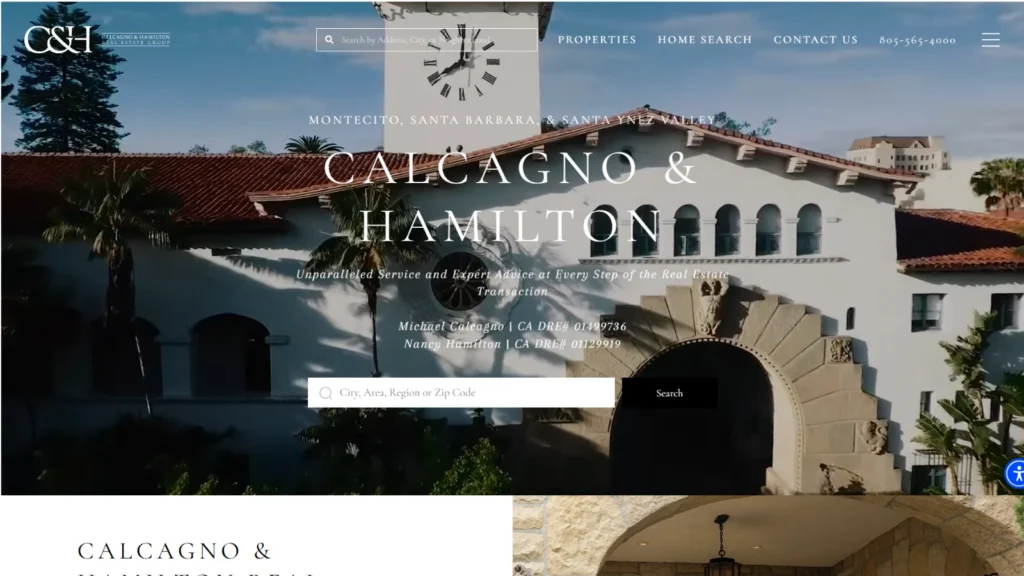
1. Michael Calcagno & Nancy Hamilton
Overview:
A clean, modern real estate website serving Santa Barbara and Montecito. The design is minimal yet premium, reflecting the luxury market they operate in.
Why This Design Works:
- Hero section focuses on lifestyle imagery
- Clear agent branding front and center
- Balanced whitespace creates elegance
- Subtle call-to-action buttons
What You Can Learn:
- Luxury markets need visual storytelling
- Personal branding builds trust
- Clean design increases perceived value
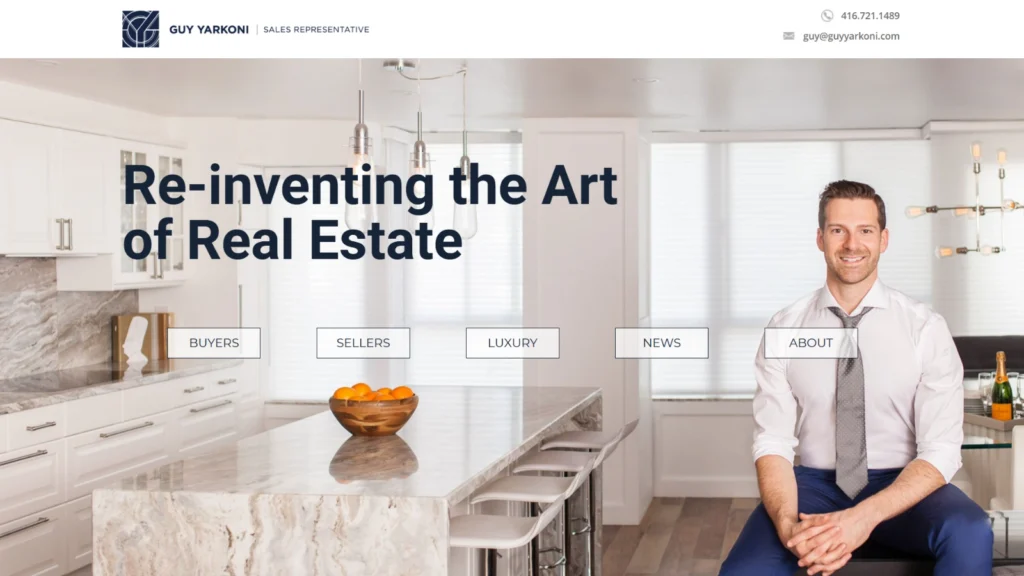
2. Guy Yarkoni
Overview:
Toronto-based real estate agent website with strong personal positioning and experience-focused messaging.
Why This Design Works:
- Personal story-driven copy
- Emphasis on long-term client relationships
- Clear service breakdown
- Professional headshots build authority
What You Can Learn:
- Storytelling differentiates agents
- Trust > flashy design
- Consistency in tone builds brand recognition
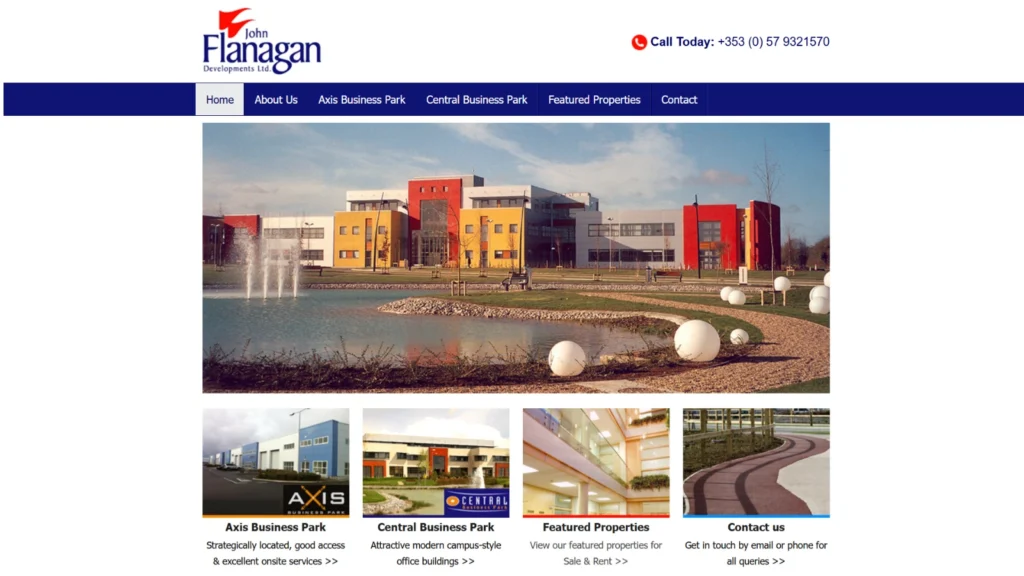
3. John Flanagan Team
Overview:
Philadelphia-focused team website combining professionalism with community familiarity.
Why This Design Works:
- Clear geographic positioning
- Relationship-driven messaging
- Balanced listing presentation
- Team credibility highlighted
What You Can Learn:
- Local authority wins listings
- Team pages improve credibility
- Highlight years of experience prominently
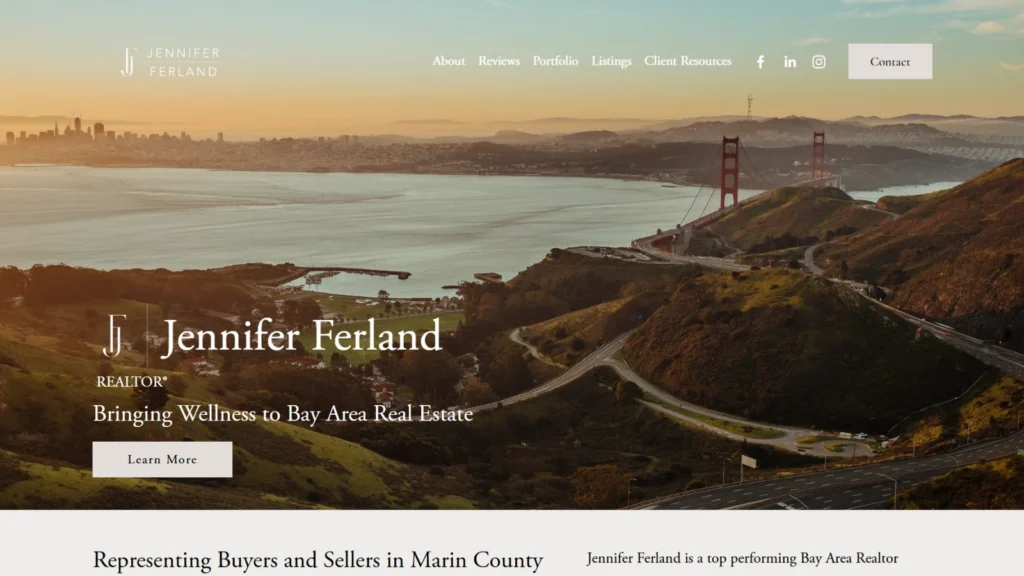
4. Jennifer Ferland
Overview:
San Francisco & Marin-based agent with a polished, high-end aesthetic.
Why This Design Works:
- Modern typography
- Clean navigation
- Elegant property imagery
- Calm, reassuring tone
What You Can Learn:
- Simplicity feels premium
- High-quality photography is non-negotiable
- Luxury design ≠ clutter
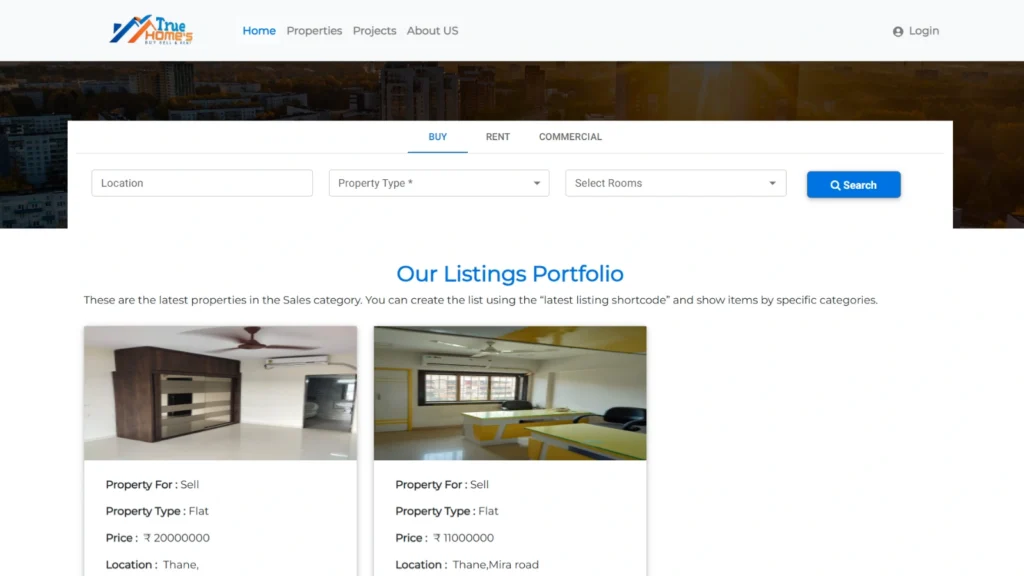
5. True Homes
Overview:
Florida property group specializing in renovations and resale.
Why This Design Works:
- Before-and-after storytelling
- Clear service differentiation
- Visual proof of value
- Strong portfolio presentation
What You Can Learn:
- Show transformation stories
- Visual case studies increase trust
- Highlight specialization clearly
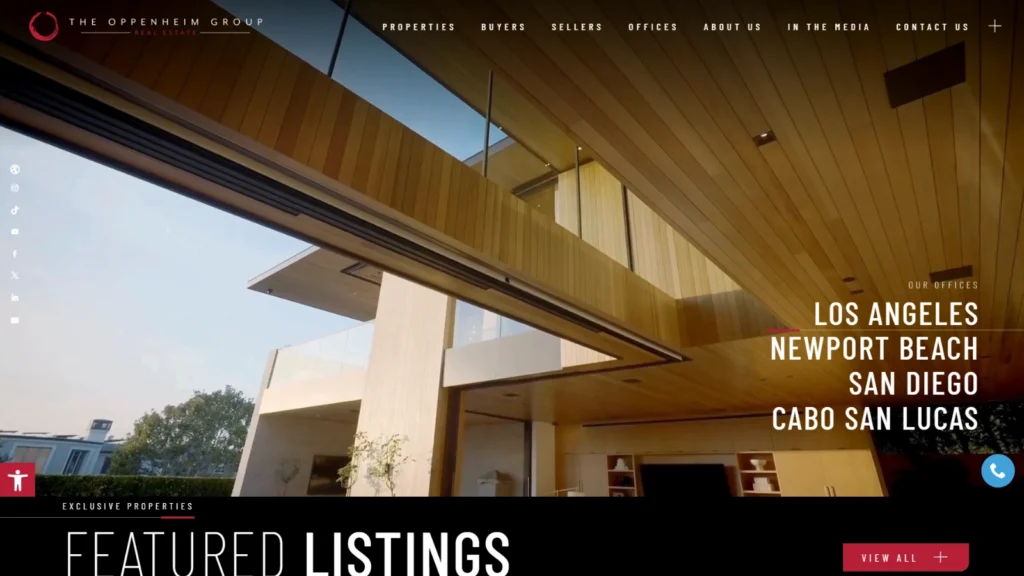
6. The Oppenheim Group
Overview:
Based in Los Angeles, The Oppenheim Group focuses on luxury real estate with a cinematic-style website. Their design mirrors their TV presence, combining high-end visuals with easy navigation.
Why This Design Works:
- Hero video immediately communicates lifestyle and market positioning
- Bold agent branding reinforces authority
- Property listings are filtered by luxury tiers and neighborhoods
Key Takeaways:
- Use video to immerse visitors in the market vibe
- Luxury clients expect curated imagery
- Strong branding differentiates in a crowded market
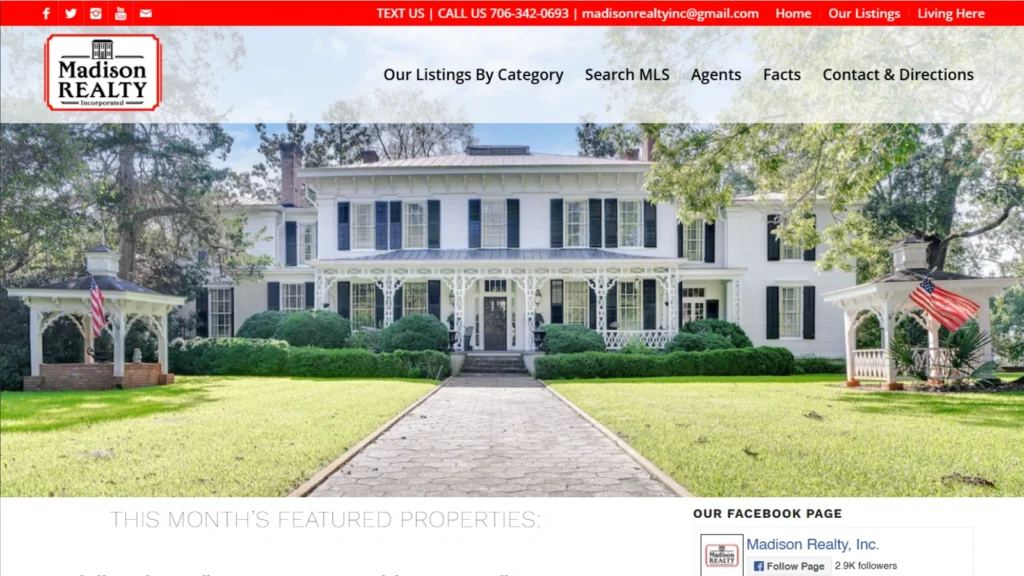
7. Madison & Mulder Realty
Overview:
A New York-based boutique agency, their website emphasizes storytelling with client success stories and neighborhood guides.
Why This Design Works:
- Interactive map search allows users to explore listings by district
- Case studies and testimonials build trust
- Mobile-first design ensures seamless browsing
Key Takeaways:
- Neighborhood-focused content improves SEO
- Storytelling increases perceived credibility
- Optimized mobile UX is non-negotiable for city clients
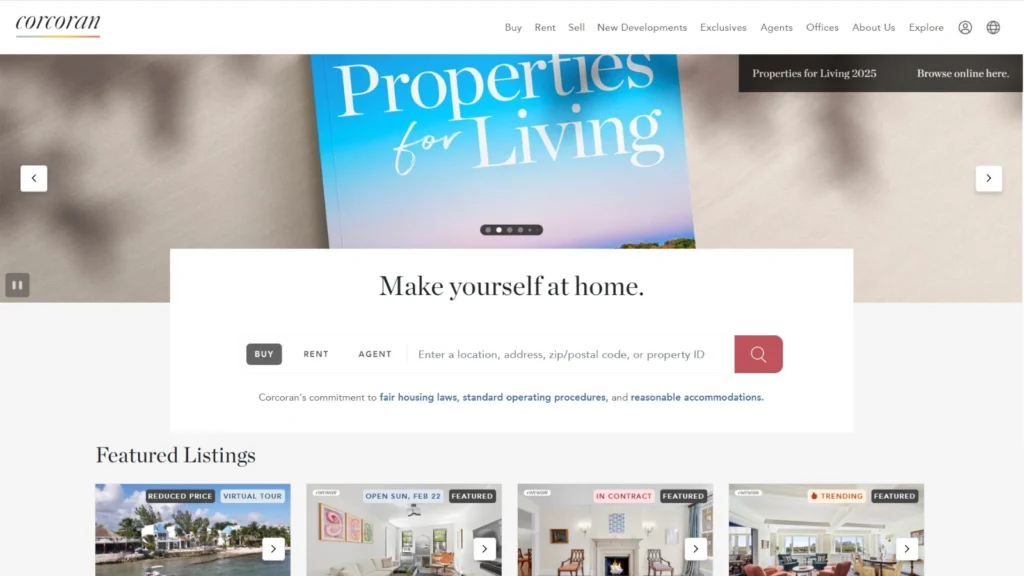
8. The Corcoran Group
Overview:
Nationally recognized, Corcoran’s website blends scale with personalization. Users can search thousands of listings with sophisticated filters.
Why This Design Works:
- Advanced IDX integration provides dynamic property search
- Personal agent pages humanize the experience
- Micro-interactions guide users subtly through listings
Key Takeaways:
- Scalability doesn’t have to reduce personalization
- Micro-animations enhance engagement without overwhelming users
- Detailed filters help serious buyers find relevant listings quickly
9. Lauren Ashley Real Estate
Overview:
Charlotte-based agent site emphasizing approachable luxury for first-time buyers and investors.
Why This Design Works:
- Clean typography and modern UI create trust
- Strong call-to-actions like “Get Home Valuation”
- Neighborhood guides educate buyers
Key Takeaways:
- Balance professionalism with approachability
- Lead capture tools increase conversion rates
- Educational content positions agents as experts

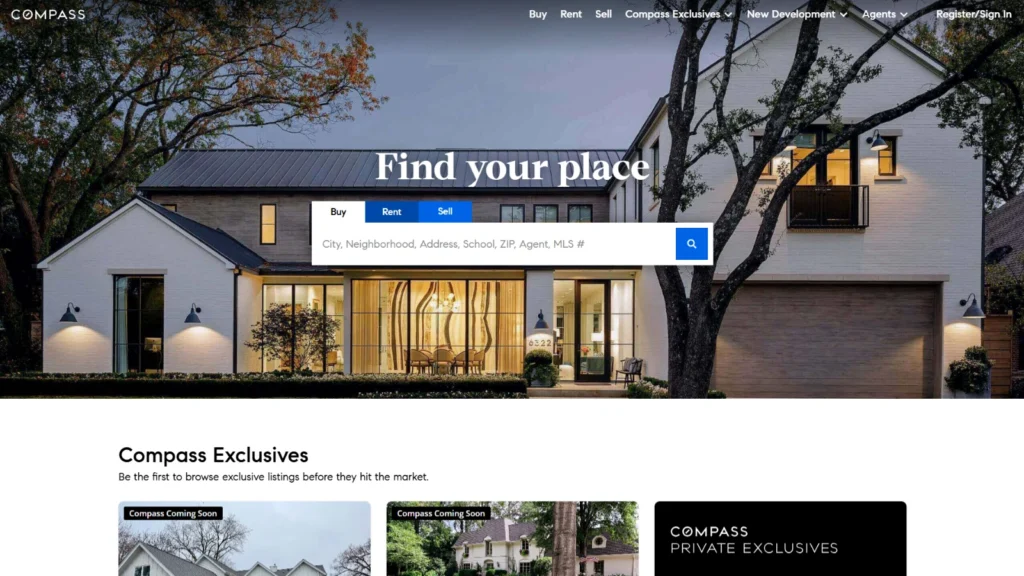
10. Compass Real Estate
Overview:
A tech-forward platform with a sleek national website, integrating AI chatbots for instant engagement.
Why This Design Works:
- AI chat assists visitors in real-time, boosting conversions
- Interactive property maps make searching intuitive
- Mobile-optimized images ensure fast load times
Key Takeaways:
- Chatbots increase lead capture efficiency
- Interactive maps enhance user experience
- Mobile-first design is critical for high-traffic websites
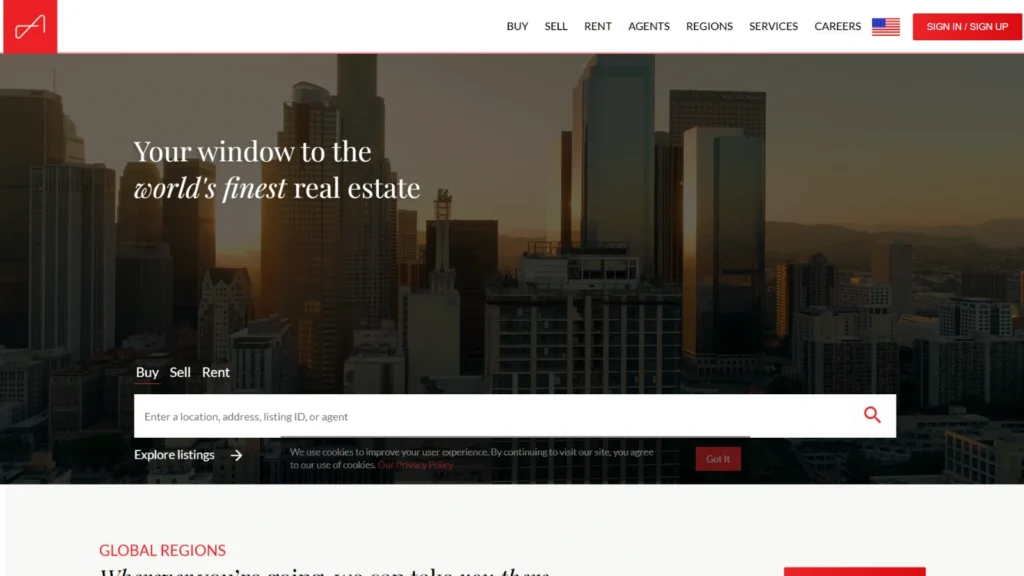
11. The Agency
Overview:
Los Angeles-based real estate team with a bold, modern website emphasizing high-end listings and personal branding.
Why This Design Works:
- Mobile responsive design ensures seamless browsing on smartphones and tablets
- IDX integration allows advanced property listing search with price, bedrooms, and neighborhood filters
- High-quality visuals and agent bios reinforce trust
Key Takeaways:
- Mobile-first design is crucial for high-traffic real estate agent websites
- Clear agent branding improves conversions
- Advanced MLS/IDX search tools help serious buyers find relevant properties
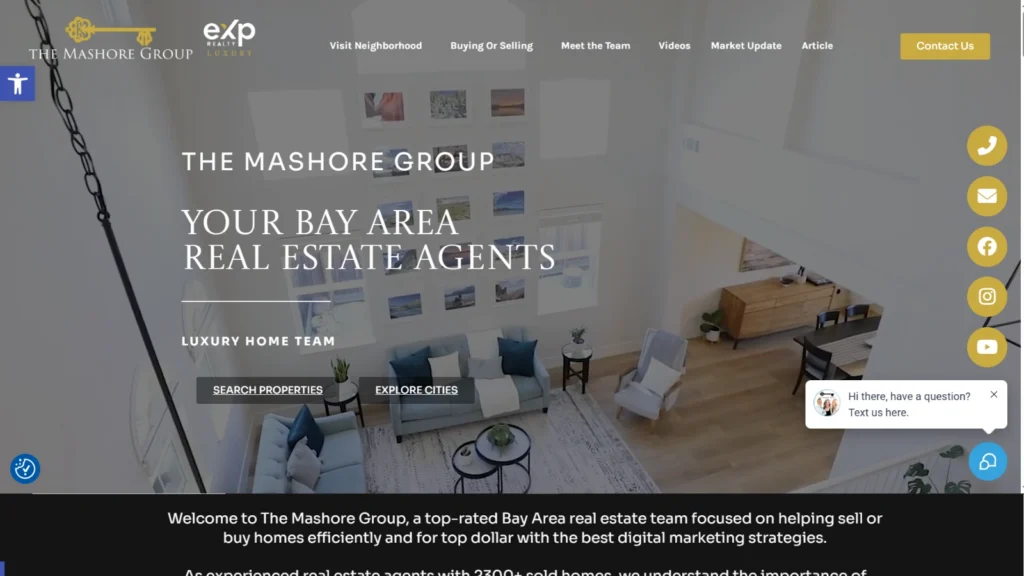
12. Krista Mashore Team
Overview:
A California realtor website combining local SEO strategy with strong lead capture features.
Why This Design Works:
- Home valuation tool encourages sellers to submit contact info
- Neighborhood-focused pages boost local search rankings
- CRM integration ensures smooth follow-up on captured leads
Key Takeaways:
- Lead capture mechanisms drive conversions
- Local SEO and neighborhood guides increase organic traffic
- Integrating CRM allows agents to manage leads efficiently
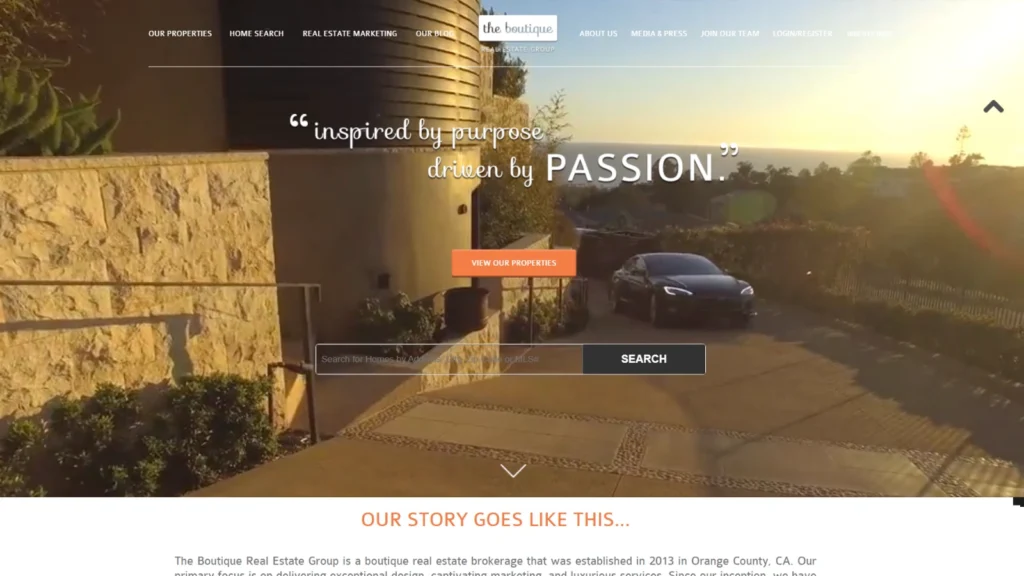
13. The Boutique Real Estate Group
Overview:
New York boutique firm with a clean, minimalist UI, focusing on both luxury and first-time buyers.
Why This Design Works:
- Schema markup improves search engine visibility
- Interactive property map lets users filter listings dynamically
- Testimonials and client stories enhance trust
Key Takeaways:
- Clean, calm designs feel premium and approachable
- Property website inspiration: include maps and filters for UX
- Structured data (schema) helps search engines understand listings
14. Christine Coney Real Estate
Overview:
Chicago-based agent emphasizing personal branding and local expertise.
Why This Design Works:
- Mobile responsive layout ensures fast load times
- IDX/MLS integration allows detailed property listing searches
- Blog and neighborhood guides support local SEO
Key Takeaways:
- Combining personal branding with real estate web design builds trust
- Lead capture via forms or valuation tools enhances conversions
- Focused neighborhood content strengthens search rankings
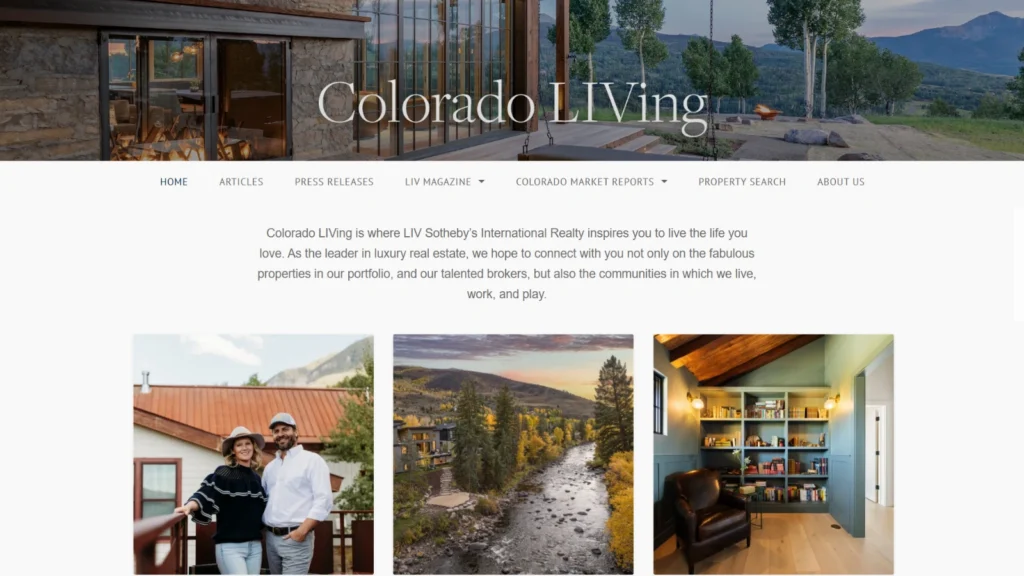
15. LIV Sotheby’s International Realty
Overview:
A luxury property website that combines cinematic visuals with intuitive navigation.
Why This Design Works:
- High-quality photography reflects premium positioning
- Mobile responsive and fast-loading for both local and international clients
- Lead capture forms and property alerts encourage engagement
Key Takeaways:
- Best real estate websites 2026 feature visual storytelling
- Combining luxury design with IDX search functionality balances style and usability
- Strong calls-to-action increase inquiries
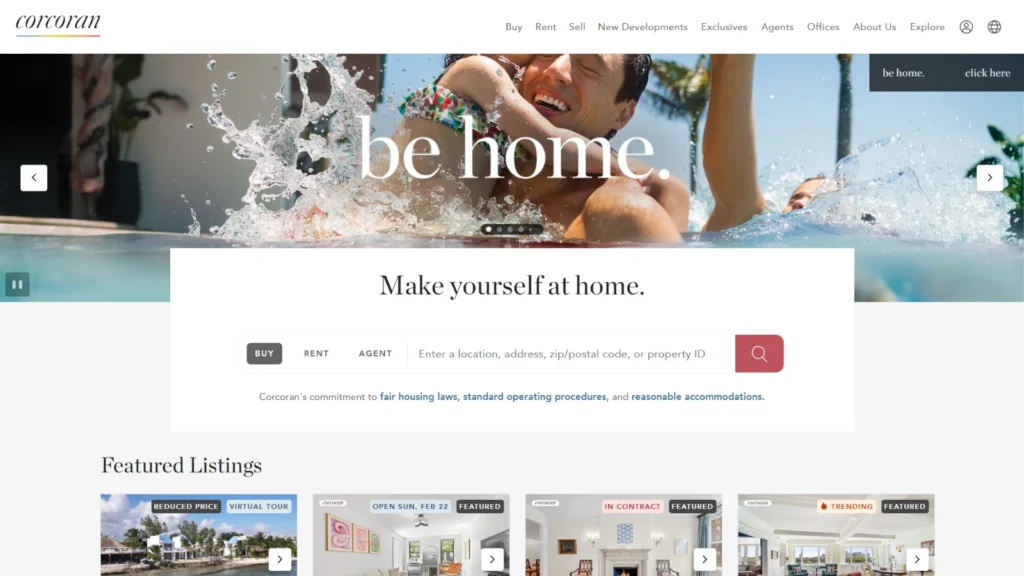
16. The Corcoran Group – Manhattan Division
Overview:
Focused on NYC luxury properties, this realtor website combines scalability with local authority.
Why This Design Works:
- IDX/MLS integration allows property listing search by borough, price, and bedrooms
- Mobile responsive design accommodates high mobile traffic
- Neighborhood guides and blog content strengthen local SEO
Key Takeaways:
- High-volume listings need organized filtering
- Local SEO pages drive organic leads
- Mobile-first approach improves engagement
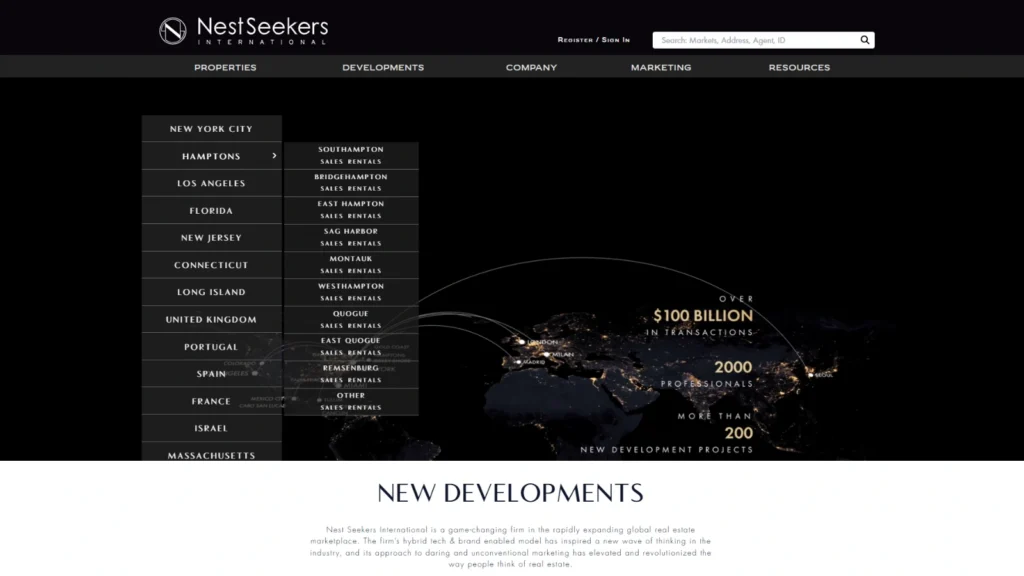
17. Nest Seekers International
Overview:
Luxury real estate website with interactive property galleries and lifestyle branding.
Why This Design Works:
- Home valuation tool captures seller leads effectively
- Schema markup improves visibility in rich search results
- Clean, modern design reflects high-end branding
Key Takeaways:
- Luxury web design + functional IDX integration maximizes conversions
- Lead capture tools are essential for serious agents
- Structured data enhances search engine performance
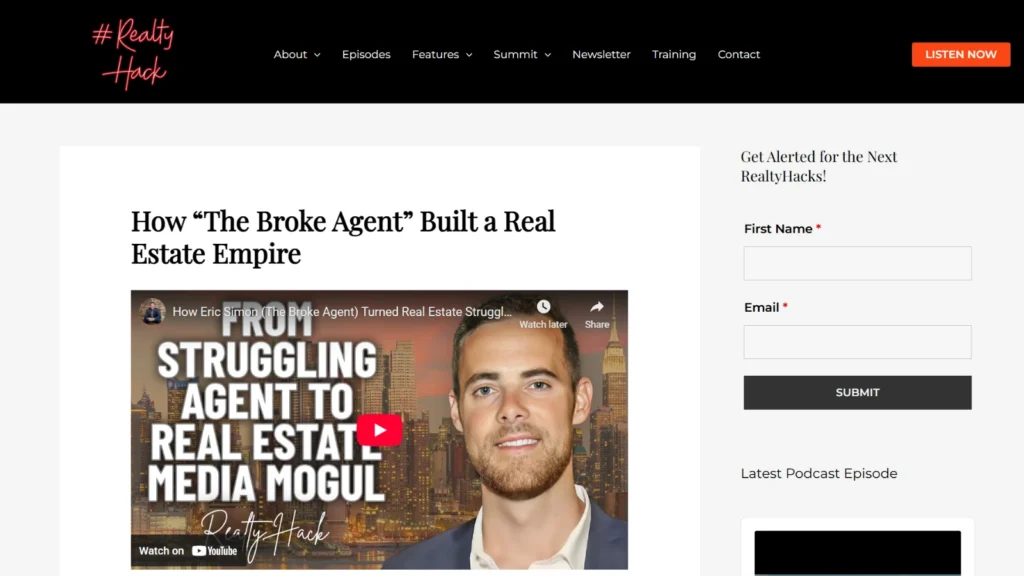
18. The Broke Agent Realty (Humorous Branding)
Overview:
A realtor website with playful branding, appealing to first-time buyers in urban markets.
Why This Design Works:
- Strong personal branding differentiates them from traditional competitors
- Mobile responsive layout ensures smooth browsing
- CRM integration supports follow-up on captured leads
Key Takeaways:
- Unique branding attracts niche audiences
- User experience and lead capture matter more than flashy visuals
- Integration with CRM ensures every lead is tracked
19. @Properties
Overview:
Chicago-based team with data-driven design, focusing on local expertise and lifestyle content.
Why This Design Works:
- IDX property listing search provides granular filters
- Neighborhood pages improve local SEO for city and district searches
- Home valuation tool encourages seller engagement
Key Takeaways:
- Combining data and design builds trust
- Local SEO and educational content drive organic traffic
- Lead capture tools convert casual visitors into prospects
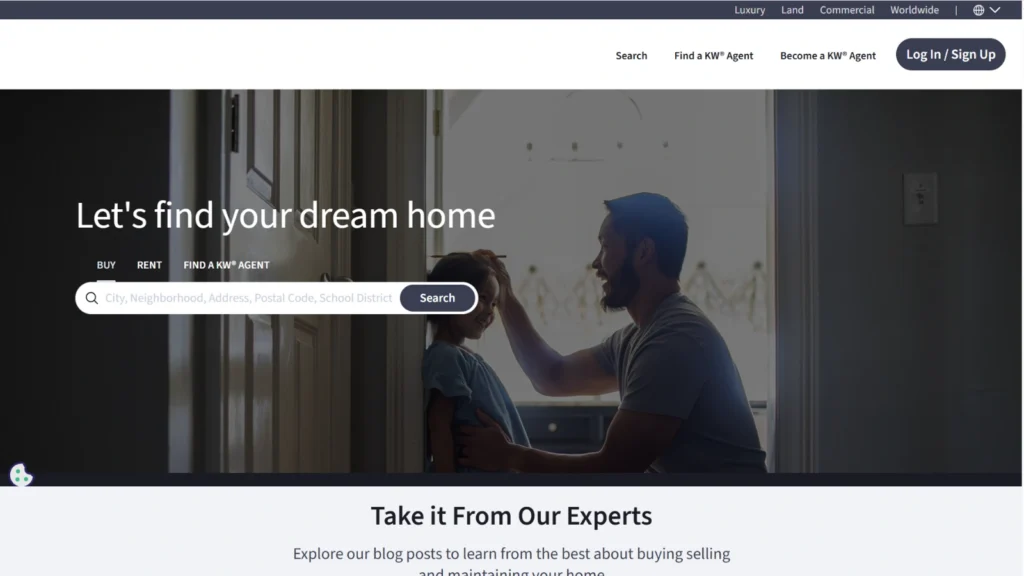
20. Compass – Miami Division
Overview:
Tech-forward real estate agent website using AI chatbots and interactive maps.
Why This Design Works:
- AI chat enhances real-time lead capture
- Interactive property map simplifies property search
- Mobile responsive and optimized for fast load speed
Key Takeaways:
- AI and interactive UX improve engagement
- IDX and MLS integration are critical for serious buyers
- Mobile optimization remains non-negotiable

21. The Agency – Beverly Hills Luxury
Overview:
A high-end property website with cinematic hero video and lifestyle content.
Why This Design Works:
- IDX search filters allow targeted property listing search
- Home valuation tool and lead capture forms drive inquiries
- Clean design with premium typography appeals to luxury clients
Key Takeaways:
- Luxury web design emphasizes lifestyle over clutter
- Lead capture tools are vital for conversion
- Interactive MLS/IDX search enhances usability
22. Keller Williams Realty – Local Branch
Overview:
National brand localized for neighborhood authority with clear agent profiles.
Why This Design Works:
- Neighborhood pages support local SEO strategy
- CRM integration ensures effective follow-up on leads
- Mobile responsive design improves accessibility for all devices
Key Takeaways:
- Local SEO builds trust and authority
- Lead capture + CRM integration increases conversions
- Responsive design ensures user satisfaction
23. Compass – San Francisco Division
Overview:
A tech-savvy site combining IDX/MLS property search with blog-driven SEO.
Why This Design Works:
- Schema markup improves Google visibility
- Advanced filters for property listings increase user engagement
- Mobile-first design ensures smooth browsing on all devices
Key Takeaways:
- Data-driven design + IDX integration improves conversion
- Local SEO pages and blogs enhance organic reach
- Mobile optimization is essential for engagement
24. The Corcoran Group – Brooklyn Focus
Overview:
Neighborhood-focused site with strong storytelling for local buyers.
Why This Design Works:
- Home valuation tool captures seller leads
- Neighborhood guides optimize local SEO
- Interactive property search using IDX/MLS integration
Key Takeaways:
- Localized content attracts serious buyers
- Lead capture tools convert casual visitors
- Clean web design ensures trust and usability
25. Douglas Elliman – Luxury Homes
Overview:
A national real estate website highlighting luxury properties with high-quality visuals.
Why This Design Works:
- Interactive IDX property listing search
- Schema markup enhances search results
- Mobile responsive for both local and international clients
Key Takeaways:
- Luxury agents need a balance of visuals and functionality
- IDX/MLS integration ensures serious buyer engagement
- Mobile-first design remains essential
26. Halstead Real Estate
Overview:
New York-based website emphasizing neighborhood expertise and modern web design for residential buyers.
Why This Design Works:
- IDX/MLS integration allows precise property listing search by price, bedrooms, and location
- Mobile responsive layout improves user experience on all devices
- Local SEO pages highlight neighborhoods and school districts
Key Takeaways:
- Strong local SEO drives organic traffic
- Interactive property searches keep visitors engaged
- Mobile-first design ensures high usability
27. Engel & Völkers
Overview:
Global luxury real estate agent website featuring sleek, minimalist design.
Why This Design Works:
- Lead capture forms and home valuation tool encourage seller inquiries
- Schema markup improves visibility in search results
- High-quality photography reinforces premium branding
Key Takeaways:
- Luxury web design should be minimalist and elegant
- Structured data and SEO optimization boost organic reach
- Lead capture tools are essential for converting prospects
28. Ryan Serhant
Overview:
Celebrity agent website combining personal branding with property search features.
Why This Design Works:
- IDX/MLS integration allows filtered property listing search
- Strong storytelling and agent credibility drive trust
- Mobile responsive and fast-loading for high engagement
Key Takeaways:
- Personal branding differentiates high-profile agents
- Interactive property search improves UX
- Mobile-first design is critical for conversions
29. Nest Seekers International – Hamptons Division
Overview:
Focus on luxury coastal properties with lifestyle imagery and interactive search.
Why This Design Works:
- Advanced IDX/MLS property listing search
- Home valuation tool captures seller leads
- Local SEO optimized with neighborhood guides
Key Takeaways:
- Luxury markets benefit from lifestyle-focused design
- Lead capture mechanisms increase inquiries
- Local SEO strengthens online presence
30. Compass – Los Angeles Division
Overview:
Tech-forward realtor website with AI chat and interactive property search.
Why This Design Works:
- AI chat improves instant lead capture
- IDX integration allows detailed property listing search
- Mobile responsive and fast load speeds increase engagement
Key Takeaways:
- AI-driven lead capture is effective for busy agents
- Property search filters improve conversion rates
- Mobile-first UX is non-negotiable
31. The Agency – Malibu Luxury
Overview:
Focused on high-end coastal properties with cinematic video backgrounds.
Why This Design Works:
- Hero video showcases lifestyle and premium listings
- IDX/MLS property listing search integrated seamlessly
- Home valuation tool encourages seller leads
Key Takeaways:
- Luxury web design combines visuals and functionality
- Interactive search enhances UX
- Lead capture tools convert visitors into clients
32. Keller Williams Realty – San Diego
Overview:
Local branch website with neighborhood-focused content and lead capture tools.
Why This Design Works:
- Neighborhood guides improve local SEO
- CRM integration helps manage leads efficiently
- Mobile responsive design ensures smooth browsing
Key Takeaways:
- Local SEO builds authority
- CRM + lead capture improves conversion
- Mobile-first web design is essential
33. The Corcoran Group – Long Island
Overview:
Focused on suburban buyers with clear IDX property listing search and agent branding.
Why This Design Works:
- Advanced filters for price, bedrooms, and neighborhood
- Mobile responsive and optimized for speed
- Blog and guides support local SEO
Key Takeaways:
- Localized content drives organic leads
- Clear agent branding builds trust
- IDX search functionality improves user engagement
34. Douglas Elliman – Manhattan
Overview:
Luxury-focused real estate agent website with sleek visuals and interactive maps.
Why This Design Works:
- IDX/MLS integration supports property listing search
- Home valuation tool captures seller leads
- Schema markup improves search engine visibility
Key Takeaways:
- Luxury websites must combine design and functionality
- Lead capture forms and tools drive conversions
- Structured data enhances SEO
35. Halstead – Brooklyn & Queens
Overview:
Neighborhood-driven website with clean design and local guides.
Why This Design Works:
- Mobile responsive design ensures smooth browsing
- IDX property search filters by price and neighborhood
- Local SEO pages target specific boroughs
Key Takeaways:
- Neighborhood content strengthens local SEO
- Mobile-first UX improves engagement
- IDX/MLS integration increases lead quality
36. Engel & Völkers – Miami
Overview:
Luxury coastal properties with minimalistic UI and strong agent branding.
Why This Design Works:
- Lead capture via forms and home valuation tool
- Schema markup helps search visibility
- Mobile responsive and fast load speed
Key Takeaways:
- Minimalist luxury web design builds premium perception
- Lead capture tools are conversion drivers
- Structured data improves search performance
37. Ryan Serhant – NYC Division
Overview:
High-profile agent website combining storytelling with IDX property search.
Why This Design Works:
- Interactive property listing search with advanced filters
- Mobile responsive ensures seamless browsing
- CRM integration supports efficient lead management
Key Takeaways:
- Personal branding + property search enhances trust
- Mobile-first design critical for user experience
- CRM and lead capture tools improve conversions
38. Compass – Boston Division
Overview:
Local real estate website with interactive maps and neighborhood guides.
Why This Design Works:
- IDX/MLS integration allows detailed property searches
- Neighborhood guides support local SEO
- Mobile responsive design enhances user experience
Key Takeaways:
- Local SEO drives organic traffic
- Interactive property search increases engagement
- Mobile optimization is non-negotiable
39. The Agency – Aspen Luxury
Overview:
Focused on high-end mountain properties with cinematic visuals.
Why This Design Works:
- Hero videos showcase lifestyle and premium listings
- IDX property listing search integrated seamlessly
- Lead capture forms convert visitors into clients
Key Takeaways:
- Luxury sites benefit from storytelling visuals
- Lead capture mechanisms increase conversions
- IDX search functionality improves UX
40. Nest Seekers International – NYC
Overview:
National real estate brand focusing on luxury Manhattan apartments.
Why This Design Works:
- IDX/MLS integration allows advanced property listing search
- Home valuation tool and lead capture forms drive engagement
- Mobile responsive design ensures accessibility on all devices
Key Takeaways:
- Best real estate websites 2026 combine luxury visuals with functionality
- Lead capture tools are essential for serious agents
- Mobile-first design and local SEO drive both traffic and conversions
Real Estate Website Design Trends for 2026
The industry is evolving fast. Here’s what’s dominating in 2026:
1. Video Hero Sections
Short cinematic neighborhood videos increase engagement.
2. Interactive Map Search
Dynamic property filtering on maps improves user experience.
3. AI Chat Assistants
Instant responses improve lead capture rates.
4. Minimalist Luxury UI
Less clutter. More whitespace. Premium typography.
5. Micro-Animations
Subtle motion enhances perceived sophistication.
Must-Have Features Checklist
| Feature | Why It Matters | Conversion Impact |
|---|---|---|
| IDX Integration | Real-time listings | High |
| Advanced Search Filters | Better UX | High |
| Home Valuation Tool | Seller lead capture | Very High |
| Testimonials Section | Trust building | High |
| Neighborhood Pages | Local SEO | Very High |
| Mobile Optimization | Majority traffic | Critical |
| Schema Markup | Rich search results | Medium |
| Fast Load Speed | Lower bounce rate | High |
Webflow vs WordPress vs Squarespace for Real Estate
| Platform | Best For | SEO Control | IDX Support | Customization |
|---|---|---|---|---|
| Webflow | Custom luxury sites | Excellent | Via integration | Very High |
| WordPress | Plugin-heavy flexibility | Strong | Strong | High |
| Squarespace | Simple brochure sites | Moderate | Limited | Moderate |
For custom performance-driven real estate sites, flexibility and SEO control matter most.
Real Estate Website SEO Strategy
To rank locally:
- Create city landing pages
- Add schema markup
- Optimize property images
- Build backlinks from local directories
- Publish neighborhood guides
- Integrate Google Business Profile
SEO is what turns a website into a lead engine.
How Much Does It Cost to Build a Real Estate Website?
Template-Based Site
$500 – $2,000
Semi-Custom
$2,000 – $5,000
Fully Custom With IDX + SEO
$5,000 – $15,000+
Ongoing SEO & maintenance should also be considered.
FAQs
What should a real estate website include?
IDX integration, mobile-first design, testimonials, lead capture tools, and neighborhood-focused SEO pages.
Do real estate websites need IDX?
If you want serious buyer engagement, yes.
What platform is best for real estate agents?
Depends on goals, but flexibility and SEO control are critical.
How long does it take to build?
4–8 weeks for custom development.
Need a High-Converting Real Estate Website?
If you're serious about standing out in a competitive property market, your website should be more than a listing portal and it should be a conversion machine.
We design real estate websites that combine:
- Strategy
- SEO
- Conversion psychology
- Modern UI
Let’s build something that actually generates leads.
About the author



Popular Posts
How to Write a Website Development RFP: Complete Guide & Checklist
September 19, 2026- 14 Min Read