
- About us
-
Services
- Back
- Development Services
-

-
-
-
- Designing Services
-
-
-
-
- Marketing Services
-
-
-
-
- Cloud Engineering Services
-
-
-
- ERP
-
-
-
- CRM
-
-
-
- Artificial Intelligence
-

-
-
- MVP
-
- Industry
- Portfolio
- Career
- Contact us
-
 info[at]startdesigns.com












Your hotel website is no longer just a digital brochure.
It is your most important sales channel.
In 2026, travelers:
- Compare multiple properties before booking
- Research heavily on mobile
- Expect instant pricing clarity
- Want immersive previews of their stay
If your hotel website design doesn’t create emotional impact within seconds or if the booking experience feels complicated potential guests will leave and book elsewhere.
Why Hotel Website Design Matters More Than Ever
The hospitality industry is highly competitive. OTA platforms dominate search visibility, but direct bookings are where profitability lives.
A strategic hotel web design helps you:
- Reduce dependency on third-party platforms
- Increase direct revenue
- Build brand loyalty
- Improve guest experience before arrival
Modern travelers judge credibility instantly.
Design = Trust.
What Makes a Great Hotel Website Design?
Before looking at examples, we need a framework.
A high-performing hotel website includes:
1. A Clear Value Proposition Above the Fold
Within 5 seconds, users should understand:
- Location
- Type of experience
- Unique positioning
- How to check availability
No confusion. No clutter.
2. Emotion-Driven Visual Storytelling
Hotels sell experiences, not rooms.
Large hero visuals, subtle motion, and immersive photography increase perceived value and emotional engagement.
3. Frictionless Booking Engine
The booking interface should be:
- Immediately visible
- Simple (dates + guests)
- Mobile optimized
- Fast
Every extra step reduces conversions.
4. Strong UX Hierarchy
Information must follow psychological order:
- Experience
- Rooms
- Amenities
- Social proof
- Pricing clarity
- Booking CTA
5. Technical SEO Foundation
To rank for keywords like:
- hotel website design
- hotel website examples
- hospitality website design
You need:
- Fast loading speed
- Optimized images
- Proper heading structure
- Internal linking
- Structured data
15 Best Hotel Website Design Examples
Below are 15 standout hotel website examples that combine branding, usability, and booking psychology effectively.
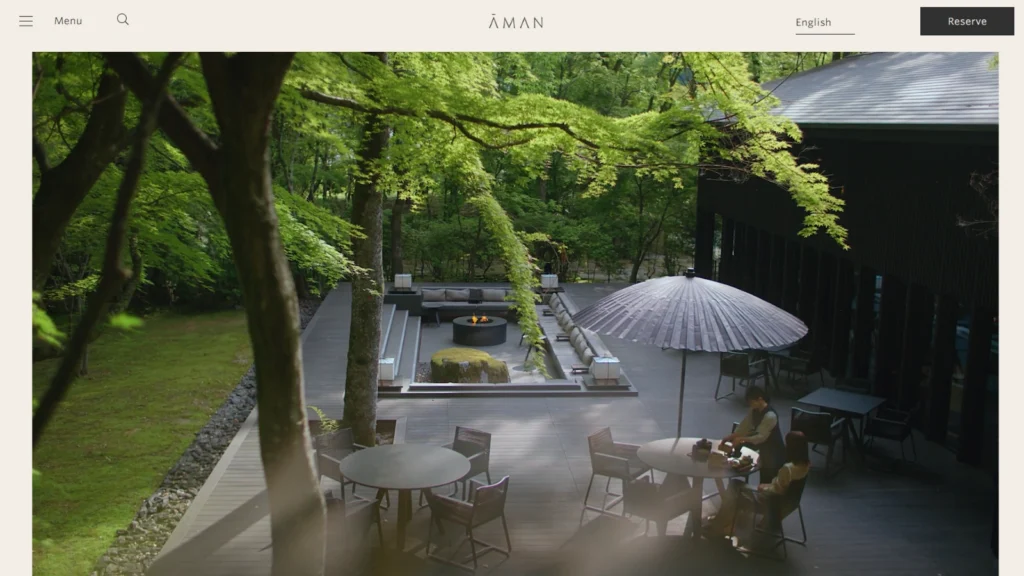
1. Aman Resorts
Aman’s website is a masterclass in restrained luxury. The homepage opens with slow, cinematic visuals that immediately create emotional stillness a reflection of the brand’s philosophy of tranquility and exclusivity.
Unlike many hotel websites that overload visitors with promotions, Aman uses negative space strategically. Text is minimal. Typography is refined. Navigation is subtle but structured.
UX Strength:
The booking bar is elegantly integrated without disrupting the immersive experience. It feels like a natural extension of the page rather than a sales push.
Conversion Psychology:
Aman sells aspiration, not rooms. The experience is positioned as rare and transformative. This elevates perceived value, justifying premium pricing.
Design Takeaway:
Luxury hotel website design should feel calm, not commercial.
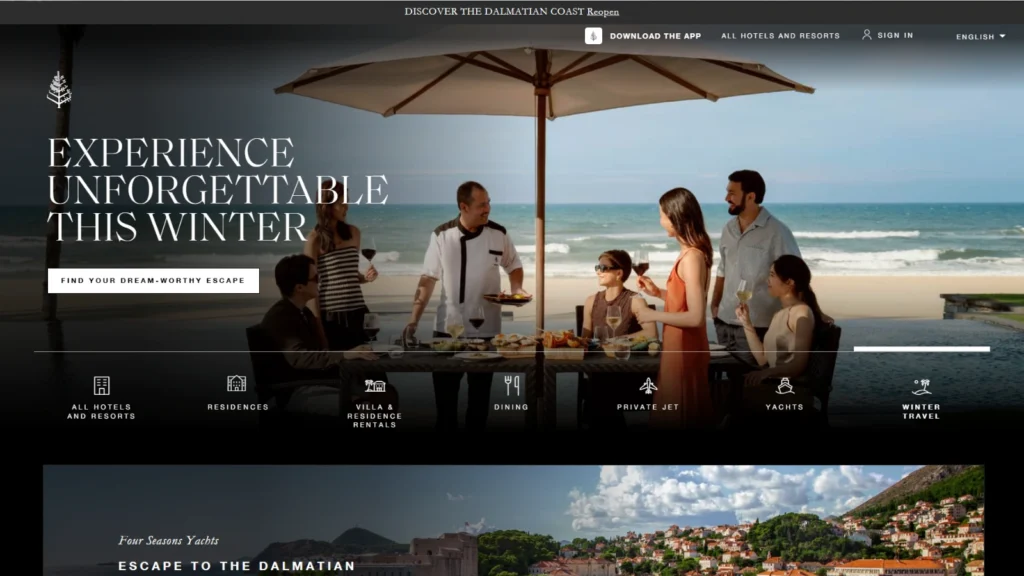
2. Four Seasons Hotels and Resorts
Four Seasons combines brand consistency with localized personalization something many hospitality websites struggle to achieve.
The homepage immediately asks users to choose a destination, making the experience location-focused. This reduces friction and guides users toward relevant properties faster.
UX Strength:
Clear mega-navigation, structured property filtering, and loyalty program integration are seamlessly implemented.
Booking Flow:
The reservation system is simple, predictable, and optimized for repeat customers.
Conversion Strategy:
Trust plays a huge role here. Awards, reviews, and brand authority are subtly reinforced throughout the journey.
Design Takeaway:
Large hotel chains must balance brand elegance with usability at scale.
3. The Hoxton
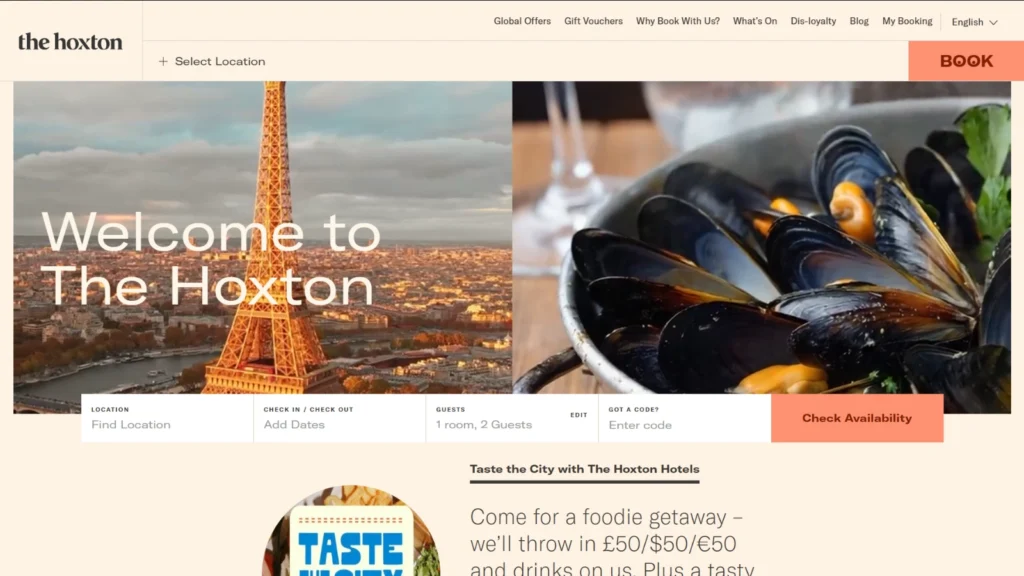
The Hoxton’s website feels more like a lifestyle magazine than a booking portal. Bold photography, editorial layouts, and playful typography give it personality.
Instead of focusing purely on rooms, the site highlights events, dining, and community engagement.
UX Strength:
Strong visual hierarchy guides users naturally toward booking without overwhelming them.
Conversion Insight:
By selling atmosphere and community first, The Hoxton increases emotional engagement before asking for commitment.
Design Takeaway:
Boutique hotel website design should reflect culture and personality.
4. 1 Hotels
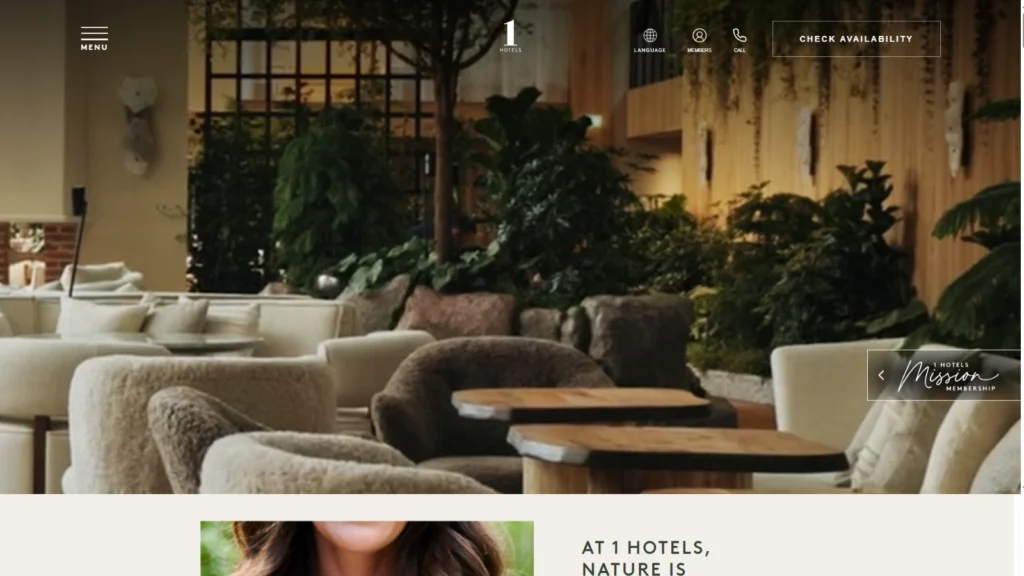
1 Hotels integrates sustainability into its design language. Earthy colors, organic textures, and nature-inspired visuals reinforce its eco-conscious positioning.
UX Strength:
Sustainability messaging is woven into the experience without interrupting booking flow.
Conversion Psychology:
Modern travelers value purpose-driven brands. This alignment increases loyalty and trust.
Design Takeaway:
Brand values should be visible in design, not just written in copy.
5. The Ritz-Carlton
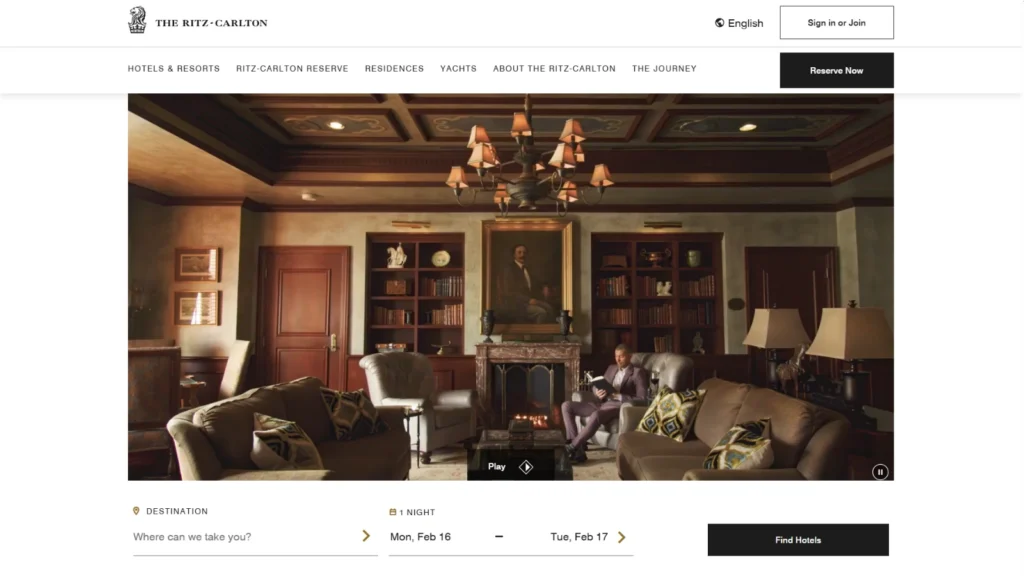
The Ritz-Carlton website balances heritage with modern usability. Elegant typography and muted tones reflect legacy luxury.
UX Strength:
Clear categorization of rooms, dining, and experiences reduces cognitive load.
Booking Optimization:
The booking CTA remains consistently visible and intuitive.
Design Takeaway:
Timeless branding must evolve with modern UX expectations.
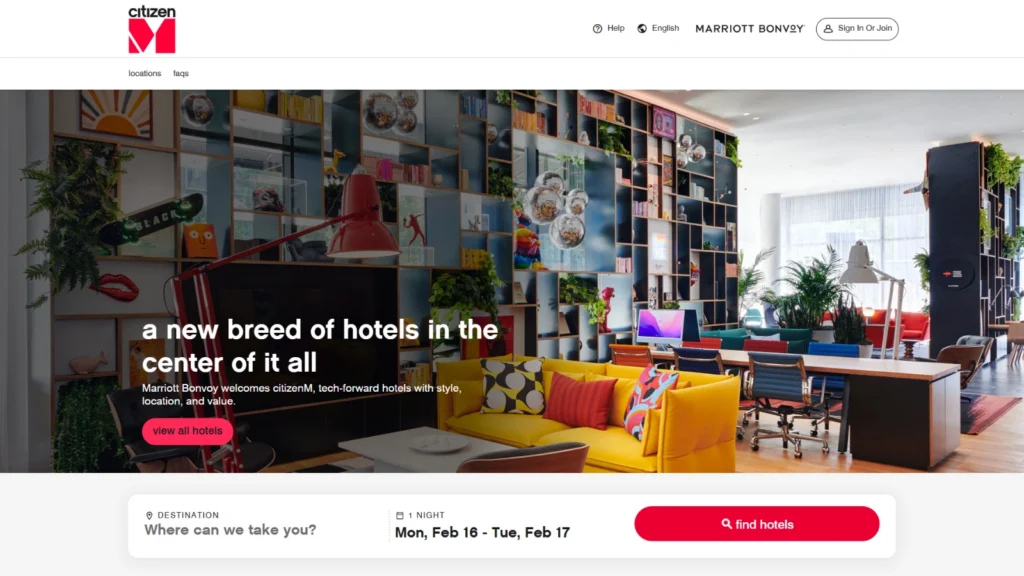
6. CitizenM
CitizenM’s website mirrors its brand personality: bold, modern, and tech-forward.
UX Strength:
Fast-loading interface and simplified navigation.
Conversion Strategy:
Clear pricing and strong CTA buttons eliminate hesitation.
Design Takeaway:
Modern hotel website examples show that clarity converts better than complexity.
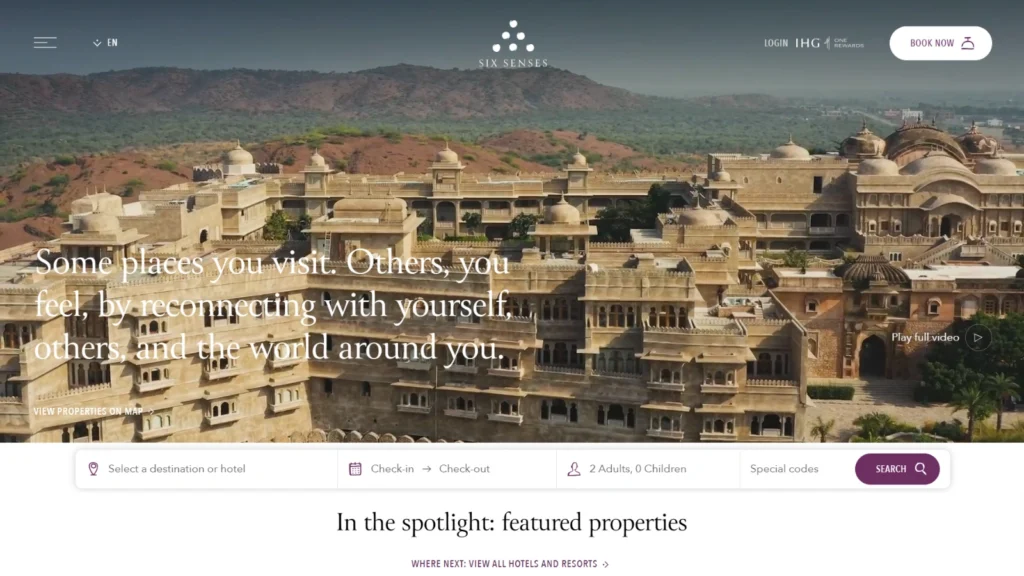
7. Six Senses
Six Senses uses immersive storytelling. Scrolling feels cinematic, almost like browsing a travel documentary.
UX Strength:
Scroll-triggered transitions enhance engagement without slowing performance.
Conversion Psychology:
By showcasing experiences before rooms, they sell transformation.
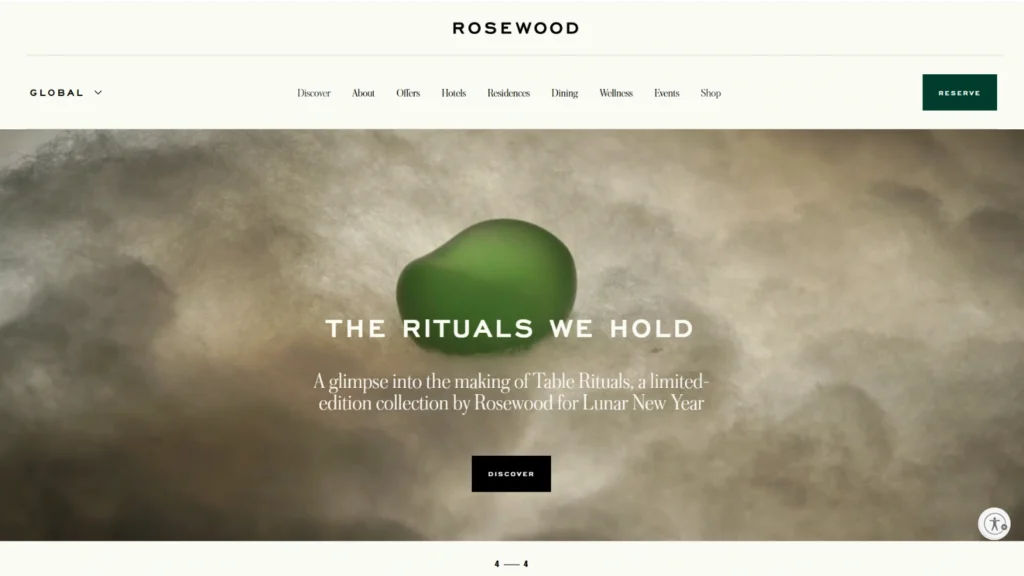
8. Rosewood Hotels & Resorts
Rosewood focuses on refinement. High-quality visuals and smooth animations create premium perception.
UX Strength:
Clear structure prevents elegance from becoming confusion.
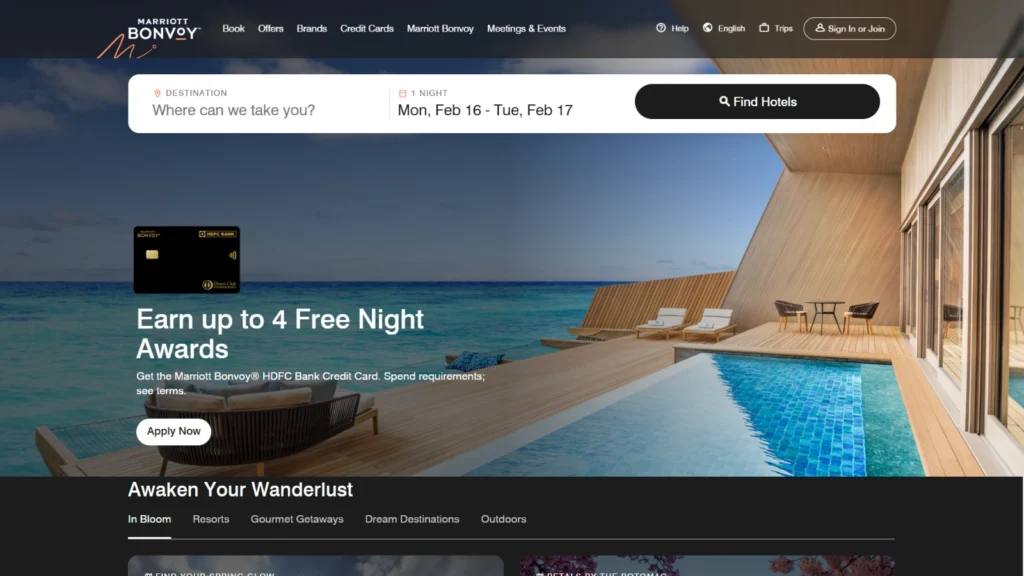
9. Marriott International
Marriott’s website is a performance-driven machine. It handles massive traffic while maintaining smooth navigation.
UX Strength:
Advanced filtering and loyalty integration.
Conversion Insight:
Frequent travelers benefit from saved preferences and streamlined checkout.
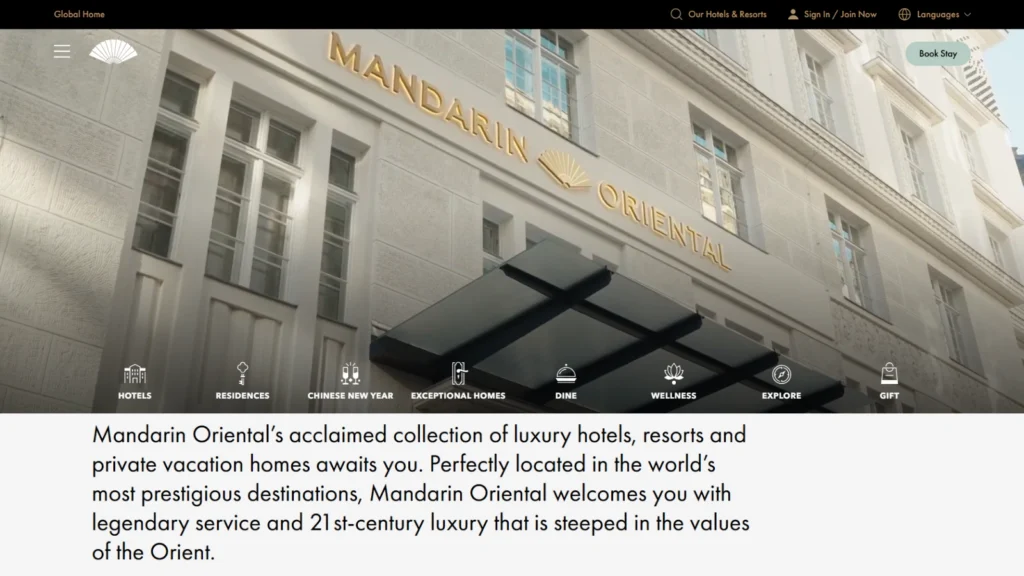
10. Mandarin Oriental Hotel Group
Mandarin Oriental emphasizes understated elegance. Clean layouts and soft animations guide users calmly toward booking.
Conversion Strategy:
Subtle trust reinforcement throughout the journey.
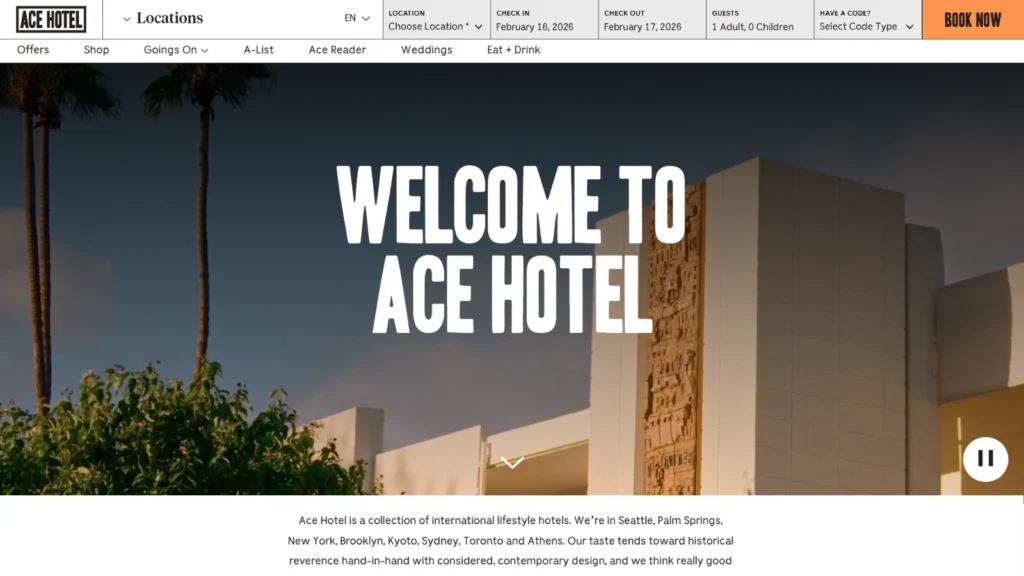
11. Ace Hotel
Ace Hotel’s industrial aesthetic reflects its urban, creative audience.
UX Strength:
Clear navigation despite unconventional visuals.
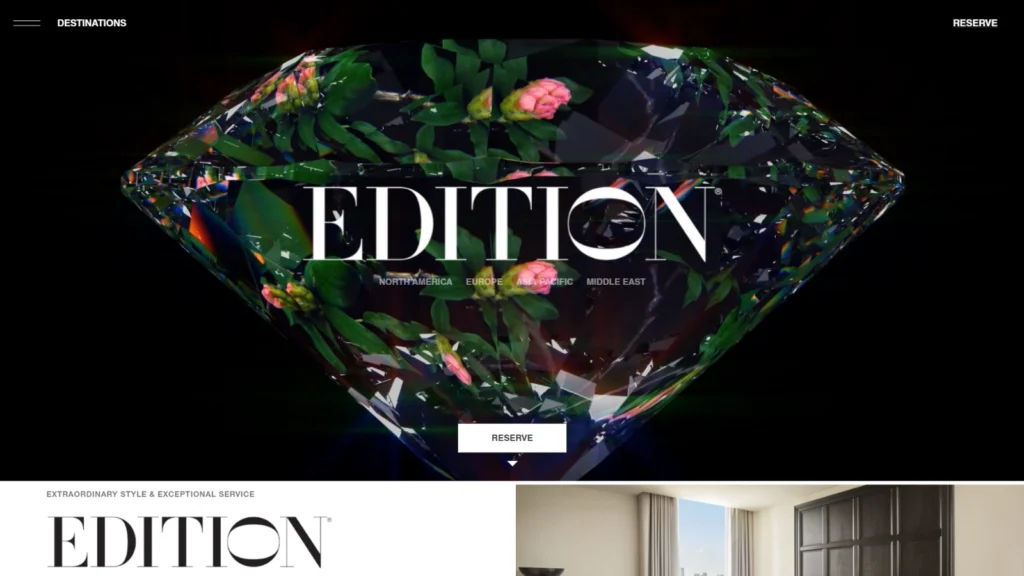
12. Edition Hotels
Edition uses darker themes and immersive visuals for dramatic impact.
Takeaway:
Dark UI can elevate exclusivity when used carefully.
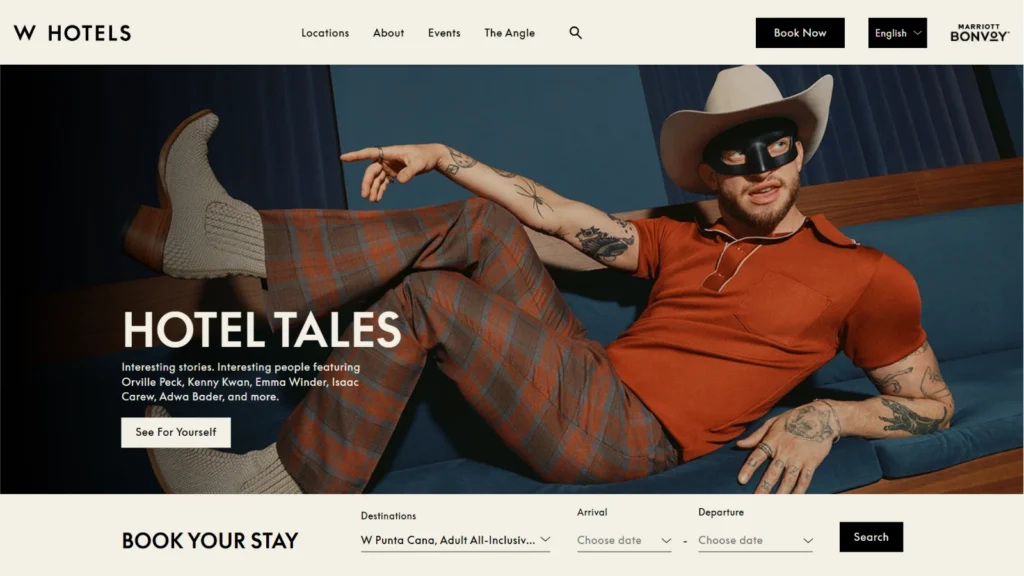
13. W Hotels
Energetic visuals and bold layouts target younger travelers.
Conversion Strategy:
Experience-driven messaging before pricing.
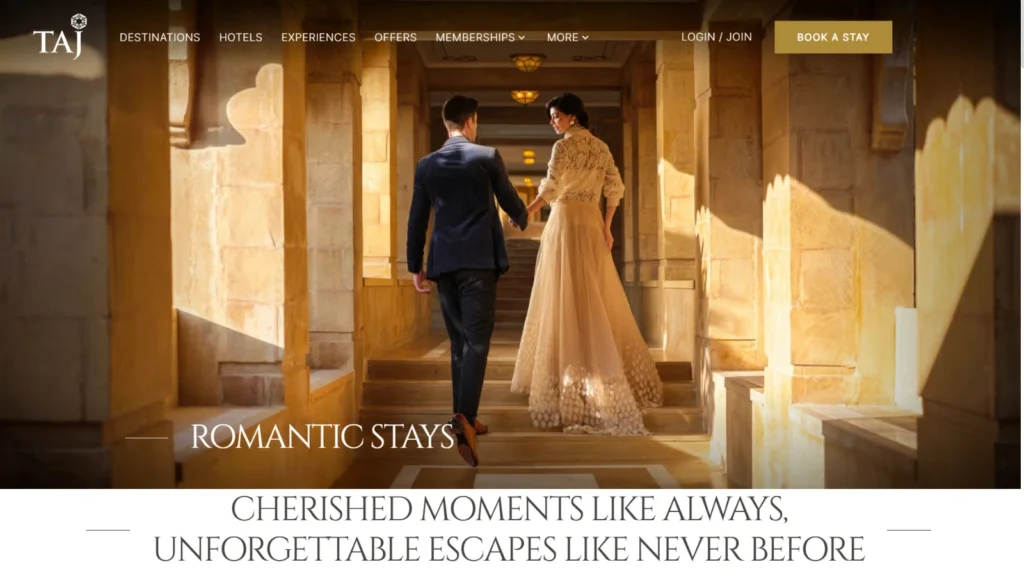
14. Taj Hotels
Taj integrates heritage storytelling with modern usability.
UX Strength:
Location-based discovery is seamless.
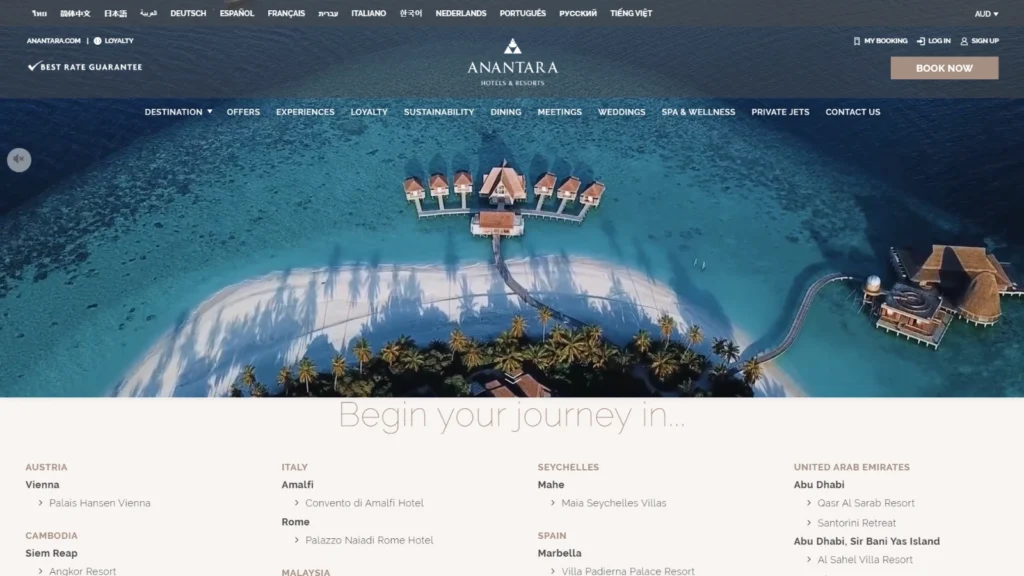
15. Anantara Hotels & Resorts
Anantara uses immersive imagery and location storytelling.
Conversion Insight:
Emotion first, booking second.
Luxury vs Boutique vs Budget Hotel Website Design
| Type | Design Focus | Visual Style | Booking Strategy |
|---|---|---|---|
| Luxury | Emotion & exclusivity | Minimal, cinematic | Experience-first |
| Boutique | Personality & culture | Editorial & bold | Story-driven |
| Budget | Clarity & value | Clean & direct | Speed-focused |
2026 Hotel Website Design Trends
- Cinematic hero videos
- Sticky booking bars
- Micro-interactions
- AI-powered personalization
- Scroll-triggered animations
- Dark mode luxury themes
- Interactive room previews
- Sustainability storytelling
Hotel Website UX & Conversion Optimization Framework
To improve direct bookings:
1. Sticky Booking Bar
Keeps CTA visible.
2. Scarcity Messaging
Limited room alerts increase urgency.
3. Social Proof Placement
Reviews near pricing reduce hesitation.
4. Simplified Checkout
3-step booking flows convert best.
5. Mobile-First Optimization
Thumb-friendly CTAs increase completion rates.
Common Hotel Website Design Mistakes
- Slow-loading video backgrounds
- Hidden booking buttons
- Overcrowded layout
- Complicated navigation
- Poor mobile experience
- Lack of pricing clarity
Hotel Website SEO Checklist
To rank for competitive keywords:
On-Page:
- Keyword in H1
- Semantic H2 usage
- Internal linking
- Optimized meta title
Technical:
- Core Web Vitals optimization
- WebP images
- Schema markup (Hotel structured data)
- Fast hosting
Content:
- Long-form depth
- Comparison tables
- FAQ section
How to Design a Hotel Website That Drives Direct Bookings
Step 1: Define your target audience
Step 2: Align design with brand positioning
Step 3: Implement frictionless booking
Step 4: Optimize for mobile
Step 5: Add conversion psychology triggers
Step 6: Test and refine continuously
Final Thoughts
The best hotel website design examples in 2026 combine:
- Emotional storytelling
- Clean UX
- Strong branding
- Technical performance
- Conversion optimization
A beautiful website is not enough.
A strategic website wins bookings.
If you’re planning a redesign, focus on experience, usability, and direct booking optimization not just aesthetics.
Because in hospitality, the guest journey begins online.
Disclaimer:
All website screenshots and brand names featured in this article are the property of their respective owners. These visuals are used solely for educational and inspirational purposes, with no intention of copyright infringement.
About the author


Popular Posts

Best Jewelry Website Design Examples That Convert (2026 Edition)
February 9, 2026- 9 Min Read