

- About us
-
Services
- Back
- Development Services
-

-
-
-
- Designing Services
-
-
-
-
- Marketing Services
-
-
-
-
- Cloud Engineering Services
-
-
-
- ERP
-
-
-
- CRM
-
-
-
- Artificial Intelligence
-

-
-
- Industry
- Portfolio
- Career
- Contact us
-
 info[at]startdesigns.com











Introduction
In today’s digital-first world, buying and selling no longer depend on physical stores alone. From ordering groceries on a mobile app to purchasing software subscriptions online, e-commerce has become an essential part of everyday life. For students, entrepreneurs, startups, and established businesses alike, understanding e-commerce is no longer optional—it’s a necessity.
This guide explains what e-commerce is, how it works, its major types, real-world applications, benefits, and future trends in a simple, structured, and up-to-date way for 2026.
What Is E-commerce?
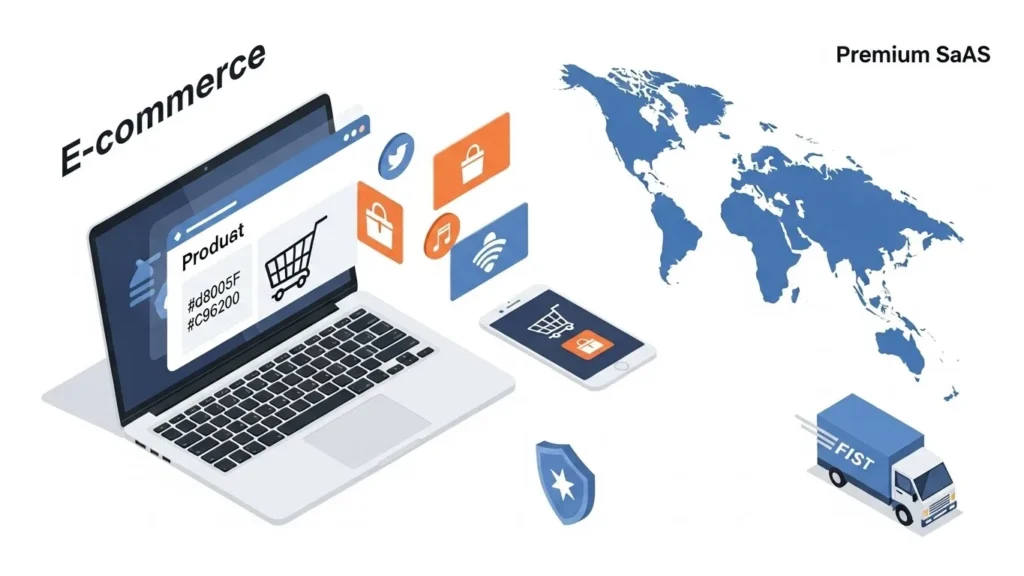
E-commerce (Electronic Commerce) is the buying and selling of goods or services over the internet using websites or mobile applications. It involves online product listings, digital payments, order processing, and delivery or digital fulfillment.
In simple words:
E-commerce means shopping or selling online instead of visiting a physical store.
Popular examples include Amazon for online shopping, Shopify-powered stores for brands, and platforms like Udemy for digital courses.
How Does E-commerce Work?
E-commerce is more than just a website or app—it’s a complete system that connects customers, businesses, payments, and logistics.
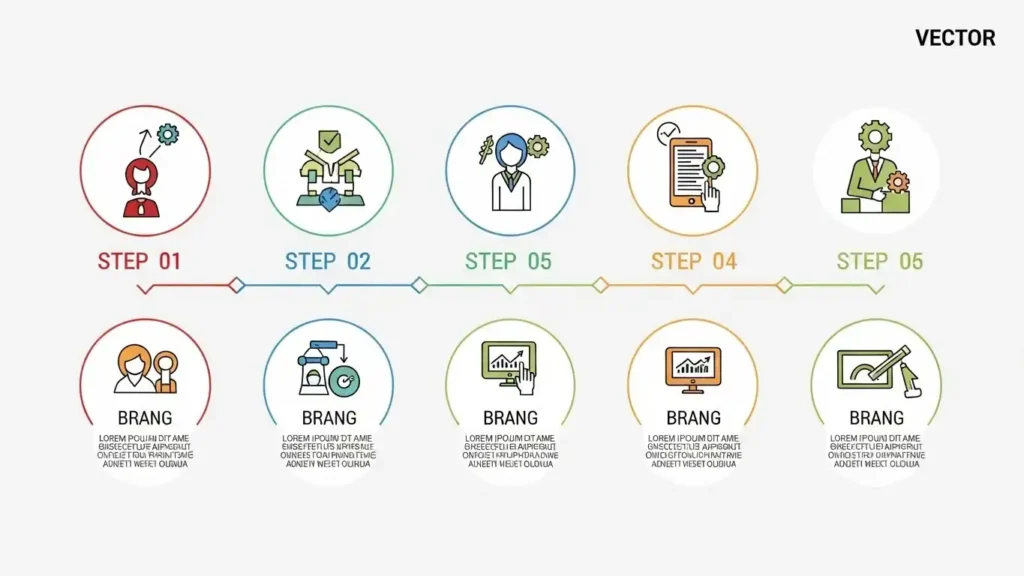
Step-by-Step E-commerce Process
- Product Listing – Businesses upload products or services to an online store
- Customer Browsing – Users explore products using search, filters, and categories
- Order Placement – Customers add items to the cart and place an order
- Online Payment – Payment is completed using cards, wallets, UPI, or net banking
- Order Processing – Inventory is updated and the order is prepared
- Shipping & Delivery – Products are delivered to the customer’s address
- Support & Returns – Customer service, refunds, or replacements if required
This smooth flow is what makes e-commerce fast, scalable, and convenient.
Types of E-commerce Models
Different businesses use different e-commerce models depending on their target audience and offerings.
| Model | Full Form | Description | Example |
|---|---|---|---|
| B2C | Business to Consumer | Businesses sell directly to customers | Amazon |
| B2B | Business to Business | Businesses sell to other businesses | Alibaba |
| C2C | Consumer to Consumer | Individuals sell to other individuals | eBay |
| C2B | Consumer to Business | Individuals offer services to businesses | Fiverr |
| G2C | Government to Consumer | Government services for citizens | Online tax portals |
Applications of E-commerce (Real-World Use Cases)
E-commerce is used across almost every industry today. Below are the most common and impactful applications.
1. Online Retail & Shopping
The most popular application of e-commerce is online retail. Customers buy clothing, electronics, books, home essentials, and more through apps and websites.
Examples: Amazon, Flipkart, Myntra
2. Grocery & Food Delivery
E-commerce enables fast delivery of groceries and food directly to homes.
Examples: Instamart, Blinkit, DoorDash
3. Digital Products & Online Courses
Courses, software, templates, and digital downloads are sold entirely online.
Examples: Udemy, Coursera, Canva
4. Travel, Hotel & Ticket Booking
Users can compare prices and book flights, hotels, and events in minutes.
Examples: MakeMyTrip, Booking.com
5. Healthcare & Pharmacy
Medicines, doctor consultations, and health products are available online.
Examples: Practo, PharmEasy
6. SaaS & Subscription Services
Businesses sell software and tools through recurring subscription models.
Examples: Shopify, Netflix, Adobe
7. Wholesale & Manufacturing
Manufacturers and wholesalers sell products in bulk through B2B platforms.
Examples: IndiaMART, Alibaba
Benefits of E-commerce
Benefits of E-commerce for Businesses
- Global Reach: Sell products worldwide without physical stores
- Lower Operating Costs: Reduced rent, staff, and utility expenses
- Scalability: Easy to grow without major infrastructure changes
- Data & Analytics: Track customer behavior and sales performance
- Automation: Inventory, payments, and marketing can be automated
Benefits of E-commerce for Consumers
- Convenience: Shop anytime, anywhere
- Wider Choice: Access thousands of products in one place
- Better Prices: Compare prices and get exclusive online offers
- Product Reviews: Make informed decisions using ratings and feedback
- Fast Delivery: Same-day or next-day delivery options
Challenges in E-commerce
Despite its advantages, e-commerce also faces certain challenges:
- Cybersecurity Threats: Data breaches and online fraud
- Logistics & Delivery Issues: Managing timely and safe deliveries
- Customer Trust: Ensuring product quality and secure payments
- Legal & Compliance Requirements: Tax, data protection, and regulations
Successful e-commerce businesses invest heavily in security, logistics, and customer support to overcome these challenges.
Future of E-commerce (2026 and Beyond)
E-commerce continues to evolve rapidly with emerging technologies.
Key Future Trends
- AI-Powered Personalization: Smarter product recommendations
- Voice Commerce: Shopping using voice assistants
- AR & VR Shopping: Try-before-you-buy experiences
- Social Commerce: Buying directly through social media platforms
- Mobile-First Commerce: Majority of purchases via smartphones
Businesses that adopt these trends early will gain a competitive advantage.
How to Get Started with E-commerce
If you want to launch your own e-commerce business, follow these steps:
- Choose the right e-commerce platform (Shopify, WooCommerce, BigCommerce)
- Set up your online store with clear product listings
- Integrate secure payment gateways
- Ensure website and data security
- Market your store using SEO, social media, and ads
Partnering with a professional e-commerce development company can make this process faster and more effective.
Frequently Asked Questions (FAQs)
What is e-commerce in simple words?
E-commerce means buying or selling products and services online using the internet.
What are the main applications of e-commerce?
Online shopping, food delivery, digital products, travel booking, healthcare, and SaaS platforms.
Is e-commerce profitable for small businesses?
Yes, e-commerce allows small businesses to reach global customers with lower costs.
What are examples of e-commerce companies?
Amazon, Shopify, Flipkart, Etsy, and Alibaba are popular examples.
Conclusion
E-commerce has transformed how businesses operate and how consumers shop. From online retail to digital services and global marketplaces, its applications continue to expand every year. For startups, students, and enterprises alike, investing in e-commerce is one of the smartest ways to achieve growth, scalability, and long-term success.
If you’re planning to enter the digital market, now is the perfect time to build a powerful e-commerce presence and stay ahead in 2026 and beyond.
About the author

Popular Posts
Ecommerce Website Development Cost: Complete Pricing Guide
December 29, 2025- 6 Min Read
The Ultimate Guide to Travel & Tourism Website Design in 2025
December 22, 2025- 5 Min Read
10 Platforms to Build a Client-Converting Coaching Website
December 11, 2025- 5 Min Read