

- About us
-
Services
- Back
- Development Services
-

-
-
-
- Designing Services
-
-
-
-
- Marketing Services
-
-
-
-
- Cloud Engineering Services
-
-
-
- ERP
-
-
-
- CRM
-
-
-
- Artificial Intelligence
-

-
-
-
- MVP
-
- Open Source Business
-
- Industry
- Portfolio
- Career
- Contact us
-
 info[at]startdesigns.com














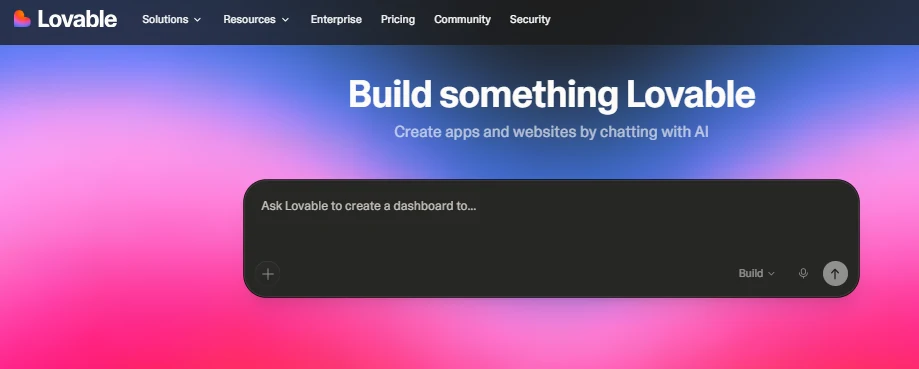
Lovable is one of the fastest-growing AI app builders, allowing users to create working web applications with simple text prompts. Instead of writing code manually, users describe an idea, and the platform generates a full application, including the interface, backend, and database.
The platform focuses heavily on speed and rapid idea validation. Many founders and product teams use Lovable to turn ideas into working prototypes within hours.
However, the tool also has limitations, especially when projects become complex or require advanced backend logic.
In this complete Lovable review, we tested the platform, analyzed real user feedback, and explored its features, pricing, performance, and alternatives to help you decide if it is the right AI app builder for your project.
What is Lovable AI
Lovable is an artificial intelligence-powered development platform that converts natural language prompts into web applications.
Users simply explain the application they want, and the system automatically generates interface components, backend routes, database structures, and authentication.
Unlike traditional no-code tools, Lovable generates real application code using modern frameworks. This means developers can continue development outside the platform if needed.
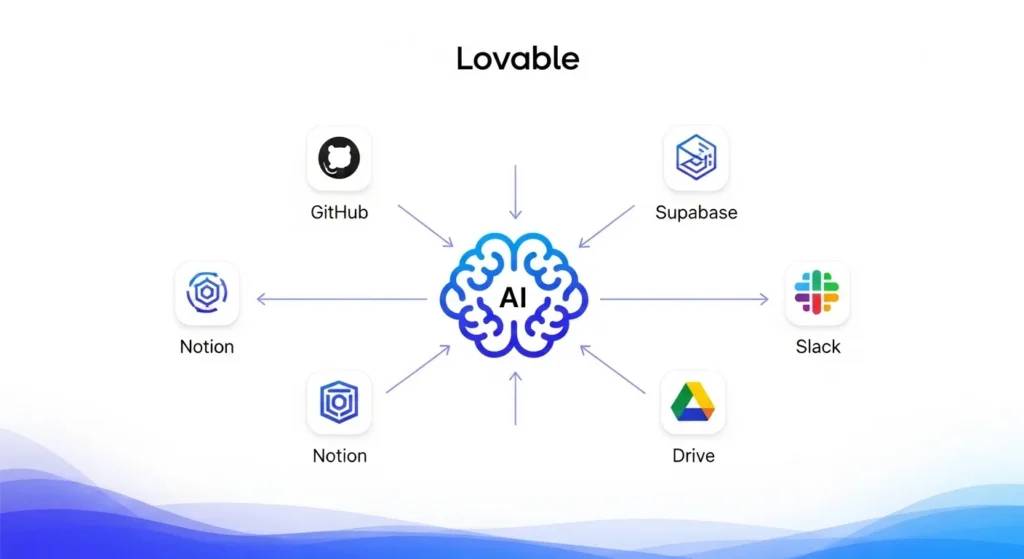
The platform typically generates applications using technologies such as React for the interface, Tailwind CSS for styling, and Supabase for backend services like authentication, database, and storage.
Because of this architecture, Lovable markets itself as an artificial intelligence full-stack engineer rather than just a visual builder.
Why Lovable became popular so quickly
The popularity of AI coding tools has increased dramatically over the last few years. Developers and startups constantly look for ways to reduce development time and validate ideas faster.
Lovable gained attention because it promises something extremely valuable.
Turn an idea into a working application within minutes.
Instead of spending weeks writing boilerplate code, developers can generate an application structure instantly and focus on improving product logic and user experience.
For founders without technical skills, this can dramatically reduce the cost of launching an MVP.
How Lovable works
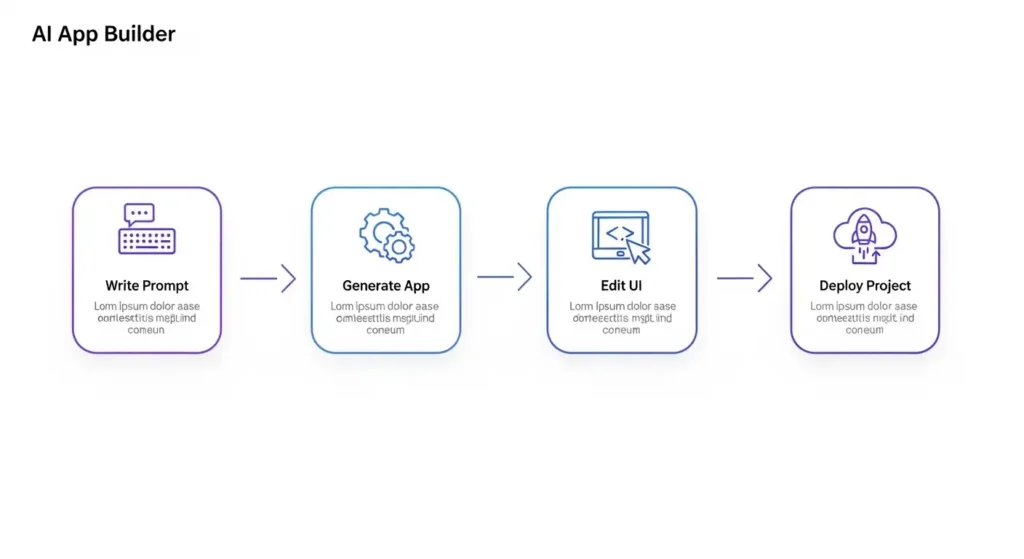
Lovable follows a prompt-driven development workflow that feels similar to chatting with a developer.
Step one: Describe your idea
Users write a prompt describing the application they want to build.
Example prompt
Create a SaaS dashboard that allows users to track tasks, manage projects, and collaborate with team members.
Step two: AI generates the application structure
Lovable analyzes the prompt and generates
- user interface components
- navigation structure
- backend routes
- database schema
- authentication logic
This process usually takes a few minutes.
Step three: preview and modify
Once the application is generated, users can preview the interface and test functionality.
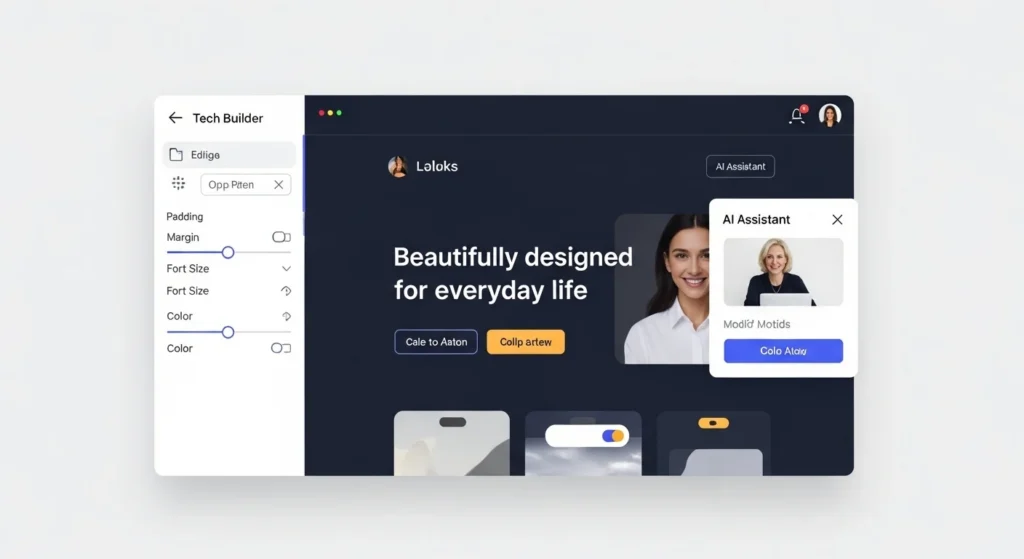
Lovable includes a visual editing interface that allows design changes such as adjusting layout spacing, colors, and typography.
Step four: export or sync code
Projects can be synced with GitHub, which allows developers to download the code and continue development independently.
This ensures that users maintain ownership of their applications.
Lovable AI features explained
Lovable includes several features that differentiate it from traditional no-code platforms.
Prompt-based development
The most powerful feature is the ability to build applications using natural language prompts.
Instead of manually configuring components, developers simply explain what they want.
The AI then generates an application architecture automatically.
This drastically reduces development time.
Supabase backend integration
Lovable connects directly with Supabase, which provides
- database management
- authentication system
- file storage
- backend functions
Because of this integration, developers do not need to configure backend infrastructure manually.
GitHub code ownership
Lovable allows projects to sync with GitHub repositories.
This means developers maintain full access to the source code and can continue development outside the platform.
Code ownership is extremely important for startups because it prevents platform lock-in.
Visual editing interface
Lovable includes a visual interface that allows users to modify elements directly.
Instead of writing new prompts for small changes, users can edit design elements like colors, spacing, or layout visually.
This makes iteration faster.
Modern technology stack
Applications generated by Lovable use widely adopted frameworks.
- React for interface development
- Tailwind CSS for styling
- Supabase for backend services
This ensures that generated applications can be extended by developers.
Our hands-on testing experience
To evaluate Lovable properly, we tested the platform with several example projects.
Test one SaaS dashboard
Prompt used
Build a project management dashboard with user login, task boards, team collaboration, and notifications.
Result
Lovable generated a functional dashboard interface, including a login screen, navigation menu, and task management layout.
Database tables were automatically created for storing tasks and users.
The initial result looked surprisingly polished.
Test two simple CRM systems
Prompt used
Create a CRM tool that allows users to add contacts, track leads, and manage customer communication.
Result
The system generated contact lists, editing forms, and database storage.
CRUD operations such as creating, updating, and deleting contacts worked correctly.
This confirmed that Lovable works well for typical business applications.
Test the three advanced permissions system
Prompt used
Add role-based access control for administrators, managers, and normal users.
Result
This is where the system struggled.
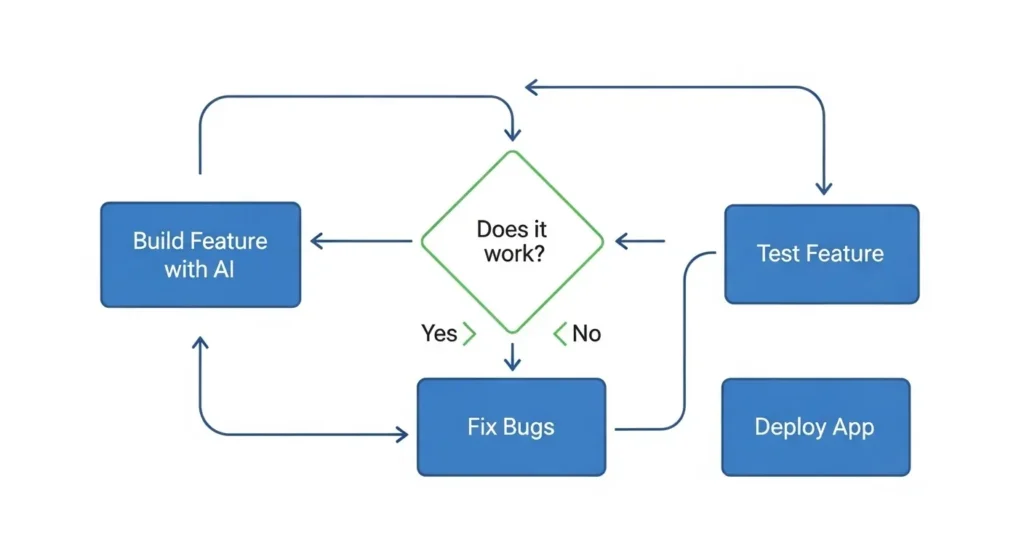
Multiple prompts were required to fix the permission logic, and several errors appeared during testing.
This suggests Lovable performs best for prototypes rather than complex backend systems.
Lovable pricing explained
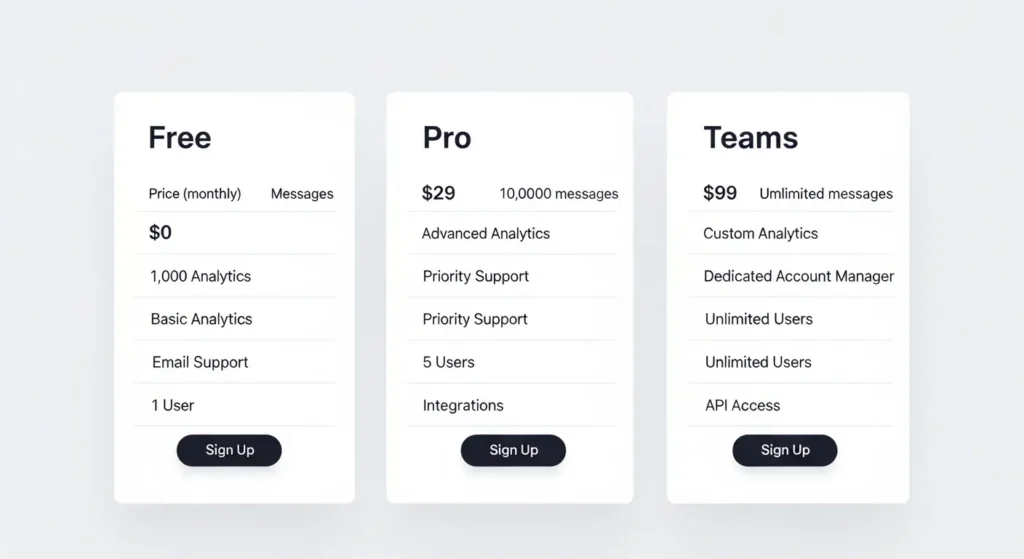
Lovable uses a credit-based system.
Each prompt interaction with the AI consumes credits.
Free plan
The free plan allows limited messages per day.
This is useful for testing the platform, but not enough for building large projects.
Paid plans
Paid plans start around twenty-five dollars per month and provide additional message credits along with features such as private projects and custom domains.
Hidden cost problem
Many users report that debugging consumes a large number of credits.
If the AI repeatedly attempts to fix the same error, the credit cost can increase significantly.
Because of this, pricing can become unpredictable for complex projects.
Real user feedback from the community
We analyzed feedback from developers and founders across multiple communities.
Common positive feedback
- Extremely fast prototype creation
- easy-to-use prompt workflow
- modern technology stack
- helpful visual editor
Common complaints
- debugging loops that waste credits
- Difficulty handling complex backend logic
- performance issues in large applications
Overall community sentiment suggests Lovable is an excellent prototype builder but not yet a complete replacement for traditional development.
Lovable pros
- Very fast application generation
- easy prompt-based workflow
- modern code frameworks
- GitHub integration provides code ownership
- useful visual editing interface
Lovable cons
struggles with complex backend systems
Credit-based pricing can become expensive
Debugging loops can occur during development
performance limitations for large-scale projects
Lovable vs other AI app builders
Several platforms compete in the lovable AI development space.
Understanding their differences helps identify when Lovable is the best choice.
Lovable vs Bubble
Bubble focuses on visual application building.
Developers manually configure workflows and logic.
Lovable focuses on automatic code generation using artificial intelligence.
Lovable is faster for prototypes.
Bubble provides more control for complex systems.
Lovable vs Replit AI
Replit AI assists developers while writing code.
Lovable automatically generates entire applications.
Replit works best for developers.
Lovable works well for founders and product teams.
Lovable vs Glide
Glide converts spreadsheet data into simple applications.
Lovable generates full web applications using AI.
Glide works better for internal tools.
Lovable works better for startup MVPs.
Best Lovable alternatives
If Lovable does not meet your needs, there are several alternative platforms.
Bubble
Powerful no-code platform for building complex applications.
Glide
Simple tool for creating mobile apps from spreadsheets.
Replit AI
A development environment that provides artificial intelligence coding assistance.
Builder AI
An enterprise-focused platform designed for scalable business applications.
Who should use Lovable
Lovable works best for specific types of users.
- Startup founders testing product ideas
- product managers creating interactive prototypes
- designers building product demos
- Developers generating boilerplate application structure
Who should avoid Lovable
Lovable may not be the right choice for
- large-scale enterprise software
- applications with complex backend architecture
- projects requiring strict reliability and performance
Future of AI app builders
AI-powered development tools are evolving quickly.
New platforms now assist with code generation, testing, debugging, and deployment.
In the near future, AI may handle much larger parts of the development workflow.
However, human developers will still play an important role in architecture decision-making, security optimization, and system scalability.
Lovable represents an early step toward this future where artificial intelligence becomes a collaborative development partner.
Final verdict
Lovable is one of the most impressive AI application builders currently available.
Its ability to convert simple prompts into working applications dramatically reduces development time for prototypes and MVPs.
For startups validating ideas or designers creating demos, Lovable can be extremely powerful.
However, the platform still struggles with complex backend systems and unpredictable credit costs during debugging.
As the technology improves, Lovable and similar platforms may become essential tools for modern product development teams.
Frequently asked questions
Is Lovable suitable for building SaaS products
Lovable works well for creating MVP versions of SaaS products, but complex production systems may require additional development.
Can beginners use Lovable
Yes, the platform allows users without coding experience to build applications using natural language prompts.
Does Lovable generate real code
Yes, applications are generated using frameworks such as React and Tailwind CSS.
Is Lovable better than traditional development
Lovable is excellent for rapid prototypes, but complex applications still require experienced Lovable AI Developers.
About the author



Popular Posts
AI Transformation Strategy: How Businesses Build Intelligent AI-Powered Systems
August 26, 2026- 8 Min Read