


- About us
-
Services
- Back
- Development Services
-

-
-
-
- Designing Services
-
-
-
-
- Marketing Services
-
-
-
-
- Cloud Engineering Services
-
-
-
- ERP
-
-
-
- CRM
-
-
-
- Artificial Intelligence
-

-
-
-
- MVP
-
- Open Source Business
-
- Industry
- Portfolio
- Career
- Contact us
-
 info[at]startdesigns.com











Tired of AI Giving Wrong Answers? Here’s the Fix
If your team spends hours digging through Slack threads, PDFs, or outdated documents just to find one answer, you’re not alone.
Even worse?
Most AI tools still guess when they don’t know something.
That’s where RAG (Retrieval-Augmented Generation) changes everything.
Instead of guessing, it pulls answers directly from your data.
👉 Let’s break it down and help you choose the right RAG platform for your needs.
What is RAG-as-a-Service?
RAG-as-a-Service (Retrieval-Augmented Generation) is a cloud-based solution that connects AI models to your data, enabling them to generate accurate, context-aware answers rather than relying solely on pre-trained knowledge.
In simple terms:
It turns your documents, tools, and databases into a smart AI knowledge system that actually knows your business.
How RAG Works (Step-by-Step)
Understanding this will help you choose the right platform (and avoid bad ones).
1. Data Ingestion
You upload your data:
- PDFs
- Notion docs
- Slack conversations
- Databases
2. Embedding (Vectorization)
Your data is converted into vector embeddings (machine-readable format).
This is what enables semantic search.
3. Retrieval
When a user asks a question, the system finds the most relevant context from your data.
4. Generation
The AI generates an answer based ONLY on retrieved data.
Final result:
Accurate, reliable answers — not hallucinations.
Why Businesses Are Rapidly Adopting RAG
Based on how modern teams are implementing AI, RAG solves the biggest problem:
Trust
Here’s why companies are switching:
- Eliminates AI hallucinations
- Uses real-time internal data
- Faster than building custom AI systems
- Improves knowledge access across teams
- Scales across tools (Slack, Notion, Drive)
RAG vs Fine-Tuning vs Traditional Search
| Method | Best For | Pros | Cons |
|---|---|---|---|
| RAG | Dynamic knowledge | Real-time, accurate | Needs clean data |
| Fine-tuning | Custom AI behavior | Highly tailored | Expensive, static |
| Search | Basic lookup | Simple | No AI-generated answers |
For most businesses, RAG strikes the best balance of accuracy, cost, and flexibility.
Best RAG-as-a-Service Platforms
| Platform | Best For | Pricing | Key Strength |
|---|---|---|---|
| Vectara | Enterprises | $$$ | High accuracy |
| Nuclia | Dev teams | $$ | Customization |
| Ragie AI | Startups | $ | Speed |
| Ragu AI | Regulated industries | $$$ | Flexibility |
| Personal AI | Individuals | $ | Personal memory |
Pros & Cons Comparison
| Platform | Pros | Cons |
|---|---|---|
| Vectara | Very accurate, secure | Expensive |
| Nuclia | Flexible, developer-friendly | Setup complexity |
| Ragie | Fast, easy, affordable | Less customization |
| Ragu | Highly customizable, compliant | Slower setup |
| Personal AI | Simple, personal use | Not for teams |
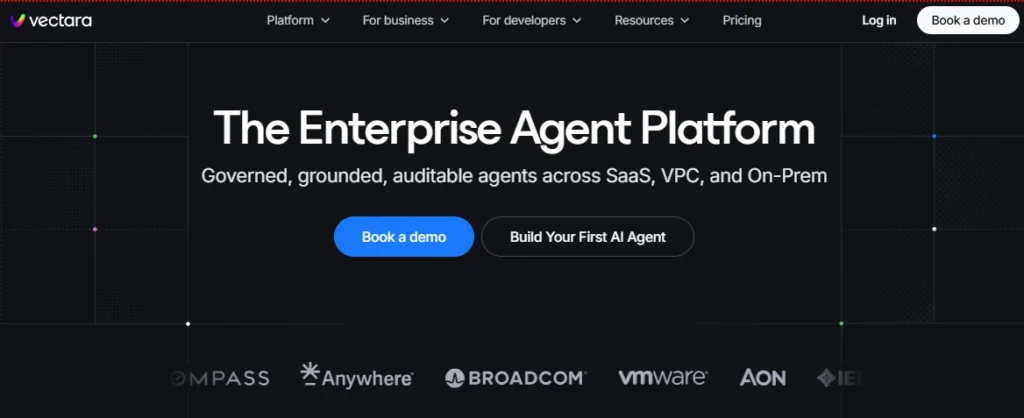
1. Vectara
Best for: Enterprises where accuracy is critical
Vectara is ideal for industries like finance, healthcare, and legal, where mistakes are costly.
✔ Pros
- Strong hallucination control
- Multilingual support
- Enterprise-grade security
❌ Cons
- Expensive
- Overkill for small teams
2. Nuclia
Best for: Technical teams needing control
Nuclia gives you full control over how your RAG system works.
✔ Pros
- Custom pipelines
- API-first design
- Handles complex data
❌ Cons
- Requires technical knowledge
- Setup takes time
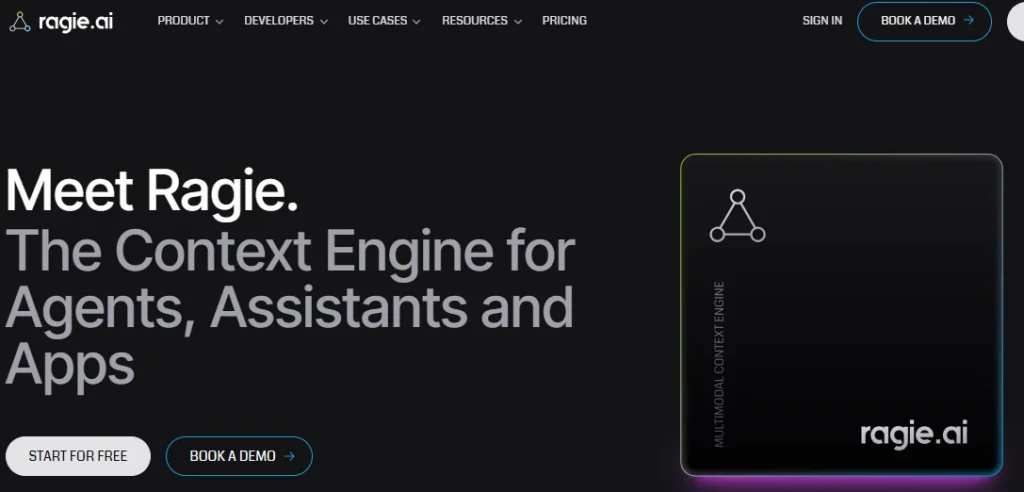
3. Ragie AI
Best for: Startups and fast launches
If you need to ship AI features quickly, Ragie is one of the easiest options.
✔ Pros
- Fast deployment (weeks)
- Easy integrations
- Budget-friendly
❌ Cons
- Limited deep customization
4. Ragu AI
Best for: Compliance-heavy businesses
Ragu is built for companies that need strict governance and customization.
✔ Pros
- Deep customization
- Expert onboarding
- Scales well
❌ Cons
- Higher cost
- Longer setup
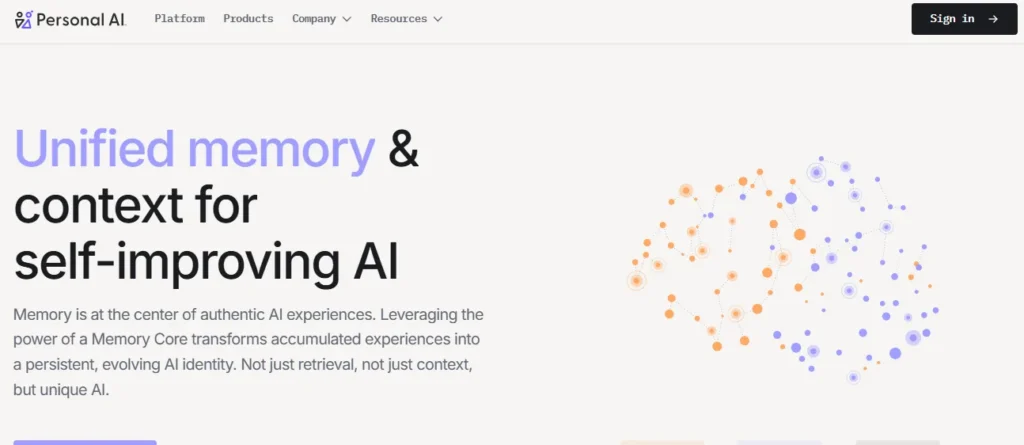
5. Personal AI
Best for: Individuals and creators
This is more of a personal AI memory tool than a team solution.
✔ Pros
- Personalized AI memory
- Easy to use
- Privacy-first
❌ Cons
- Not built for teams
- Limited features for scaling
Which RAG Platform Should YOU Choose?
Let’s simplify this 👇
- Startup / MVP → Ragie AI
- Developers / Tech teams → Nuclia
- Enterprise / High accuracy needs → Vectara
- Regulated industries → Ragu AI
- Personal productivity → Personal AI
Don’t overthink it — match the tool to your team + use case.
Real-World Example
Imagine a customer support team:
Instead of searching multiple tools, they ask:
“How do we handle refund requests?”
RAG pulls:
- Past tickets
- Internal docs
- Policies
It gives a single accurate answer instantly.
That’s the real power of RAG.
Real Use Cases of RAG
- Customer support automation
- Internal knowledge search
- AI copilots in SaaS apps
- Document Q&A systems
- Research and analytics
When NOT to Use RAG
RAG isn’t always necessary.
Avoid it if:
- Your dataset is very small
- Your data rarely changes
- You don’t need AI-generated answers
Common Mistakes to Avoid
- Ignoring data quality
- Choosing tools based on demos
- Underestimating setup time
- Skipping security requirements
- Not planning for scale
Most RAG failures come from bad data, not bad tools
The Future of RAG
RAG is evolving fast and becoming the backbone of modern AI systems.
What’s coming:
- AI agents powered by RAG
- Real-time data pipelines
- Deep integrations with tools
- Hybrid AI architectures
Frequently Asked Questions (FAQs)
What is RAG in AI?
RAG combines retrieval systems with AI models to generate accurate answers using external data.
Is RAG better than fine-tuning?
In most cases, yes — because it’s dynamic, flexible, and cost-effective.
How much does RAG-as-a-Service cost?
It ranges from free tiers to enterprise plans costing thousands per month, depending on usage.
Which RAG platform is best?
- Startups → Ragie
- Developers → Nuclia
- Enterprises → Vectara
Final Thoughts
RAG-as-a-Service is quickly becoming the standard for building reliable AI systems.
Instead of spending months building infrastructure, you can:
- Launch faster
- Reduce costs
- Deliver accurate AI experiences
The real advantage isn’t just using RAG
It’s choosing the right platform for your specific needs.
About the author

Popular Posts

PHP2Shell: Is Your Website Safe? A Plain-English Guide to Fixing the 2026 PHP Vulnerability
October 23, 2026- 13 Min Read
AI Transformation Strategy: How Businesses Build Intelligent AI-Powered Systems
August 26, 2026- 8 Min Read